

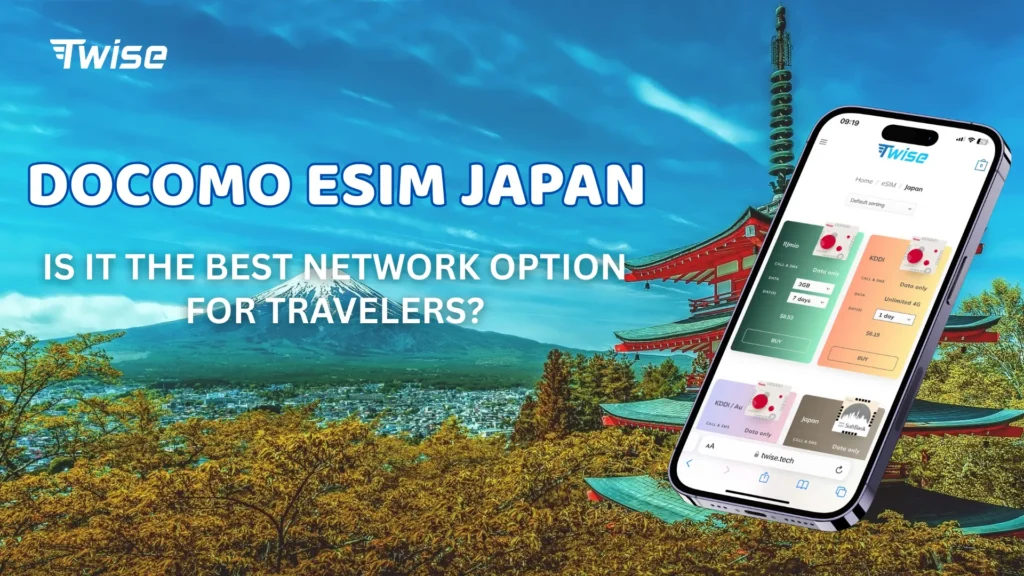
Docomo eSIM Japan: Is It the Best Network Option for Travelers?
Dec
Traveling in Japan has never been easier, but staying connected is still one of the biggest concerns for international visitors. Whether you’re navigating Tokyo’s subway system, searching for the best ramen shops, translating Japanese signs, or streaming content during a Shinkansen ride – reliable mobile data is essential.
Modern travelers no longer want to deal with physical SIM cards, confusing APN settings, or long queues at airport kiosks. As eSIM technology becomes mainstream, Japan has quickly adapted, offering fast, flexible, and convenient options for tourists who need instant connectivity. Among the top choices, the Docomo eSIM Japan option stands out thanks to its renowned nationwide coverage and strong network performance.
But is Docomo really the best eSIM choice for travelers? Do visitors need to consider alternative solutions like KDDI’s unlimited eSIM or SoftBank’s budget-friendly daily plans?
This in-depth guide explores everything you need to know about Docomo Japan eSIM, how it works, who it benefits, and how it compares to other networks. By the end, you’ll know which eSIM option matches your travel style, data usage, and budget – ensuring a smooth and connected journey across Japan.
1. What Is Docomo eSIM Japan?
Overview of NTT Docomo
NTT Docomo is one of the largest mobile carriers in Japan, with a reputation for:
- The widest and most reliable coverage in the country
- Exceptional rural connectivity
- Strong 4G and rapidly expanding 5G service
- High-quality voice and data performance
Because of its scale and infrastructure, Docomo is often considered the gold standard for connectivity in Japan. Travelers searching for the best network reliability almost always hear the same recommendation: Docomo is king of coverage.
Docomo offers eSIM services for:
- Postpaid users in Japan
- Prepaid plans (limited availability)
- Select tourist-focused eSIM options through partner providers
However, direct Docomo eSIM access for tourists is not always straightforward, and this is one of the biggest challenges travelers face.
How It Works
A Docomo Japan eSIM allows users to activate mobile data digitally, without installing a physical SIM card. Once the eSIM profile is installed:
- The phone connects to Docomo’s network within seconds
- Users can enjoy 4G/5G data depending on their plan
- No physical SIM management is required
Activation Process Overview
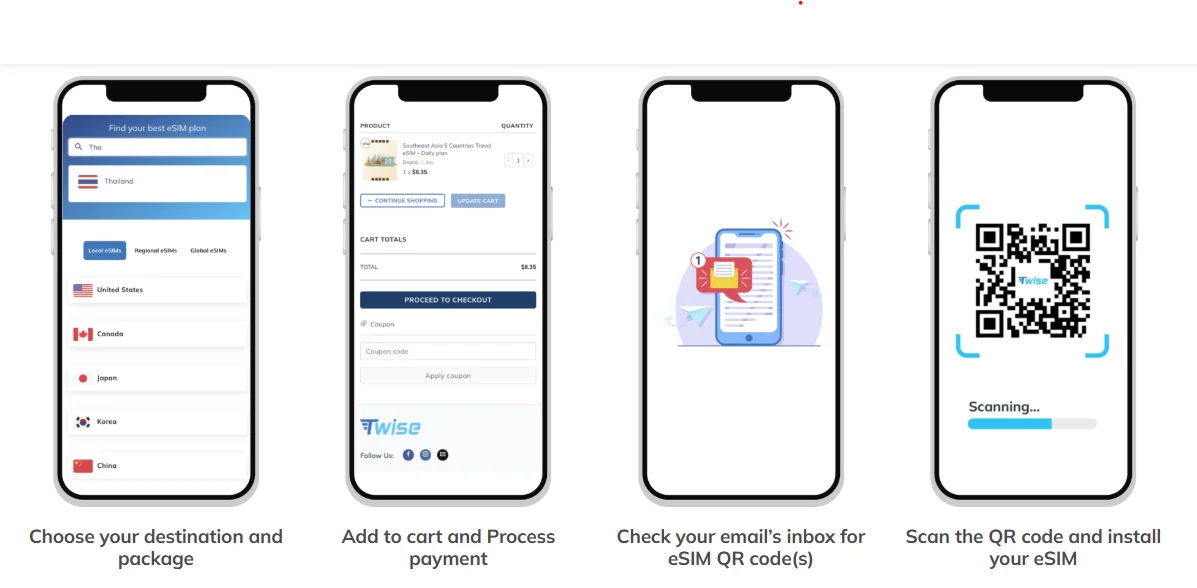
The typical process for eSIM Docomo Japan activation includes:
- Visit Docomo’s official site or partner platform
- Choose your plan
- Complete identity verification (if required)
- Receive a QR code or activation link
- Scan the QR code
- Wait for the eSIM profile to install
- Restart your phone and connect
While this sounds simple, tourists often encounter ID restrictions, which we’ll discuss later.
Device Compatibility
Docomo eSIM supports most modern smartphones, such as:
- iPhones XR and newer
- Google Pixel 4 and newer
- Samsung Galaxy S20 and newer (Japan variants work best)
International Android devices may have mixed compatibility due to Japanese carrier restrictions.
2. Why Travelers Choose Docomo eSIM
Travelers who prioritize network performance often gravitate toward Docomo because of its exceptional national coverage.
Strong Nationwide Coverage
Docomo is famous for delivering coverage in:
- Busy cities like Tokyo, Osaka, Yokohama, Sapporo, Nagoya
- Suburban residential areas
- Mountainous regions
- Remote countryside towns
- National parks and hiking trails
- Coastal and fishing villages
No other network in Japan covers rural Japan as consistently as Docomo. Travelers visiting alpine regions like Nagano, Takayama, or Hokkaido’s rural areas overwhelmingly prefer Docomo due to its signal stability.
Fast 4G/5G Speeds
Docomo’s 5G infrastructure is expanding rapidly, offering:
- 4G average speeds between 50–150 Mbps
- 5G speeds that often exceed 300 Mbps in major cities
This is ideal for:
- Google Maps navigation
- JR train route planning
- Streaming videos
- Uploading content
- Using translation apps
- Video calls

Read more: Top eSIM Providers for Japan: Complete Comparison for Travelers
Reliable for Navigation & Travel Apps
apps like HyperDia, Google Maps, and Japan Travel by Navitime run smoothly even in:
- Underground subway stations
- Tunnels
- Busy train stations
- Mountain roads
- Shinkansen train routes
Stable Signal in Mountains & Countryside
Travelers exploring:
- Mount Fuji
- The Japanese Alps
- Nakasendo Trail
- Hokkaido national parks
- Kyushu’s volcano regions
often report that Docomo is the only network providing consistent connectivity.
3. Limitations of Docomo eSIM
Even though Docomo eSIM Japan offers incredible performance, it isn’t always the most convenient option for tourists.
Not Always Available for Short-Term Travelers
Many Docomo eSIM plans require:
- A Japanese address
- Japanese phone number
- Japanese credit card
- Identity verification through MyNumber (Japanese ID)
This immediately disqualifies most tourists.
Complicated Registration
For visitors who attempt direct purchase from Docomo, the process may involve:
- Japanese-language portals
- Multi-step ID verification
- Address input fields that require Japanese characters
This makes direct Docomo access unfriendly for non-Japanese users.
Higher Pricing Compared to Travel eSIM Brands
Docomo’s local plans are priced for local residents, not tourists. As a result:
- Travelers may end up paying more than necessary
- Data plans may not match tourist usage patterns
- Short-term packages are limited
Not Always Instant Activation
Some plans require:
- Waiting for identity approval
- Manual processing
- Visiting a Docomo shop
Not ideal for travelers landing at Haneda or Narita who need instant connectivity.
4. Alternative eSIM Solutions for Travelers in Japan
Because of the limitations of Docomo eSIM Japan, many visitors choose network alternatives that offer simpler activation, cheaper prices, and more tourist-friendly plans like Twise (KDDI & Softbank).
a. KDDI 5G Unlimited Data (eSIM)
KDDI (operating under the “au” brand) is Docomo’s biggest competitor and is increasingly popular among international travelers.
Why It’s a Strong Alternative
- Often offers better value for unlimited data
- Strong coverage across major cities and popular tourist areas
- Offers simple, fast tourist activation
- No need for Japanese ID
- Supports hotpot and heavy streaming
- Works well for long trips
Benefits of KDDI Unlimited Plans
- Unlimited 4G/5G data (Premium Local Plan)
- Lower cost than Docomo’s direct plans
- Excellent performance in:
- Tokyo
- Osaka
- Kyoto
- Sapporo
- Fukuoka
- Okinawa
- Great for digital nomads and remote workers
Ideal For
- Long stays
- Travelers needing hotspot use
- Video streaming
- Social media creators
- High-data usage patterns
b. SoftBank Daily Data eSIM
SoftBank is another major Japanese carrier offering tourist-friendly daily eSIM pricing.
Key Advantages
- Affordable per-day data plans
- High-speed SoftBank 4G/5G network
- Simple QR-code activation
- No ID verification
- Great urban performance
Works Best For
- Budget travelers
- Short stays (1–10 days)
- Travelers using:
- Google Maps
- Ride-hailing
- Social media
- Translation apps
SoftBank is extremely fast in city centers and on most rail routes, making it ideal for short-term visitors sticking to major tourist corridors. These plans are unlimited in daily consumption, but each day includes a fixed amount of high-speed data. After that, speeds may reduce to around 128kbps—still usable for:
- Messaging
- Basic navigation
- Light app usage
5. Coverage Comparison (Docomo vs. KDDI vs. SoftBank)
Coverage quality is the biggest factor for travelers choosing a Japan eSIM.
Docomo Coverage
- Best overall national coverage
- Strongest rural and mountain signal
- Extremely reliable in remote areas
- Ideal for nature trips, hiking, countryside stays
KDDI (au) Coverage
- Excellent city and suburban coverage
- Strong 5G rollout
- Reliable performance on Shinkansen lines
- Sometimes slightly weaker in deep rural zones
SoftBank Coverage
- Very strong in metropolitan areas
- Solid coverage along transit routes
- Optimized for urban travelers and tourists
- Weaker in remote mountains compared to Docomo
Ideal Traveler Profiles
| Traveler Type | Best Choice |
| Hiking / countryside / national parks | Docomo |
| Urban exploration / shopping / dining | SoftBank or KDDI |
| Heavy streaming / hotspot users | KDDI unlimited |
| Budget travelers | SoftBank daily plans |
| Long trips | KDDI or travel eSIM providers |
6. Price & Value Comparison for Travelers
Docomo eSIM Pricing (General Insight)
Local Docomo prepaid pricing is often:
- Higher than tourist-focused plans
- Limited in data options
- Designed for residents, not short-term visitors
- Typically between ¥3,000–¥7,000 depending on data amounts
KDDI Unlimited Plan Pricing
Travel-focused providers using KDDI often offer:
- Unlimited data starting around $7–$12 per day
- Multi-day discounts
- Long-stay packages (15–30 days) at affordable rates
SoftBank Daily Pricing
SoftBank-based tourist eSIM plans usually include:
- ¥350–¥500 per day
- High-speed data allowance
- Affordable short-term options
Best Value Based on Trip Length
| Trip Duration | Recommended eSIM |
| 3–5 days | SoftBank daily plans |
| 7–14 days | KDDI unlimited or SoftBank weekly plans |
| 1 month+ | KDDI unlimited multi-week plans |
Docomo becomes ideal mainly for travelers who require rural coverage above all else.
7. How to Activate an eSIM in Japan (General Process)
Regardless of the network, the eSIM activation process usually follows similar steps:
a. Purchase Your Plan
Buy from:
- Official carrier websites
- Travel eSIM providers
- Airport kiosks (if necessary)
2. Receive QR Code
You’ll receive:
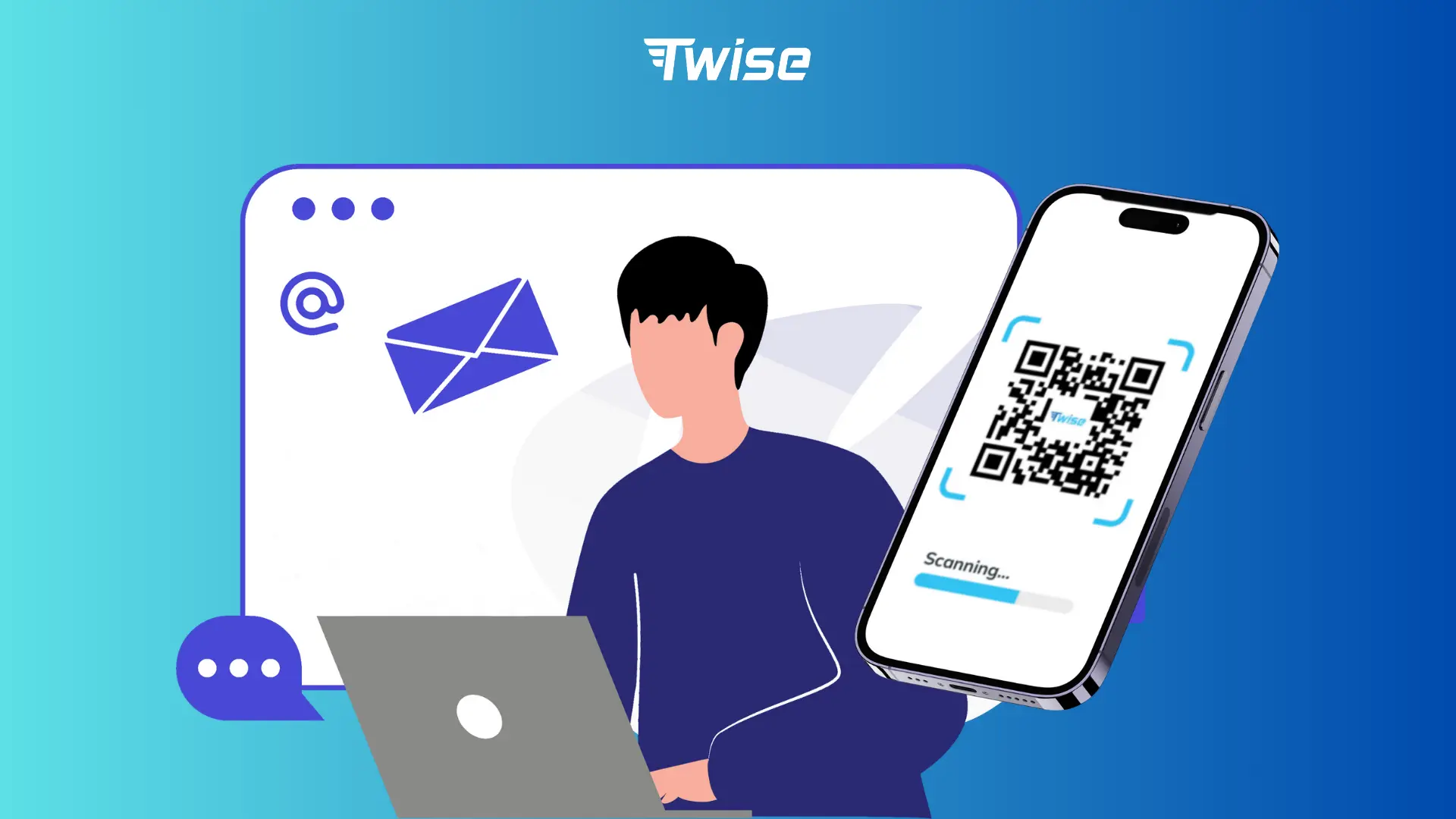
- A QR code by email
- Activation instructions
- APN details if needed
3. Scan & Install
On iPhone:
- Go to Settings → Mobile Data → Add eSIM
- Scan QR code
On Android:
- Go to Network & Internet → SIMs → Add eSIM
4. Restart Your Device
Helps sync network settings.
5. Connect to the Network
Turn on mobile data and ensure:
- APN is set automatically
- eSIM is active as primary data line
Troubleshooting Tips
- Toggle airplane mode
- Restart device
- Reinstall eSIM
- Update carrier settings
- Ensure roaming is ON (for some travel eSIMs)
Most travelers can activate their eSIM within 2–5 minutes.
The Docomo eSIM Japan option is undeniably one of the strongest choices for travelers who prioritize coverage and reliability. Whether you’re visiting remote villages, hiking mountains, or exploring Japan’s lesser-known countryside, Docomo delivers unmatched signal stability. It offers excellent speed, wide availability, and dependable performance across the entire country.
However, Docomo is not always the easiest or most affordable option for tourists. Registration can be complicated, tourist plans are limited, and the pricing may be higher than necessary for short-term visitors.
That’s why so many travelers turn to KDDI unlimited eSIM plans or SoftBank’s budget-friendly daily packages. These alternatives provide:
- Instant activation
- Tourist-friendly pricing
- Strong urban and nationwide coverage
- Flexible plan durations
Choose your Japan eSIM based on:
- ✔ How much data you need
- ✔ Your travel duration
- ✔ Whether you’re going to cities or rural regions
- ✔ Your budget
- ✔ Your device compatibility
Whether you decide on Docomo, KDDI, or SoftBank, you’ll stay connected across Japan with ease—and enjoy a smooth, enjoyable, and well-connected trip.
Twise’s customer support is available 24/7 to assist you. You can contact them through the official channels below for immediate help:
- Facebook Fanpage: Twise
- Email: [email protected]
- WhatsApp: (+1) 818-915-0777
