
 Tiếng Việt
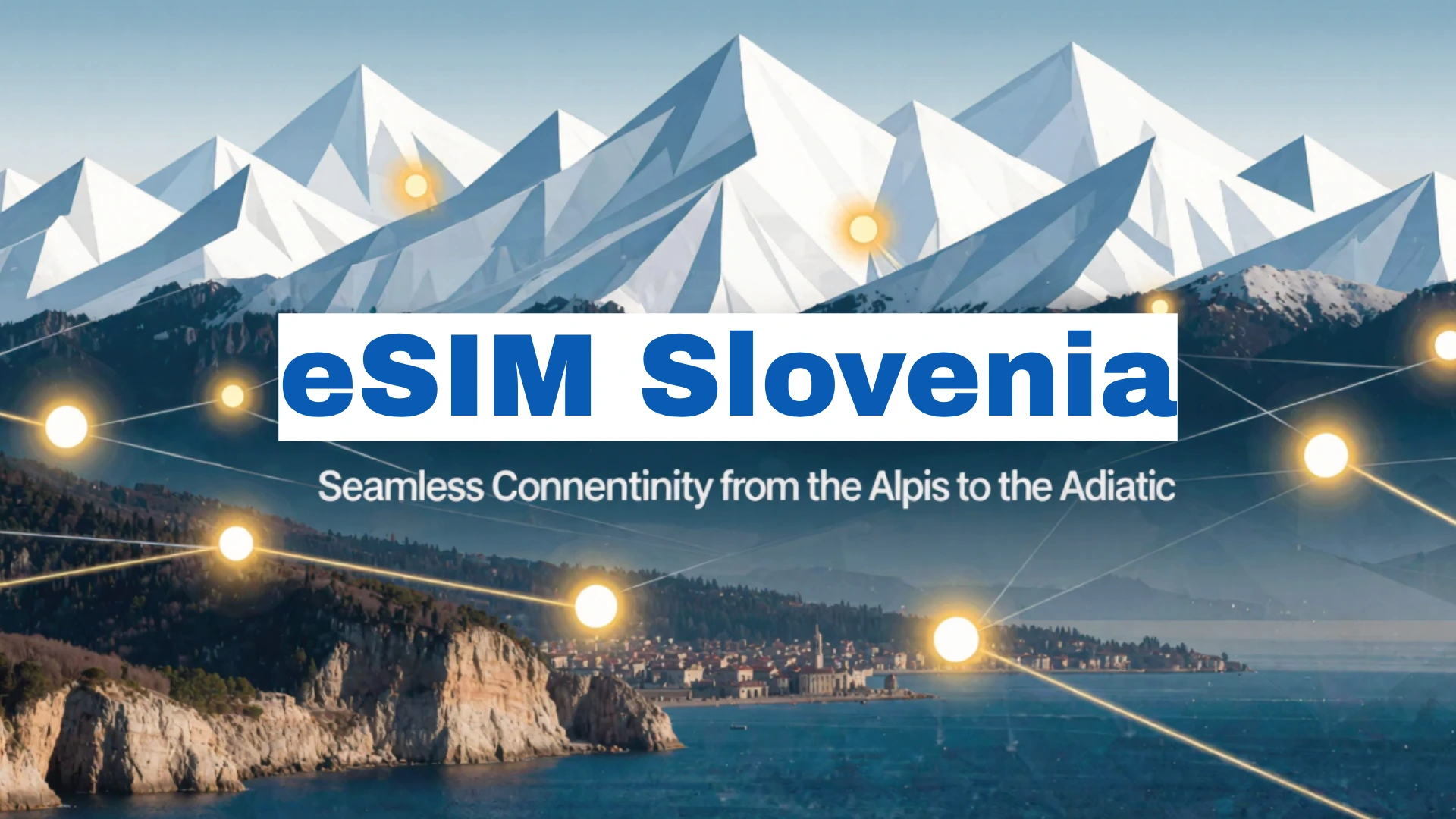
Slovenia is one of Europe’s most quietly extraordinary countries — a place where glacial lakes reflect perfectly symmetrical church spires, where karst cave systems stretch for kilometers beneath rolling green hills. Staying connected throughout all of it is non-negotiable, which is why getting an eSIM Slovenia plan before you travel is the single smartest preparation decision you can make. With a Slovenia eSIM from Twise, you land connected to Telemach — Slovenia’s award-winning, 5G-enabled network — without hunting for a shop in Ljubljana’s Old Town, without language-barrier registration menus, and without a single minute of unnecessary downtime.
Slovenia also sits at the geographic heart of Central Europe, making it a natural transit and gateway destination for travelers moving between Italy, Austria, Croatia, and Hungary. Twise’s regional coverage means your data crosses those borders as effortlessly as you do.
Why Telemach Is the Speed Champion in Slovenia
Network choice matters, and in Slovenia it matters more than the headline names might suggest. The country’s two legacy operators — Telekom Slovenije and A1 — have long histories but infrastructures that reflect those histories in ways that do not always favor the modern traveler. Telemach has taken a different path: a deliberate, capital-intensive investment in a fiber-backed mobile network built from the ground up for high-capacity modern usage. The results are measurable. Telemach consistently tops independent benchmark tests for download speeds and latency across Slovenia, and its 5G rollout — concentrated in Ljubljana and the major urban centers — is among the most advanced of any operator in the country.
This is the network that powers every Twise Slovenia eSIM plan.
Read more:
Install eSIM on iPhone: A Step-by-Step Guide
Installing eSIM on Android Phones: A Step-by-Step Guide
Urban Excellence: Ljubljana, Maribor, and Beyond
In Slovenia’s cities, Telemach’s advantage is most sharply felt in the metrics that matter most for digital nomads and business travelers: latency and upload consistency. Ljubljana’s Old Town, Metelkova cultural district, BTC City shopping complex, and the co-working spaces scattered across the city’s increasingly tech-forward neighborhoods are all well within Telemach’s strongest coverage zones. Video calls land cleanly. Cloud uploads complete at speeds that match what you would expect from a fixed-line connection. The lag that can make a remote working day frustrating simply does not appear here.
Maribor — Slovenia’s second city, a growing wine tourism hub with a well-developed cultural scene — and Celje, the country’s third urban center, both benefit from the same network quality. For travelers exploring beyond Ljubljana, Telemach’s coverage does not degrade significantly as you move between cities.
Outdoor Performance: Where Slovenia Really Tests a Network
Slovenia’s great appeal to a large proportion of its visitors is not its cities — it is its extraordinary natural geography. The Julian Alps in the northwest, dominated by Mount Triglav and threaded by some of the most scenic hiking and cycling routes in Europe, draw outdoor adventurers from across the continent. The Soča Valley, with its impossibly turquoise river running through steep limestone gorges, is one of the most photographed landscapes in Central Europe. Lake Bled, with its island church and clifftop castle, needs no introduction.
All of these destinations present genuine challenges for mobile networks. Steep terrain, forested ridgelines, and the sheer distance from urban cell towers create signal conditions that expose the limitations of networks that have not invested specifically in outdoor and rural coverage. Telemach has. Its network is engineered to maintain signal in the Julian Alps and along the major outdoor recreation corridors, which means your GPS stays active on the trail, your emergency contacts remain reachable from the ridge, and your trail map keeps loading even when the path ahead is uncertain. For the Triglav National Park hiker, this is not a minor convenience — it is a safety consideration.
Europe-Wide vs. World Coverage: Choosing the Right Plan Scope
Slovenia is rarely the only destination on an itinerary. Its central European position makes it a natural node on several classic road-trip routes, and its compact size — you can drive across it in two hours — means that border crossings happen almost incidentally during a Slovenian stay. Twise offers two primary plan scopes for Slovenia, and understanding which one fits your itinerary can save both money and hassle.
The Europe 33-Country Plan: Built for the Regional Road-Tripper
The Europe 33-Country plan is the natural fit for the most common Slovenian travel patterns. The classic Italian Riviera to Istrian Coast route — driving from Trieste through Piran and on toward Croatia’s Rovinj — passes through three countries across a single afternoon. The Alpine loop from Vienna through the Karawanks Tunnel into Kranjska Gora and back through Austria covers two countries in a single day’s drive. The Pannonian Plain route from Ljubljana to Budapest crosses Slovenia and Hungary with an optional Serbian or Croatian detour.
On the Europe 33-Country plan, none of these border crossings require any action on your part. As you pass through the Karawanks Tunnel from Austria into Slovenia, the Twise eSIM switches networks automatically — from a compatible Austrian operator to Telemach — without interruption, without manual network selection, and without any change in data pricing. The same happens in reverse when you head south into Croatia. One plan, one price, continuous coverage across the entire loop.
The World 70-Country Plan: For the Intercontinental Traveler
Some visitors arrive in Slovenia as a single stop on a much longer global itinerary. A traveler flying in from Japan via Frankfurt, spending a week in Ljubljana, and continuing to Montenegro or Albania is covering territory that a Europe-only plan handles imperfectly — both non-EU Balkan countries fall outside the 33-country scope, while the World 70-Country plan covers them.
The World plan is also the rational choice for travelers who are in active uncertainty about their routing. If your plans beyond Slovenia are genuinely open — if you might extend to North Africa, the Middle East, or back to Asia — the World plan’s 70-country footprint is an insurance policy against the complexity of managing multiple regional eSIMs across an unscripted itinerary.
Daily Data vs. Fixed Data: Which Structure Fits Slovenia?
Daily Data Plans: The Safety Net for Creators and Adventurers
The Daily Data plan gives you a fixed amount of high-speed data — typically 1GB or 2GB — that resets every 24 hours. Use today’s allocation freely; tomorrow morning it replenishes regardless of what you consumed the day before.
This structure is ideal for two distinct Slovenia traveler profiles. The first is the content creator — the traveler uploading 4K footage of Lake Bled at sunrise, sharing Stories from inside Postojna Cave (before the no-phone zone begins), and maintaining a running visual diary of a country that genuinely rewards daily documentation. For this traveler, the Daily plan functions as a creative safety net: there is no moment of anxious rationing, no decision to skip a share because the data pool is running low, no day of throttled speeds because yesterday was heavy.
The second profile is the serious outdoor traveler — the hiker spending long days in Triglav National Park or the cyclist navigating the Vršič Pass. These are high GPS-demand activities that burn through data at a steady rate throughout the day. A daily allocation that refreshes each morning matches the rhythm of activity-based travel perfectly: each new hiking day begins with a full data tank, regardless of how intensively the previous day used its allocation.
The core logic is simple: you cannot run out of data for your entire trip on Day 3. Every day is a fresh start.
Fixed Data Plans: The Smart Saver for City Explorers and Long Stays
The Fixed Data plan provides a total data pool — commonly 10GB or 20GB — valid across 15 to 30 days with no daily ceiling. You draw on it at whatever rate each day demands and carry the remainder forward.
For the traveler spending most of their time in Ljubljana — using hotel and café Wi-Fi for heavy tasks and mobile data primarily for navigation, messaging, and real-time lookups — a Fixed plan offers both economy and flexibility. A slow museum day might consume 200MB. A Saturday afternoon wandering the Open Kitchen food market and the weekend antique fair along the Ljubljanica, navigating between spots and sharing photos, might consume 800MB. The Fixed plan absorbs that variation without penalty or waste.
Fixed plans also suit the “slow traveler” profile — visitors who have taken a longer stay in Slovenia, settled into a rhythm, and are managing their connectivity with the thoughtfulness of someone who has more time than urgency.
Traveler Personas: Which Slovenia Plan Is Yours?
The Ljubljana Digital Nomad: You are working remotely from a co-working space in Tabor or a café near Prešeren Square. You need reliable, fast data when you step outside, but your heaviest work loads go through the building’s broadband. The Europe Fixed Data plan — with Telemach’s low latency keeping your sync tools and messaging apps snappy — is the right fit. You use what you need each day without burning through a daily allocation on light usage days.
The Triglav National Park Adventurer: You are spending a week in the Julian Alps — the seven-day Triglav circuit, or the Alpe-Adria Trail, or the mountain hut route to the summit. GPS reliability and emergency reachability are genuine priorities, not just conveniences. The Europe Daily Data plan gives you a guaranteed data refresh each morning at basecamp, a full allocation for each day’s navigation demands, and the reassurance that tomorrow’s hiking data is already secured regardless of what today consumed.
The Adriatic Coast Hopper: Your itinerary runs from Piran’s Venetian-influenced harbor to Trieste’s espresso bars across the Italian border, and then south toward Rovinj and the Croatian coast. You will cross three national borders across a ten-day trip. The Europe 33-Country plan — available in either Daily or Fixed data structure — is built precisely for this routing. One plan, continuous coverage, automatic network switching at every border.
Local Expertise: Slovenia-Specific Tips for Twise Users
Essential Apps: Ljubljana’s public transport system runs on the Urbana card, but the Urbana app for real-time bus tracking requires a live data connection to be useful. NextBike — the city’s popular bike-sharing platform — needs data for station maps and lock releases. Bolt is widely active in Ljubljana for ride-hailing. All three work seamlessly on Telemach via Twise, and all three are genuinely useful tools for getting around a city that does not always reward car travel in its historic center.
The Schengen Advantage: Slovenia is a full Schengen Area member, which means border crossings with Austria, Italy, and Hungary involve no passport control and no physical checkpoint delay for EU and most Western travelers. For the Twise eSIM, the Schengen reality reinforces what the plan already delivers: the border is invisible, and so is any disruption to your data connection.
Tethering: All Telemach-powered Twise plans support mobile hotspot and tethering. This is more relevant in Slovenia than in many destinations — a country where scenic spots, mountain huts, and rural guesthouses frequently have limited or unreliable Wi-Fi. The ability to share your Twise data connection with a laptop while sitting on a bench by the Ljubljanica, or with a travel companion at a Soča Valley campsite, extends the plan’s practical value significantly.
Comparison at a Glance
| Feature | Europe Daily Plan | Europe Fixed Plan | World 70-Country |
| Slovenia Network | Telemach (4G/5G) | Telemach (4G/5G) | Telemach (4G/5G) |
| Best For | Video uploads / GPS-heavy hiking | Messaging / maps / city breaks | Multi-continental travel |
| Data Structure | Resets every 24 hours | Total bucket, no reset | Total bucket, no reset |
| Ideal Trip Length | 3–10 days, activity-focused | 10–30 days, relaxed pace | Variable, global routing |
Get your Slovenia with phone number now
Slovenia rewards the prepared traveler. Its landscapes are too beautiful to miss because you were staring at a “no signal” indicator. Its cities are too navigable — once you have the right apps running — to waste time getting lost without maps. And its position at the heart of Europe makes it too well-connected a destination to treat as a connectivity problem to be solved on arrival.
With Telemach’s premium 5G and 4G network providing the infrastructure and Twise’s flexible plan options giving you the freedom to match your data structure to your actual travel style, the connectivity side of a Slovenian trip is genuinely effortless. What remains is everything that makes Slovenia worth visiting: the morning light on Lake Bled, the underground rivers of Škocjan, the smell of coffee and good bread drifting out of a Ljubljana side street on a slow Tuesday morning.
Slovenia is small, stunning, and remarkably well-connected. Your eSIM should be all three things too.
Choose your perfect Slovenia eSIM plan on Twise now and arrive connected before you reach the Julian Alps.

FAQs
Yes, if you choose a Twise regional Europe plan that includes those destinations. You can keep the same supported eSIM when crossing borders instead of purchasing a separate profile for every country.
Twise offers both daily and fixed-data Slovenia-compatible plans. Daily data can suit travelers with consistent heavy usage, while fixed data gives you one allowance to manage across the entire trip.
The featured Twise Slovenia plans connect through the supported local network, but mountain terrain can still affect signal strength. Download offline maps before hiking in the Julian Alps or Triglav National Park and do not rely on mobile coverage as your only navigation or emergency option.
Some Twise Europe products are data-only, while selected local-style Europe plans (Orange, Lebara, Vodafone) include voice, SMS, and a European phone number. For example, Twise currently lists Orange Holiday Europe voice-and-data plans, so check the exact product features before purchasing.