

 Tiếng Việt
Uzbekistan is one of travel’s great slow reveals — a country where you round a corner in Samarkand and suddenly the tilework of a 600-year-old madrassa fills your entire field of vision, vivid and impossible in equal measure. Securing an eSIM Uzbekistan plan before you fly solves this problem entirely. With a Uzbekistan eSIM from Twise, you land already connected to Beeline — the most reliable network across Central Asia — with zero paperwork, zero IMEI registration hassle, and zero time spent searching for an English-speaking shop assistant at Tashkent International Airport.
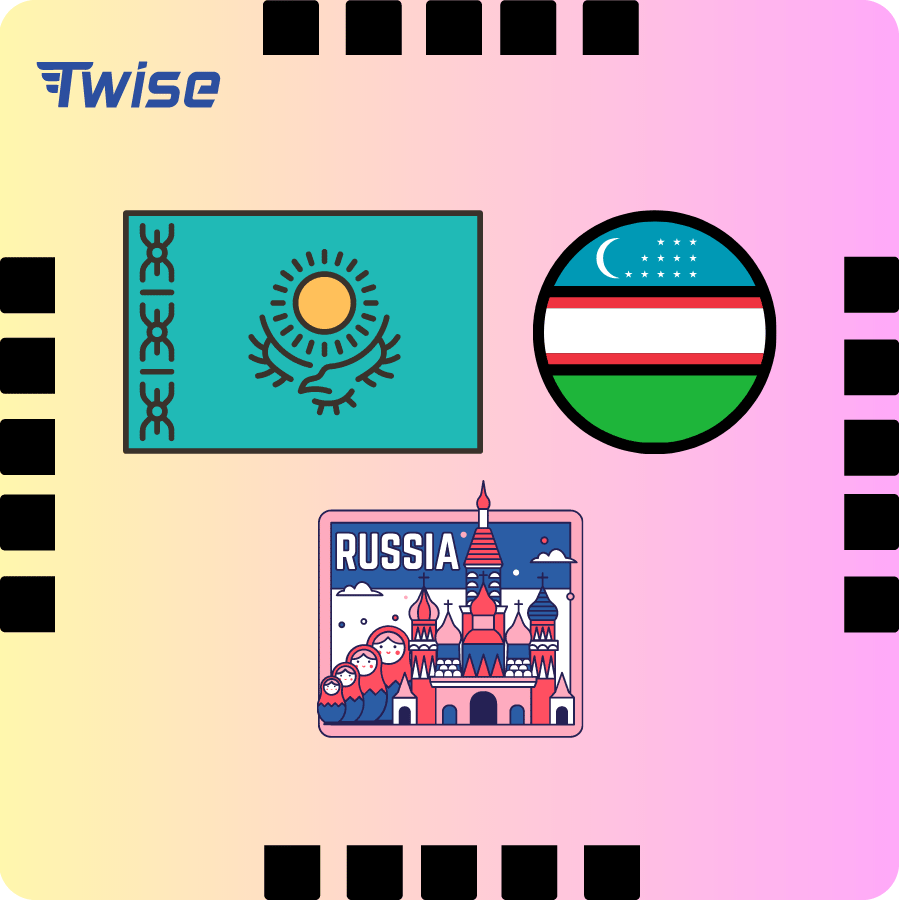
The Twise Russia-Uzbekistan-Kazakhstan Regional eSIM extends that coverage across three major nations, making it the natural choice for the classic “Stans Loop” itinerary that many travelers use to structure their Central Asian adventure.
The Beeline Power: Why It Is the Traveler’s First Choice in Uzbekistan
Mobile network quality in Uzbekistan has improved dramatically over the past decade, but the landscape for international visitors remains uneven. Several operators compete for the domestic market, but when the criteria is specifically optimized for travelers — consistent 4G LTE, reliable international data peering, and stable performance outside major cities — Beeline stands apart from the field.
Beeline Uzbekistan is part of VEON, one of the world’s largest telecommunications groups with operations across nine countries in the CIS and beyond. This is not an incidental detail. It means that Beeline’s infrastructure in Uzbekistan is built and maintained to standards set by a global operator with the resources and technical expertise to match. The network’s performance in Uzbekistan reflects that investment in a way that smaller domestic-only operators simply cannot match.
Read more:
Travel Data Guide: How to Calculate What You’ll Need
City Coverage: Where the Monuments Are
Uzbekistan’s UNESCO-listed cities — Tashkent, Samarkand, Bukhara, and Khiva — concentrate both the country’s tourism and its best cellular infrastructure. In all four cities, Beeline delivers fast, consistent 4G LTE that handles everything the modern traveler demands: Google Maps navigation through medinas too narrow for any printed map to capture adequately, real-time translation of Uzbek and Russian signage, seamless video calls home, and the steady stream of uploads that documents a journey of this magnitude properly.
Tashkent in particular — a city that surprises most visitors with its scale, its Soviet-era grandeur, and its rapidly modernizing neighborhoods — has network coverage dense enough that you will rarely notice a signal gap regardless of which district you are exploring.
On the Move: The Afrosiyob Train Corridor
One of Uzbekistan’s great infrastructure achievements is the Afrosiyob high-speed train, which connects Tashkent, Samarkand, and Bukhara at speeds reaching 250 km/h. For travelers, this means that the three headline cities of any Uzbekistan itinerary are linked by a journey that is fast, comfortable, and scenically interesting. It also means that you will want your data working throughout, whether for navigation at the other end, passing the journey with podcasts, or staying on top of work messages.
Beeline’s signal consistency along this corridor is notably strong. The train passes through regions where smaller operators experience gaps, but Beeline’s cell tower investment along the main intercity routes means your connection holds through most of the journey. For a traveler using Twise on Beeline, the three-hour Tashkent-to-Bukhara journey does not need to be a connectivity blackout — it is simply part of the trip.
Desert and Rural Coverage
Beyond the cities, Uzbekistan presents a more challenging environment for any mobile network. The road to Khiva crosses flat, arid steppe. The Nuratau Mountains offer trekking routes far from any urban center. The Aral Sea’s ghost towns sit at the edge of the navigable world. Beeline’s rural coverage is not universal — no network’s is in terrain this sparse — but it is consistently the most extensive of any Uzbekistan operator, which means that when signal is available outside the cities, it is most likely to be Beeline’s. For GPS navigation, offline map pre-loading at your guesthouse, and staying connected during long overland stages, this matters.
The Regional Strategy: Why a 3-Country eSIM Makes Sense
Read more:
How to check Roaming Data Consumption on iPhone and Android
The “Stans” Loop
Uzbekistan is rarely the only destination on a Central Asian itinerary. The classic regional route — variously called the Silk Road circuit or the Stans Loop — typically combines Uzbekistan with Kazakhstan and often includes a transit through Russian hub airports. Almaty and Nur-Sultan (Astana) pair naturally with the Uzbek cities for travelers with two to three weeks in the region. Tashkent’s airport is one of Central Asia’s busiest international hubs, meaning many visitors to neighboring countries pass through it regardless of their primary destination.
The Twise Russia-Uzbekistan-Kazakhstan Regional eSIM is built specifically for this travel pattern. A single QR code, activated once, covers all three countries under a single data plan with no additional roaming charges and no manual network switching. When you board the overnight train from Tashkent to Shymkent and cross the Kazakh border in the small hours, your data does not go offline — it transitions to the Beeline Kazakhstan network (also part of VEON, ensuring a clean handoff) and keeps working exactly as before.
Transit Hubs and Layovers
Russia features heavily in the transit routes connecting Central Asia to Europe, East Asia, and beyond. Moscow Sheremetyevo and Domodedovo are common layover points for travelers routing between Uzbekistan and Western Europe. A regional plan that keeps your data alive through a Moscow layover — for navigation, translation, and finding your connecting gate — is worth the marginal cost difference over a single-country plan every time. One plan covers your entire routing without a moment of connectivity gap.
Daily Data vs. Fixed Data: Choosing the Right Plan Structure
Twise offers two structurally different plan types for Uzbekistan, and the distinction matters more here than in many destinations. Uzbekistan’s daily rhythm — intense sightseeing days in the historic cities interspersed with long, relatively passive overland transit legs — creates a specific usage pattern that rewards choosing the right plan type from the outset.
Option A: The Daily Data Plan — For the High-Frequency User
The Daily Data plan allocates a fixed amount of high-speed data (typically 1GB or 2GB) that resets every 24 hours for the life of your plan. Once today’s allocation is used, speed is reduced until midnight resets the clock.
This structure suits a particular type of Uzbekistan traveler extremely well. Content creators and social storytellers — the kind of traveler who is uploading high-resolution Reels of the Registan at golden hour, posting Stories from inside the Shah-i-Zinda necropolis, and maintaining a steady flow of content throughout the trip — benefit enormously from knowing that a fresh data allocation is waiting each morning regardless of what they used the day before. There is no slow creep toward a data cliff edge, no anxious monitoring of a dwindling fixed pool.
Digital nomads working remotely from Uzbekistan — a growing cohort, given the country’s improving infrastructure and genuinely competitive cost of living — will similarly appreciate the predictability. A guaranteed daily tethering budget for video calls and cloud work means that the rhythm of a working day is stable from Tashkent to Bukhara, regardless of how much was used the previous day.
The core psychological benefit of the Daily plan is straightforward: you cannot run out of data for the whole trip on Day 2. No matter what happens today, tomorrow morning you start fresh.
Option B: The Fixed Data Plan — For the Strategic Explorer
The Fixed Data plan offers a total data pool — commonly 10GB or 20GB — valid across a 30-day period with no daily cap. You draw on that pool at whatever rate your day demands, and carry the remainder forward until the plan expires or the pool empties.
For the typical independent traveler in Uzbekistan, this structure maps naturally onto the reality of the trip. A day of intensive sightseeing in Bukhara — where you are navigating unfamiliar streets, translating inscriptions, looking up historical context, and calling rides across town — might consume 1.5GB. A slow afternoon in a Khiva guesthouse courtyard, reading and chatting over tea, might consume 50MB. A long train journey where you pre-downloaded your maps and entertainment before boarding might consume almost nothing. A Fixed Data plan absorbs these fluctuations without penalty, letting you use what you need when you need it.
Fixed plans also tend to offer better value per gigabyte for travelers who manage their usage sensibly — connecting to hotel and guesthouse Wi-Fi for heavy downloads and video streaming, and reserving mobile data for the navigation, communication, and on-the-go tasks where cellular connectivity is genuinely irreplaceable. For a budget-conscious backpacker working their way through a month in Central Asia, a well-sized fixed plan combined with thoughtful Wi-Fi habits is typically the most economical approach available.
Technical Peace of Mind: Surviving and Thriving in Uzbekistan
The Data Roaming Toggle
The single most important setup step for any international eSIM user: before you expect data to work, confirm that Data Roaming is switched ON in your phone’s eSIM or cellular settings. This is the instruction that tells your phone to seek and authenticate with local networks abroad rather than restricting itself to your home operator’s coverage. Without it enabled, your Twise eSIM will be installed and functional but completely silent. It takes seconds to check and is the cause of the overwhelming majority of “my eSIM isn’t working” moments that travelers experience.
The Essential App Stack for Uzbekistan
Yandex Go: If WhatsApp is Uruguay’s connective tissue, then Yandex Go is Uzbekistan’s. This ride-hailing platform — part of the broader Yandex ecosystem dominant across the former Soviet Union — is the default way to move around Tashkent and the other major cities. It is more reliable than flagging down street taxis, far cheaper for visitors unfamiliar with local pricing norms, and GPS-dependent in a way that requires a stable data connection. Beeline’s low-latency signal ensures that the app’s location tracking is accurate, your driver finds you where you actually are, and the fare calculation reflects the real route rather than a GPS-confused approximation.
Telegram: Uzbekistan runs on Telegram in a way that goes beyond social messaging. Guesthouses send check-in instructions via Telegram. Tour guides share itinerary updates there. Local transport operators coordinate group movements through Telegram channels. Having it active and connected throughout your trip is not optional — it is how Uzbekistan communicates with visitors. The Twise eSIM keeps your Telegram connected to your home number via the dual-SIM setup, meaning every guesthouse host who has your number can still reach you in the app without any reconfiguration.
Google Translate: Uzbekistan uses two scripts in everyday life — Uzbek (increasingly written in the Latin alphabet, but Cyrillic still common on older signage) and Russian (widespread in Tashkent and common as a lingua franca throughout the country). Google Translate’s camera feature, which translates text in real time through your phone’s camera, is one of the most practically useful tools available to a traveler who speaks neither language. It requires a live data connection to function at full accuracy, and it earns its keep dozens of times per day in Uzbekistan.
Dual-SIM Safety Net: Because the Twise eSIM handles all data independently, your physical home SIM can remain active in your phone’s second SIM slot for voice calls and SMS. This matters most for the OTP (one-time password) messages that banks, payment apps, and various online services send to your home number for authentication. Keeping your home number reachable for those messages — while routing all data through Twise — gives you the security of your familiar number and the performance of a premium local data connection simultaneously.
The IMEI Registration Question
A word on one of Uzbekistan’s more discussed connectivity quirks: the IMEI registration requirement. Uzbekistan has periodically enforced rules requiring foreign visitors on extended stays to register their phone’s hardware identifier with the government to use local SIM cards. The specifics of enforcement have varied over time and by operator, but the requirement creates friction — both bureaucratic and personal data-related — that many travelers reasonably want to avoid. The Twise eSIM sidesteps this issue entirely: it is an international roaming product that connects you to local networks without the same registration pathway as a domestically issued physical SIM. The activation is managed through Twise’s own platform, entirely in English, without any interaction with local government registration systems.
Decision Matrix: Which Plan Is Right for Your Uzbekistan Trip?
| Traveler Type | Recommended Plan | Key Reason |
| Content Creator / Instagrammer | Daily Data (2GB/Day) | Guaranteed high-speed uploads every single day, regardless of previous usage. |
| Regional Explorer (Stans Loop) | Russia / UZ / KZ Regional | Seamless coverage from Tashkent to Almaty to Moscow on a single plan. |
| Budget Backpacker / Long-Termer | Fixed Data (10GB or 20GB / 30 Days) | Best price-per-GB for travelers who manage Wi-Fi usage sensibly. |
| Digital Nomad | Daily Data | Predictable daily tethering budget for work calls and cloud tools. |
Choose Data for Your UzberkistanTrip
Uzbekistan rewards travelers who show up prepared. Its cities are dense with history, its people are genuinely hospitable, and its scale — the distances between Tashkent, Samarkand, Bukhara, and Khiva are not trivial — means that having reliable navigation, communication, and real-time information is not a luxury but a genuine practical necessity. The traveler who lands in Tashkent already connected, with Yandex Go loaded and Telegram linked to their guesthouse’s contact, starts their experience minutes ahead of the one still standing at the operator kiosk filling out forms.
With Beeline’s network providing the infrastructure and Twise’s flexible Daily and Fixed plan options giving you control over how you consume it, the connectivity side of a Silk Road journey becomes genuinely effortless. What remains is the actual experience: the geometric perfection of Samarkand’s Registan at dawn, the labyrinthine alleyways of Bukhara’s old city at dusk, the eerie vastness of the Kyzylkum Desert stretching away from a dust-coated road in every direction.
Uzbekistan is a land of hospitality, history, and — with the right eSIM — seamless digital freedom. Don’t let a connectivity gap interrupt a journey this extraordinary.
Heading into the Stans? Get your Twise Russia-Uzbekistan-Kazakhstan Regional eSIM now and step off the plane already connected to the Silk Road.

FAQs
Twise offers both daily and fixed-data options for Uzbekistan-compatible travel plans. Daily data can suit travelers with consistent high usage, while fixed data gives you one allowance to manage across the trip.
Yes, if you choose a Twise regional plan that includes Uzbekistan and your next destinations. Twise currently lists Central Asia regional options, so check the exact supported-country list before purchase rather than assuming every plan covers the same countries.
Uzbekistan has an IMEI registration system, but the rules differ between local SIM use and foreign-SIM roaming. UZIMEI currently states that non-residents using a foreign SIM while roaming are free of the registration fee, while devices connected with local operator SIMs must be registered within the required period.
Install it over stable Wi-Fi before departure and follow the instructions supplied with your plan. Twise sends eligible eSIM activation details digitally by QR code, allowing you to prepare the profile before your trip.