Tiếng Việt
A World eSIM can provide mobile data across several countries through one digital profile, but no plan covers every destination or guarantees continuous service. The best option is the one that includes your complete itinerary, provides enough data for your travel behavior, and has activation rules that match your schedule.
Mobile data on a multi-country trip does real work: arrival transport, airport transfers, maps and translation, hotel and tour messages, digital boarding passes, cross-border rail and bus journeys, payment and account verification, and remote work between stops. A World eSIM is the layer that keeps those moments running without a SIM-shop stop at every border.
Compare Twise’s current World eSIM plans once you know what to check for below.

Global Multi-Country eSIM Landscape
Before comparing individual providers, it helps to know how this market is actually built. Global multi-country eSIM brands — Airalo, Holafly, Nomad, Twise, and others — don’t operate their own towers. They partner with tier-1 mobile network operators (MNOs) and MVNOs in each country, such as Vodafone, Orange, AT&T, or SoftBank, to route data through existing local infrastructure.
- Regional eSIMs cover a defined zone — Europe, Asia, or Latin America — using local carrier partnerships within that region.
- Global eSIMs span anywhere from roughly 80 to over 200 countries on a single profile.
- Unified balance models let some plans draw from one data or cash pool across countries instead of allocating separate data per country.
Almost all of these packages are data-only: no local phone number, no native SMS. That’s the standard structure across the category, not a Twise-specific limitation — worth knowing before you assume a global eSIM replaces your phone number entirely.
What Is a World eSIM?
A World eSIM is a digital mobile plan that provides data across multiple countries through one installed eSIM profile. Coverage, data limits, and network partners vary by plan, so travelers should confirm every destination and transit country before purchasing.
How a Global eSIM Connects to Local Networks
Twise, Airalo, Saily, and similar services don’t build mobile towers in each destination. They operate through agreements with local MNOs and roaming partners, which is why coverage quality can differ noticeably between countries on the same plan.
World eSIM, Global eSIM and International eSIM
These terms are used interchangeably across the industry, but the underlying country list and product structure still vary by provider. Always check the specific coverage list, not just the label.
What a World eSIM Usually Includes
- A shared or per-country data allowance
- A defined validity period
- Access to partner networks in each supported country
What It Usually Does Not Include
- A local phone number
- Regular voice calls or native SMS
- Guaranteed 5G in every location
- Uninterrupted coverage in remote areas
Does One World eSIM Really Cover Your Entire Trip?
Check Destinations, Transit Airports and Territories
Before buying, list every country on your route — including layovers and short land crossings. A plan can look comprehensive and still miss a transit stop.
Why the Total Country Count Can Be Misleading
A “70 countries” or “130 countries” headline doesn’t tell you whether specific islands, overseas territories, or non-contiguous regions are included. Some plans treat a territory separately from its parent country.
What Happens When One Destination Is Missing?
Add a country-specific eSIM, a regional plan, or fall back to home roaming for that single leg rather than assuming the global plan quietly extends coverage.
How World eSIM Plans Work Across Borders

Automatic Network Registration
After landing or crossing a land border, the eSIM typically registers with an available partner network automatically — no manual carrier selection needed in most cases.
Why Reconnection May Take Time
Registration can take a few minutes. If it stalls, toggling Airplane Mode or restarting the phone usually resolves it.
Can the eSIM Use Every Local Network?
No — only the networks the provider has a roaming agreement with in that country. Manual network selection is possible on some devices but limited to that list.
Does the Plan Guarantee 5G?
Treat 4G as the realistic baseline. 5G access depends on the destination, the partner network, and your device — it’s a bonus, not a guarantee.
World eSIM Plan Types Compared
| Plan Model | Best For | Main Limitation |
| Fixed-data global plan | Predictable short or medium trips | Data can run out |
| Daily-data plan | Consistent daily navigation and messaging | Unused daily data may not carry over |
| Unlimited-style plan | Heavy phone-data use | Fair-use and hotspot restrictions |
| Long-validity balance | Frequent trips across several months | Higher upfront cost |
| Monthly subscription | Regular international travel | Recurring payment |
| Regional plan combination | Concentrated travel within a few regions | Requires more than one plan |
Fixed Data Versus Daily Data
Fixed pools suit variable daily usage; daily plans suit predictable routines like maps and messaging, but unused data typically resets rather than accumulating.
Unlimited Data and Fair-Use Policies
“Unlimited” almost always includes a fair-use cap or speed reduction after a threshold — check the fine print, not just the label.
Long-Validity Plans for Frequent Flyers
Useful if you travel internationally several times a year, since the plan stays usable across multiple trips instead of expiring after one.
Global Subscription Versus Prepaid Package
Subscriptions suit frequent travelers who want continuity; prepaid packages suit occasional trips where a recurring charge isn’t worth it.
Best World eSIM Providers Compared
| Provider | Global Coverage | Data Model | Calls/SMS | Top-Up | Best For |
| Twise TRUE | 98 countries (See current country list) | Fixed data amount | Data-only | No | Multi-country prepaid use |
| Twise Orange | 195+ countries (See current country list) | Fixed data amount | Supported | No | Broad global itineraries |
| Airalo Discover | ~130 countries | Fixed and other options | Available on selected plans | Yes | Travelers needing voice options |
| Saily Global | 121 destinations | Fixed, unlimited-style, long validity | Optional US number service | Yes | App management and security tools |
| Holafly Global | 121 countries | Unlimited-style | Data-focused | Extension available | Heavy phone-data users |
| Nomad Global-EX | 54 or 82 countries | Long-validity fixed data | Data-only | Add-ons available | Frequent trips over 180–365 days |
Coverage lists and pricing change often — confirm current figures directly on each provider’s page before deciding. Airalo, Saily, Holafly, and Nomad use materially different coverage and plan structures, which is why no single option is the unconditional winner across every trip type.
- Best for short multi-country trips: a fixed-data global plan matched to your exact route
- Best for frequent travel across one year: a long-validity or subscription model
- Best for heavy mobile data: an unlimited-style plan with hotspot allowed
- Best when calls or SMS are needed: a provider offering an optional local number
- Best for hotspot and laptop use: a fixed-data plan without daily hotspot caps
Which Twise World eSIM Fits Your Itinerary?
Twise TRUE World eSIM

Check before buying: the exact supported destination list, data and validity options, whether it’s daily or fixed data, the speed after the allowance is used, hotspot availability, the installation deadline, the activation timezone, and renewal rules.
Twise Orange World eSIM

The same checklist applies here, so you can compare the TRUE and Orange options directly against your specific route and data habits rather than picking by brand name alone.
When Neither Twise World Plan Is the Right Fit
If your trip stays within one region, a regional eSIM often gives more data per dollar. If you need a local number or a long-term stay in one country, a country-specific or local eSIM is the better fit.
Before-Purchase Checklist
- Every country and transit airport on your route is confirmed as covered
- Data model (daily vs. fixed) matches your usage pattern
- Hotspot is included if you plan to share the connection
- Validity window covers your actual travel dates
- You know the post-allowance speed, not just the headline data amount
How Much Global Data Do You Need?
| Travel Behavior | Suggested Starting Point |
| Maps, messages and boarding passes | 1–3GB per week |
| Navigation, browsing and social media | 5–10GB per week |
| Regular photo and video uploads | 10–20GB per week |
| Remote work and occasional hotspot | 20GB+ |
| Frequent streaming or video meetings | Large fixed or unlimited-style plan |
Data Use During Airport and Transport Days
Travel days often spike data use — maps running continuously, ride-hailing apps, and messaging add up faster than a normal day at a destination.
Data for Remote Work and Hotspot Sharing
Video calls and hotspot sharing to a laptop consume noticeably more than phone-only browsing — size the plan around your heaviest day, not your average one.
How to Reduce Background Data
Turning off automatic app updates and background refresh, and downloading maps offline, meaningfully stretches a limited data pool.
Real-World World eSIM Scenarios
A three-week Europe–Asia–Australia trip: check each country plus every transit airport individually — a plan can cover the main destinations while missing a short layover country.
A frequent business traveler taking six trips a year: a long-validity plan can work out cheaper than repeatedly buying short prepaid packages, if the total spend is compared honestly.
A digital nomad moving between regions: plan around top-ups, hotspot needs, video calls, and the reality that most of these plans don’t include a local number.
A cruise or island-hopping itinerary: cellular service depends on proximity to terrestrial networks and doesn’t provide continuous coverage at sea.
A remote safari, hiking trip, or road trip: offline maps and a local emergency plan remain necessary — no eSIM guarantees signal in low-infrastructure areas.
How to Install a World eSIM Before Departure
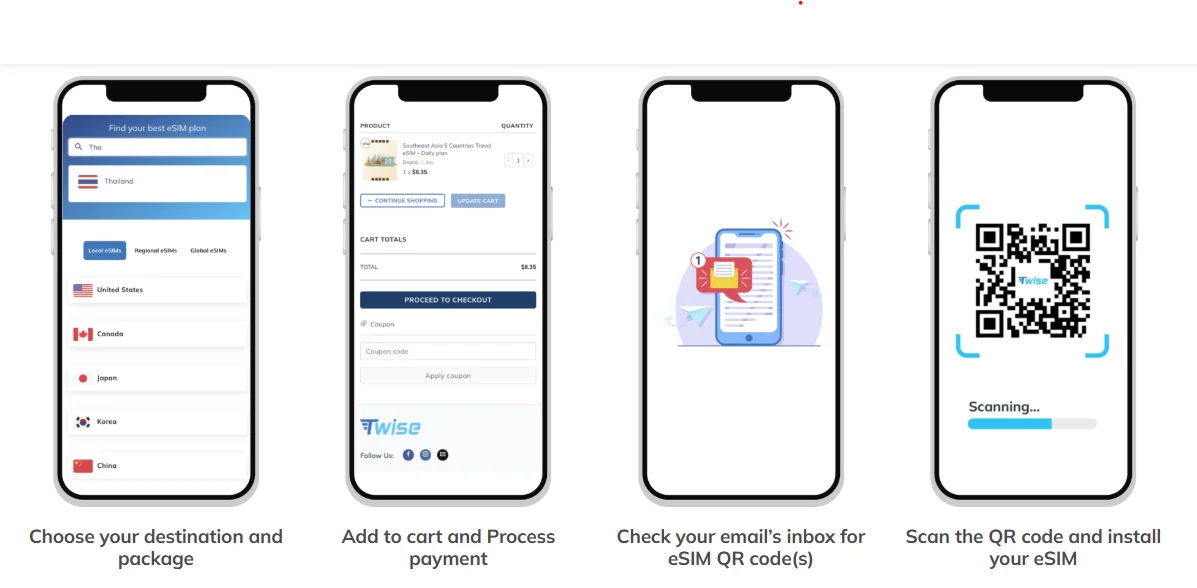
- Confirm device compatibility and carrier unlock status.
- Install the profile over reliable home Wi-Fi, not travel-day airport Wi-Fi.
- Label the travel eSIM clearly in your phone’s settings so it’s easy to identify later.
- Keep the line off until the correct activation time.
- Configure data roaming on arrival.
Recommended setup: World eSIM selected for mobile data, data roaming on for the World eSIM, data roaming off for the home SIM, cellular-data switching turned off, and the home SIM left active only for calls or verification texts.
What to Do When the World eSIM Does Not Connect
Immediately After Landing
Confirm the line is enabled, confirm it’s selected for mobile data, enable data roaming, wait a few minutes for registration, toggle Airplane Mode, then restart the phone if needed.
After Crossing a Border
Give the device time to re-register with a new partner network; manual network selection is sometimes required.
When Data Works but Is Slow
Check the signal type shown (4G vs. 5G), local network congestion, remaining data allowance, and whether you’ve hit a fair-use throttling point.
Before Deleting the eSIM
Many QR codes are single-use. Deleting the profile to “start over” can make recovery harder than working through the steps above first.
World eSIM vs Regional eSIM, Local SIM and Roaming
| Option | Best For | Main Advantage | Main Limitation |
| World eSIM | Several countries across regions | One profile, broad coverage | Higher price per GB in some markets |
| Regional eSIM | Multiple countries in one region | Better regional value | Another plan needed outside the region |
| Country eSIM | One main destination | Often more data for the price | Stops at the border |
| Local SIM/eSIM | Long stays and local calls | Local number and domestic service | Registration and store friction |
| Home roaming | Very short or occasional use | No installation | Potentially high fees |
| Pocket Wi-Fi | Groups and several devices | Shared connection | Separate device and battery |
Smart Backups for a Multi-Country Trip
- Offline maps downloaded for each destination
- Screenshots of accommodation addresses and confirmations
- Downloaded transport tickets, not just email links
- An authenticator app with saved recovery codes
- Known airport Wi-Fi login options as a fallback
- A power bank
- A second eSIM or home-roaming fallback for genuinely critical legs
- Confirmed communication arrangements with tour operators in low-signal areas

FAQs
No. Coverage is limited to the provider’s supported-country list and its roaming agreements — always check your specific route before buying.
Generally yes, registering with an available partner network after landing or crossing a border, though reconnection can take a few minutes.
Typically through your home SIM (if kept active) or an authenticator app, since most World eSIMs don’t carry SMS.
Often yes, though some unlimited-style plans restrict or throttle hotspot use — check the specific plan terms.
No — cellular data depends on proximity to terrestrial networks and doesn’t function continuously at sea or in the air.
More useful tips for your journey around the world:
Best Prepaid eSIMs for First-Time Travelers to the USA
Top 3 Value Southeast Asia eSIM | Unlimited Data 4G/5G
How Much Does a Travel Hotspot Cost? Pocket Wi-Fi vs Phone Hotspot vs eSIM