


eSIM for Mexico: Compare Top Travel Plans & Networks
May
Every year, millions of travelers land in Mexico City, Cancún, or Guadalajara and face the same first decision: find a local SIM card at the airport kiosk, deal with a form in Spanish, wait while a cashier manually configures a physical card, and hope the carrier’s network actually covers the resort town or ancient ruin they’re heading to. In 2025, that entire process is obsolete. The right eSIM for Mexico travel is installed before you board the plane, activates the moment you clear customs, and connects you to a network that was designed for international visitors — not the domestic prepaid market. This guide explains which network that is, why it matters, and how to make sure you’re on it.
Mexico’s Mobile Network Landscape: An Objective Comparison
Mexico’s mobile market is served by three major carriers, each with a different coverage strategy, technology investment profile, and relationship with international visitors. Understanding the landscape before you buy an eSIM for travel to Mexico is the difference between a plan that works in Tulum’s cenotes and one that drops signal between Mexico City and Oaxaca on the autopista.
The three carriers are not interchangeable products with different branding. They represent genuinely different infrastructure investments, frequency band profiles, and tourist-service orientations. Here is what each one actually delivers.
Telcel — The Legacy Provider
América Móvil subsidiary · Largest coverage footprint in Mexico
| Genuine strengths
Widest rural and remote area coverage Signal in very small towns and indigenous communities Most extensive highway corridor coverage Long-established infrastructure investment |
Tourist limitations
The “tourist tax” — prepaid plans priced significantly higher for short-stay visitors Requires in-person ID registration with a CURP or passport International device compatibility issues with some European and Asian phones Customer support available in Spanish only at most points of sale Legacy network architecture results in higher latency for international apps |
Telcel’s geographic coverage advantage is real and significant — if you are travelling to genuinely remote areas of Chiapas, Oaxaca’s Sierra Norte, or the Copper Canyon — places where no international carrier has built infrastructure. For the 95% of tourists whose itinerary centers on major cities, resort towns, and Yucatán destinations, Telcel’s rural reach is a feature they will never use, while its tourist pricing and registration friction are problems they encounter on day one.
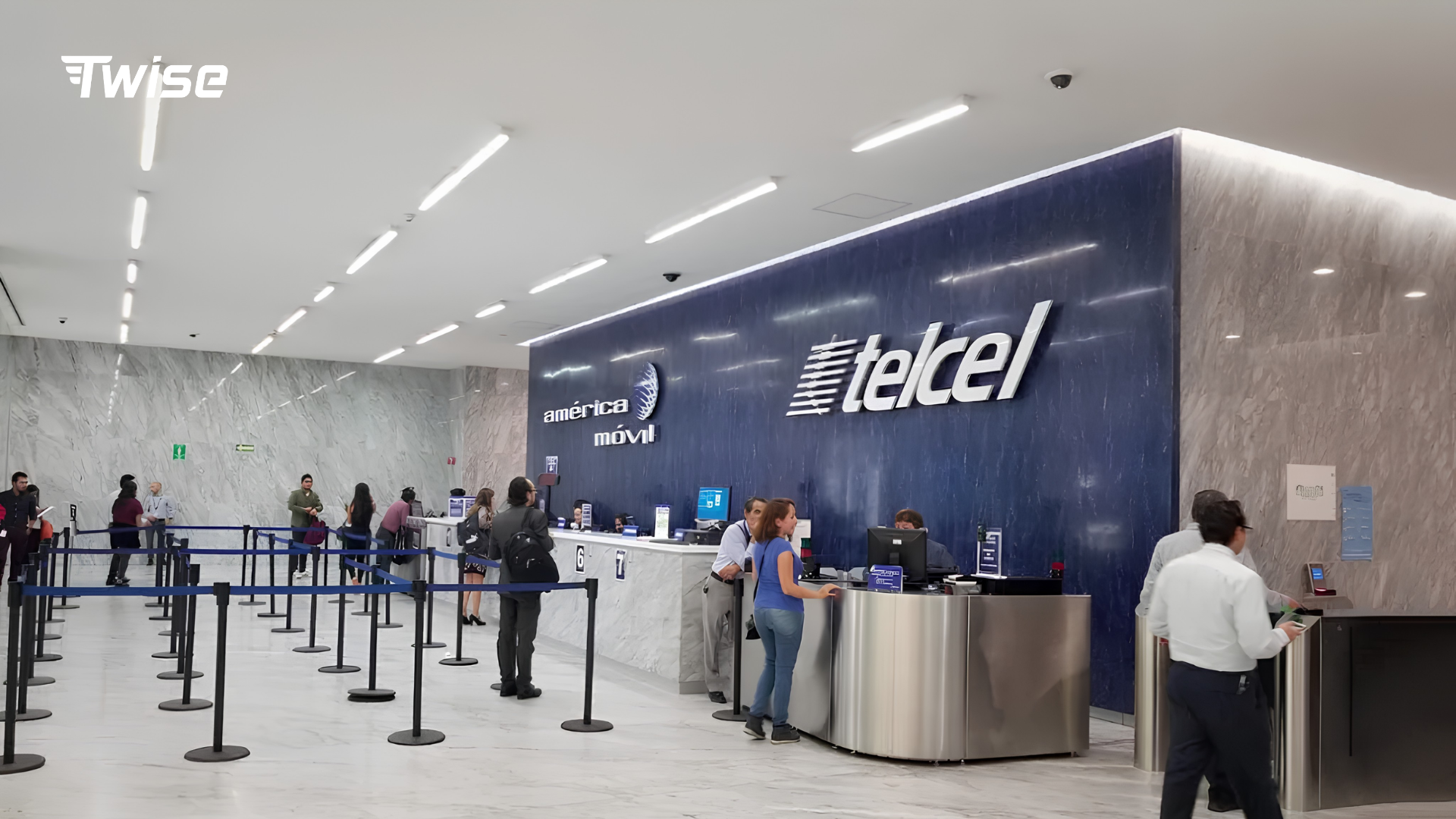
The Telcel registration reality: Purchasing a Telcel prepaid SIM as a foreign visitor requires a government-issued ID scan and, at many points of sale, a process that takes 15–30 minutes to complete in Spanish. Online registration for foreigners is not available. This is not a minor inconvenience — it is the first hour of your Mexico trip spent at an airport counter rather than in transit to your hotel.
Movistar — The Budget Carrier
Telefónica subsidiary · Competitive domestic pricing
| Genuine strengths
Competitive pricing for long-term local residents Adequate coverage in major urban centres Good indoor signal in Mexico City |
Tourist limitations
Significant signal gaps on intercity highway routes Minimal 5G availability in tourist zones Coverage thins substantially outside major cities International roaming and compatibility more limited than AT&T Requires in-store registration — no digital tourist option Support infrastructure oriented toward domestic long-term customers |
Movistar operates as a budget carrier optimized for the domestic prepaid market. Its pricing is competitive for Mexican residents on monthly plans — a demographic for which the in-store registration process is a one-time inconvenience rather than a vacation disruption. For international tourists, Movistar’s coverage thinning on highway corridors is particularly problematic: the Cancún–Tulum highway, the Guadalajara–Puerto Vallarta route, and the toll roads of the Bajío region all experience variable Movistar signal that can drop entirely in stretches.
AT&T Mexico — The Modern Gold Standard for Tourists
North American unified network · 4G LTE and 5G tourist infrastructure (Best for tourists)
| Genuine strengths
4G LTE and 5G in every major tourist destination Frequency bands (B2, B4, B5) compatible with US, European, and Asian devices Lower latency for international apps — Google Maps, Uber, WhatsApp Cross-border North American network architecture No in-person registration required for eSIM travelers Optimized routing for international traffic |
Tourist limitations
Less rural coverage than Telcel in very remote areas Smaller total geographic footprint than Telcel’s legacy network |
AT&T’s entry into the Mexican market — following its 2015 acquisition of Iusacell and Nextel México — fundamentally changed the competitive landscape for international travelers. Unlike Telcel and Movistar, which built their Mexican networks primarily for the domestic prepaid market, AT&T built its Mexican infrastructure as an extension of a unified North American network. The result is a carrier whose technical priorities align naturally with what international tourists actually need: device compatibility across all global phone types, fast and low-latency routing for the international apps tourists depend on, and 5G deployment concentrated specifically in the urban and resort areas where foreign visitors spend their time.
Why AT&T Is the Ultimate Choice for Your Mexico Trip
| Seamless High-Speed Connectivity
AT&T’s network is engineered for high bandwidth traffic from smartphones and international devices. GPS navigation, Instagram uploads, and work apps run without the latency spikes common on domestic-oriented networks under tourist load. |
Consistent 5G in Tourist Hubs
AT&T has deployed 5G specifically in Mexico’s highest-traffic tourist destinations — Cancún hotel zone, Mexico City’s Roma and Polanco districts, Playa del Carmen’s 5th Avenue corridor — rather than dispersing limited 5G budget across rural geography. |
| Global Device Compatibility
AT&T Mexico uses frequency bands (B2, B4, B5) that align with the baseband profiles of phones manufactured for the US, European, and Asian markets. Travelers with iPhones, Samsung Galaxy devices, or Google Pixels experience full 4G/5G without the band-mismatch “no signal” issues that affect Telcel and Movistar on some international devices. |
North American Network Performance
Because AT&T operates across the US, Canada, and Mexico as an integrated continental network, its routing for international internet traffic is significantly more optimized than carriers whose international gateway is an afterthought. Lower ping times for Google Maps, Uber México, and video calls is a measurable, practical difference. |
| eSIM USA Mexico Continuity
For travelers entering Mexico from the United States, an AT&T-backed eSIM provides the most seamless cross-border network transition available. The same AT&T infrastructure that serves US travelers at home extends into Mexican territory — making the eSIM USA Mexico use case the most natural application of AT&T’s continental footprint. |
Zero Registration Friction
An AT&T-backed eSIM from Twise requires no in-person visit, no Spanish-language forms, and no ID submission to a Mexican carrier’s database. Purchase online, receive a QR code by email, scan, and activate — entirely before departure. |
Twise: Your Gateway to Premium AT&T Connectivity in Mexico
Knowing that AT&T is the right network for a Mexico trip is one thing. The question is how to access that network through an eSIM product that was designed for international travelers rather than for domestic Mexican subscribers. Twise provides AT&T-backed Mexico eSIM plans specifically built for this use case.
The Twise Advantage
Twise leverages AT&T México’s infrastructure through an international roaming architecture — meaning your data routes through an international gateway rather than a locally-registered Mexican SIM profile. The practical result: you connect to AT&T’s tower network with the same signal quality as a domestic AT&T subscriber, while your data traffic behaves as international roaming. No CURP. No passport upload to a Mexican carrier database. No registration counter at Benito Juárez International Airport.
The entire purchase and activation process is digital. Buy online, receive a QR code by email, scan it with your phone’s eSIM settings, and the profile installs over your existing Wi-Fi connection. By the time your flight lands in Mexico, the eSIM is active and searching for AT&T towers before your seatbelt is unbuckled.
Two ways to access AT&T Mexico through Twise
| Option A
Local AT&T Mexico eSIM Fixed data pool for your trip duration Connects directly to AT&T México towers Best for travelers staying exclusively in Mexico Lower per-GB cost for longer stays 7-day, 15-day, and 30-day plan options |
Option B — Recommended for US Travelers
Roaming AT&T Mexico eSIM International roaming routing — no local SIM registration Seamless US→Mexico cross-border continuity Apps work without VPN or configuration changes Ideal for eSIM USA Mexico travelers entering from the US No in-country setup required at any point |
AT&T Coverage Across Mexico’s Top Tourist Destinations
AT&T’s coverage strategy in Mexico concentrates its 5G and high-density 4G investment in the destinations where international tourists actually spend their time. Here is how that plays out across the most common Mexico itineraries.
| Cancún Hotel Zone
★★★★★ AT&T 5G Full 5G coverage across the hotel strip, airport, and downtown. One of AT&T’s highest-priority 5G deployment zones in Mexico. |
Tulum
★★★★★ AT&T 4G/5G Strong 4G/5G in the town centre and beach road. Cenote sites in the jungle: signal varies but AT&T outperforms competitors at most tourist access points. |
| Playa del Carmen
★★★★★ AT&T 5G 5G on 5th Avenue and resort corridor. Consistent coverage on the ferry pier to Cozumel and along the Riviera Maya highway. |
Mexico City (CDMX)
★★★★★ AT&T 5G Comprehensive 5G across Roma, Condesa, Polanco, Centro Histórico, and the airport. One of the strongest AT&T urban deployments in Latin America. |
| Puerto Vallarta
★★★★★ AT&T 4G/5G Strong coverage in the Malecón area, hotel zone, and marina district. Mountain roads toward Sayulita: 4G with some variable patches. |
Oaxaca City
★★★★ AT&T 4G LTE Reliable 4G in the city centre and historic district. Highway toward Monte Albán and further rural Oaxacan villages: Telcel becomes more relevant here. |
| Los Cabos
★★★★★ AT&T 5G 5G across the resort corridor from San José del Cabo to Cabo San Lucas. Marina area and tourist zones fully covered. |
Guadalajara
★★★★★ AT&T 5G Full 5G in the city centre, Tlaquepaque, and Zapopan. Strong signal on the highway toward Tequila and Lake Chapala. |
Network Comparison at a Glance
| Feature | Telcel | Movistar | AT&T (via Twise) |
| Urban speed | High | Medium | Ultra-High / 5G Priority |
| 5G in tourist hubs | Limited | Minimal | Extensive in all major zones |
| Rural / remote coverage | Best — nationwide reach | Variable | Good in tourist corridors; less in deep rural |
| International device compatibility | Variable by device | Limited | Full — B2/B4/B5 global bands |
| Latency for international apps | Moderate | Higher | Low — North American routing |
| Tourist registration | In-person ID required | In-store only | Instant QR — no ID required |
| Tourist support | Spanish only, limited | Limited | Digital, English-language |
| eSIM availability for tourists | Not straightforward for foreigners | Limited | Fully digital via Twise |
| Best for | Remote rural trekking | Long-stay domestic residents | International tourists — all major destinations |
Pro Tips for Using Your eSIM in Mexico
- Enable data roaming before you land — this is non-negotiable
A Twise AT&T Mexico eSIM operates on international roaming protocols. Your device must have Data Roaming enabled to connect to AT&T México’s tower network. Go to Settings → Mobile Data / Cellular → Data Roaming and switch it on before your flight departs. Without this step, the eSIM installs correctly but your phone shows “No Service” at the airport. Enable it once — it stays active for the entire trip automatically.
- Manual network selection — how to lock onto AT&T for best performance
In areas where multiple networks overlap (common in large cities), your device may occasionally latch onto a weaker carrier. To manually select AT&T México: go to Settings → Mobile Data → Network Selection → Manual, then choose “AT&T” from the list. This locks your device to AT&T towers and prevents automatic switching to a slower network. Revert to automatic selection when leaving urban areas to ensure the eSIM finds the best available signal in transit zones.
- Keep your home SIM active for bank OTPs and 2FA
Most modern phones support dual SIM — a physical home SIM and the Twise eSIM running simultaneously. Keep your home SIM active in the physical tray while using the Twise eSIM for data. This means your home number receives banking SMS verification codes, WhatsApp continues on your existing number, and family can reach you on your regular number — while AT&T Mexico provides all your data traffic.
- Install the eSIM at home — not at the airport or in Mexico
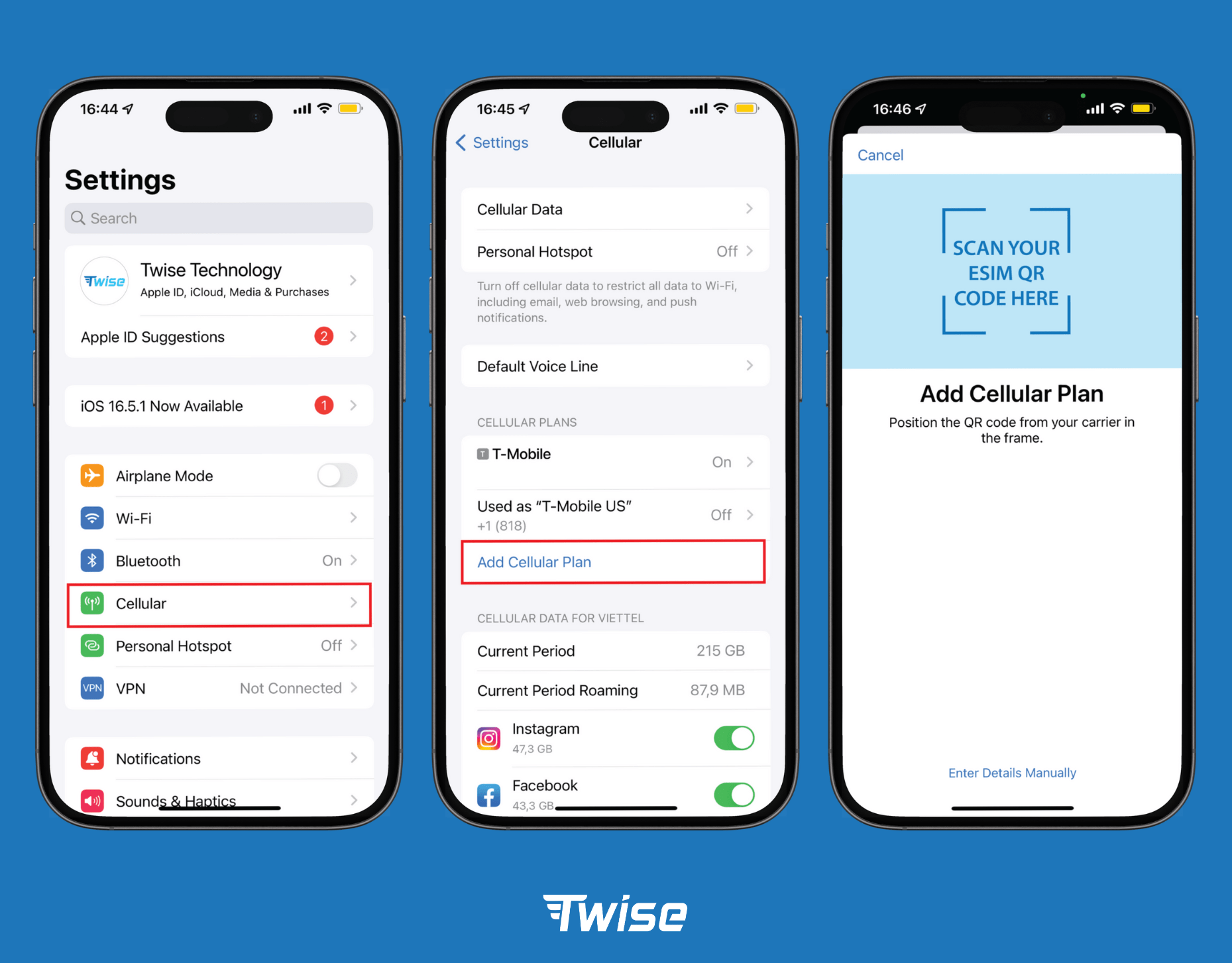
eSIM profile installation requires an internet connection. Install the QR code at home or at your departure airport over Wi-Fi — ideally the day before your flight. Once installed, the eSIM activates automatically when your phone detects AT&T towers in Mexico. No app download, no configuration at the destination. The profile is stored on your device and activates passively when you land.
- Monitor usage via your phone’s built-in data tracker
Track how much of your data plan you’ve used through your phone’s native settings: Settings → Mobile Data → Current Period (iOS) or Settings → Network & Internet → Data Usage (Android). Set a data usage warning at 80% of your plan limit to avoid surprises. For heavy users, downloading Google Maps regions for offline navigation before arrival is a reliable way to extend your effective high-speed data budget throughout the trip.
- Download Uber and DiDi before departure — not in Mexico
Uber operates in most major Mexican cities, and DiDi has become a strong alternative particularly in Cancún, Mérida, and Mexico City. Setting up both apps — account creation, payment method, and location access — over home Wi-Fi before your flight ensures they work immediately on arrival. With AT&T’s low-latency routing, both apps perform significantly better in Mexico than on local carrier connections.
Final Verdict: The Best eSIM for Mexico Travel
Mexico’s three major carriers serve different traveler profiles — and understanding which profile you represent is the fastest way to make the right choice. Telcel’s rural reach is a genuine advantage for travelers going off the well-worn tourist path into remote Mexico. Movistar serves domestic residents who have time to register at a local store and know the prepaid market well. For international tourists — and for the overwhelming majority of Mexico travel itineraries that center on cities, resorts, and the most popular archaeological and coastal destinations — AT&T México is the clear answer.
The combination of 5G in every major tourist hub, frequency bands that work natively with all global phone types, North American routing architecture that keeps Google Maps and Uber running at low latency, and a digital activation process that requires no in-person registration or Spanish-language forms makes AT&T the only carrier in Mexico whose design priorities actually align with what international tourists need.
Accessed through Twise’s AT&T Mexico eSIM, that network is available before you board your flight, active before you clear customs, and running without any airport queue, any ID submission, or any configuration on arrival. The SIM card kiosk at Mexico City’s Terminal 1 is a line you no longer need to join.
The pre-departure checklist for Mexico eSIM travelers: (1) Install the Twise eSIM QR code on home Wi-Fi at least 24 hours before departure. (2) Enable Data Roaming in your phone settings. (3) Keep your home physical SIM active for calls and 2FA. (4) Download Uber, DiDi, and offline Google Maps for your Mexican destinations. (5) Save the manual AT&T network selection path in your notes for urban use. That’s the complete setup — everything else is Mexico.

FAQs
More useful tips for your journey to Mexico
How to Save Mobile Data and Money: Complete Guide
Install eSIM on iPhone: A Step-by-Step Guide
