

Best Japan eSIMs in 2026: How to Get Them + Full Comparisons
Dec
Japan is experiencing rapid growth in digital connectivity, and eSIM adoption is reaching record levels as international travel continues to rebound. With millions of visitors expected in 2026, staying connected has become a fundamental part of travel planning rather than an optional convenience. In the context of Japan eSIM comparison, travelers increasingly look for solutions that offer reliable coverage, fast activation, and flexible data plans to support modern travel needs.
So the big question every traveler asks: How do Japan eSIMs actually compare in 2026? This complete Japan eSIM comparison guide breaks down the top providers, networks, pricing, coverage, and activation processes so you can pick the perfect plan.
1. What is an eSIM and Why It Matters for Japan
An eSIM (embedded SIM) is a digital SIM built directly into your smartphone, tablet, or smartwatch. Instead of inserting a physical SIM card, you install a mobile plan digitally by scanning a QR code.
Why eSIM is especially useful in Japan:
- Buy online before departure
- No store visit
- Works instantly on arrival
- No risk of losing your physical SIM
2. How eSIM Works in Japan
Japan’s mobile network ecosystem is known for exceptional reliability. eSIMs operate on the country’s top carriers:
- KDDI has the strongest early 5G adoption
- SoftBank offers fast 5G in urban areas
- Docomo has wide 4G and expanding 5G
Read more: Japan eSIM Speed Test 2026: Which Provider is the Fastest?
Data-Only vs. Voice eSIM Options
- Data-only eSIMs
Most popular for tourists. No extra registration or identity checks. - Voice + data eSIMs
Available but require stricter ID verification and are rarely needed by short-term visitors.
Almost all tourist-oriented eSIM providers partner with one (or several) of these networks. Most plans are data-only (no local Japanese phone number), which is perfect for travelers who use WhatsApp, LINE, iMessage, or FaceTime.
3. Japan eSIM Comparison: Key Factors to Evaluate
a. Coverage & Reliability
Japan is known for its strong mobile infrastructure, but network performance can vary depending on location.
- Cities: In major cities such as Tokyo, Osaka, Fukuoka, and Sapporo, all major networks generally deliver stable and high-speed connectivity.
- Countryside: However, in rural and countryside areas, Docomo tends to provide the most consistent coverage
- Mountainous areas: Docomo and KDDI perform particularly well in mountainous regions.
- Transit & Shinkansen lines: Along transit routes and Shinkansen lines, SoftBank and KDDI often offer excellent performance, making network selection an important factor in any Japan eSIM comparison.
b. Data Allowance & Speed
Network speed and data performance also differ across providers.
- KDDI is recognized for its early adoption of 5G technology and strong high-speed performance
- SoftBank delivers fast 5G connectivity in urban areas with dense infrastructure.
- Docomo, on the other hand, combines extensive 4G coverage with rapidly expanding 5G networks, offering a balanced option for travelers who prioritize coverage and stability.
c. Validity Options
Most eSIM providers in Japan offer flexible plan durations, typically ranging from 3, 5, and 7 days to longer options such as 15, 20, and 30 days or more.
Selecting a plan that matches your trip length helps avoid unnecessary costs or unexpected data shortages. In a Japan eSIM comparison, flexibility in validity periods is an important advantage, allowing travelers to tailor their plans to their itinerary and usage needs.
d. Pricing
Price is an important factor, but the cheapest option is not always the most effective.
When comparing eSIM plans, travelers should consider not only the total price but also the cost per gigabyte, potential speed limitations, hotspot availability, and whether the plan offers unlimited or fixed data.
e. Activation Process
There are two main activation styles:
- QR activation before departure
Scan the QR code → download eSIM profile → activate when you land - Auto-activation based on purchase time
Some eSIMs activate immediately after purchase (useful but risky if you buy too early)
Switching plans is easy: simply add another eSIM profile.
f. Customer Support & Issue Handling
During international travel, support quality matters:
- 24/7 support ensures help when activation issues arise
- Chat-based support is fastest
- Providers with multilingual agents are most convenient
4. Comparison Table: Top Japan eSIMs in 2026
Here is a simplified comparison of common price ranges among major providers. Pricing varies by season, but this gives a general overview of value.
| Provider | Network Used | Plan Type | Price Range | 5G Support | Customer support rating |
| Twise | KDDI, SoftBank, Docomo | Fixed GB, Daily plan,Unlimited 5G | Affordable | Yes | 9.9/10 (24/7) |
| Airalo | SoftBank, KDDI | Data-only plans
A free daily eSIM available |
Mid-Range | Yes | 8.8/10 |
| Holafly | KDDI | Data sharing
Customisable plans |
High | Yes | 9.0/10 |
| Nomad | KDDI, SoftBank | Data-only plans | Mid-Range | Yes | 8.9/10 |
| Ubigi | KDDI, NTT Docomo | Data-only plans | Mid-Range | Yes | 9.2/10 |
5. How and Where to Buy a Japan eSIM
a. Online Purchase Before Traveling
For most travelers, buying an eSIM online before departure is the most convenient option.
- It eliminates the need to queue at airport counters, enables immediate activation via QR code, and ensures guaranteed connectivity as soon as you land in Japan.
- Online platforms stand out for their simplicity, competitive pricing, and wide range of plan options.
Most travelers purchase eSIMs online due to convenience and lower pricing.
b. Buying at Airport Kiosks
Pros:
- Airport kiosks offer the advantage of direct, in-person support, which can be helpful for travelers unfamiliar with eSIM setup.
Cons:
- However, this option often comes with higher prices, long waiting times during peak travel periods, and limited plan choices.
c. Purchasing via Mobile Carrier Stores
Japan’s major mobile carriers, including KDDI, SoftBank, and Docomo, also provide eSIM services through physical stores.
These options typically require identity verification and involve more complex procedures, making them less convenient for short-term visitors.
6. Which Japan eSIM Is Best for Different Travelers?
Choosing the right eSIM depends on your travel style, data usage, and coverage needs. In a Japan eSIM comparison, different traveler profiles often require different priorities, from affordability and simplicity to speed, reliability, and nationwide coverage. Understanding these differences helps travelers select the most suitable eSIM plan for their journey.
a. Budget Travelers
These users typically look for easy activation and affordable data plans without unnecessary features.
Best Choice:
- Twise SoftBank daily plans
- Airalo Small Data Packages
b. Heavy Data Users
For heavy data users, high data limits and consistent speed are essential. Travelers who stream content, use cloud services, or rely heavily on navigation and communication apps benefit from unlimited or high-capacity plans.
Best Choice:
- KDDI 5G Unlimited via Twise
- Holafly: Only an acceptable choice if the user is aware of and okay with the likelihood of heavy speed caps and throttling after a few GB of use each day.
c. Business Travelers
For business travelers, reliability and performance are critical. High network uptime, premium 5G speeds, and responsive customer support are often decisive factors. Twise’s multilingual 24/7 customer support adds significant value, ensuring that professional travelers can stay connected without disruption.
d. Multi-City or Rural Travelers
Choose eSIMs based on coverage maps:
- Docomo-based eSIMs generally provide the most extensive nationwide coverage, particularly in rural areas.
- SoftBank offers strong performance in major cities
- KDDI delivers balanced coverage and speed across urban and suburban regions.
7. Phone Compatibility: Does Your Device Support eSIM in Japan?
Nowadays, most major smartphones support eSIM, including:
- iPhone XR and newer
- Samsung S20 and newer
- Google Pixel 4 and newer
- Most recent Huawei, Motorola, and OPPO models
If your device supports eSIM, you’re ready to install a Japan plan anytime.
How to Check eSIM Support
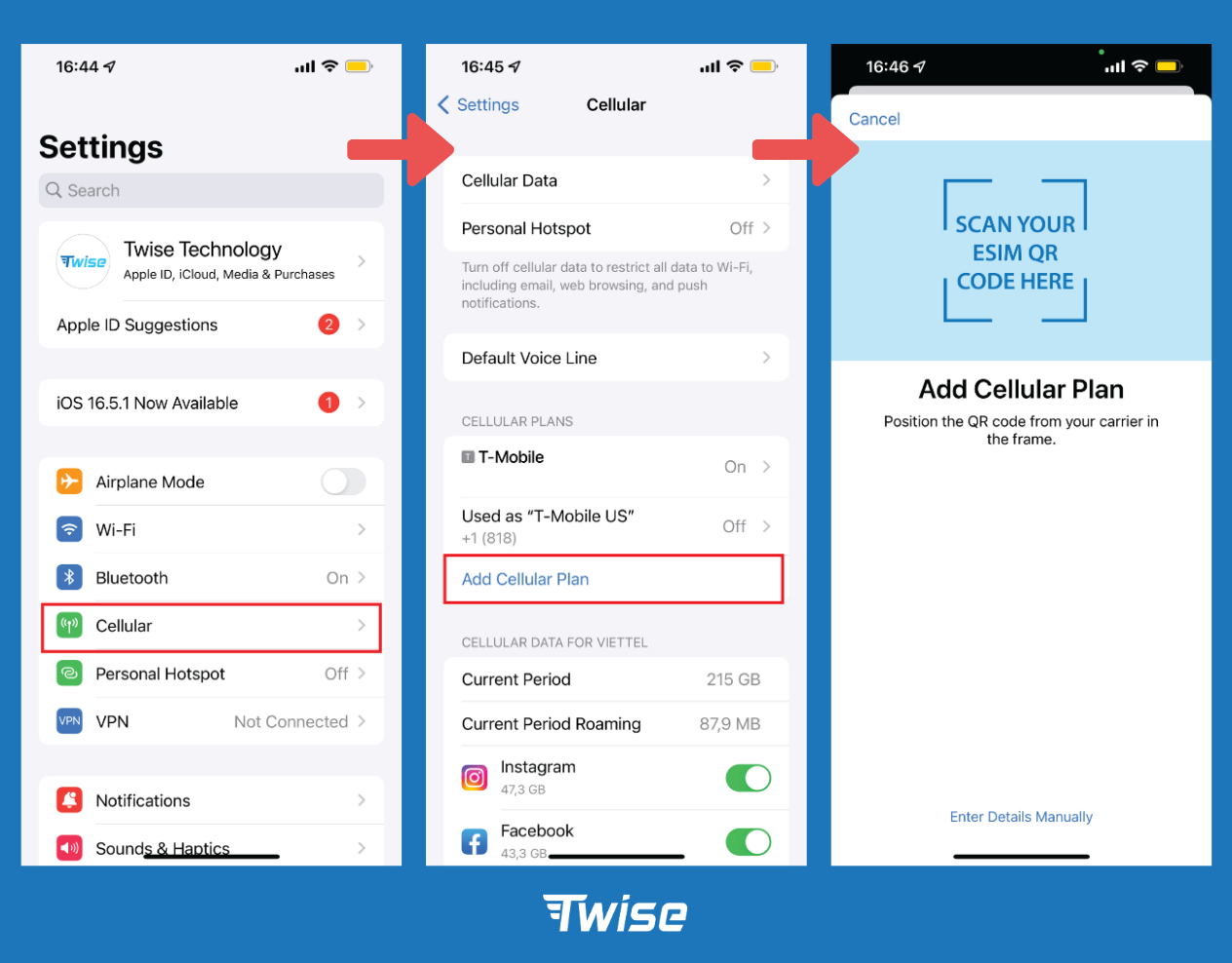
- Settings → Cellular → Add eSIM
Dual SIM Support
A significant benefit of the eSIM is its Dual SIM Dual Standby (DSDS) feature. This enables you to keep your physical SIM card from your home country active for receiving important verification messages or calls, while utilizing the Japan eSIM for all your data needs. This capability is crucial for travelers who wish to maintain access to their home phone number.
Conclusion
eSIMs represent the most efficient connectivity option for traveling in Japan in 2026. They provide enhanced pricing, quicker data speeds, and simpler activation compared to traditional roaming or pocket WiFi.
Your ideal eSIM depends on:
- Trip length
- Data usage needs
- Budget and coverage priorities
Whether you choose a fixed data plan, unlimited daily package, or premium unlimited 5G – understanding the differences ensures you pick the plan that truly fits your travel style.

Twise’s customer support is available 24/7 to assist you. You can contact them through the official channels below for immediate help:
- Facebook Fanpage: Twise
- Email: [email protected]
- WhatsApp: (+1) 818-915-0777
