

Top 3 Value Southeast Asia eSIM | Unlimited Data 4G/5G
May
The classic Southeast Asia itinerary is famously fluid. You wake up in Singapore’s Marina Bay, take the Causeway bus to Kuala Lumpur for two days, fly into Bangkok for a week, cross into Vietnam overland, and end up island-hopping in Bali with a slightly sunburned phone screen. The logistics of that kind of trip are genuinely complex — and the data connectivity piece used to be the most tedious part. Buying a local SIM in each country means five registration queues, five different data pools, five physical cards you will lose before Cambodia, and the very real possibility of arriving at a border with no connectivity at all because the previous card ran out two days ago.
The Southeast Asia eSIM unlimited data plan was built to make that problem disappear.
Market Insight: Network Quality Across Southeast Asia
Not all regional eSIM plans are equal — and the difference is almost entirely in which carrier networks underpin them. A regional eSIM that connects to secondary or budget carriers delivers mediocre performance regardless of how aggressively it’s priced. The following breakdown maps the Tier-1 carrier landscape across the five most-traveled countries in the region, which is the foundation for evaluating any unlimited data eSIM Southeast Asia plan worth buying.
Singapore (SG)Singtel / StarHub / SIMBA ★★★★★ 5G Everywhere The gold standard for Southeast Asian connectivity. Singapore’s urban density means 5G blanket coverage — including MRT stations, malls, and every tourist district. SIMBA offers high-data packages at disruptive prices without sacrificing speed. |
Thailand (TH)AIS / DTAC + TrueMove (merged) ★★★★★ 5G Tourist Islands The 2022–2023 DTAC-TrueMove merger created a combined tower network now reaching Koh Phi Phi, Koh Samui, and Andaman coast islands with 5G speeds previously unavailable on either carrier alone. |
Vietnam (VN)Viettel / Vinaphone ★★★★★ 4G Powerhouse Exceptional 4G/LTE infrastructure, especially notable for strong coverage in rural northern mountains — Sa Pa, Ha Giang — where travelers often expect poor signal but find reliable connectivity. Urban hubs like Hanoi and Ho Chi Minh City approach 5G saturation. |
Malaysia (MY)Maxis / Celcom ★★★★ Tier 1 Coverage Malaysia’s geography — dense rainforest, highlands, and a long peninsula — makes carrier selection genuinely critical. Celcom and Maxis lead on coverage in the Cameron Highlands, Borneo routes, and East Malaysia, where secondary carriers frequently drop. |
Indonesia (ID)Telkomsel ★★★★ Island Coverage Leader Indonesia’s 17,000 islands make carrier selection more consequential here than anywhere else in SEA. Telkomsel is the only carrier with meaningful infrastructure across Bali, Lombok, Flores, and the Gili Islands — where other networks frequently have no signal at all. |
The Tier-1 carrier test: Before purchasing any regional eSIM, check whether the product page specifies which carrier networks it connects to by country. A plan that says “works in Indonesia” without naming Telkomsel is almost certainly connecting to a secondary network with significantly weaker island coverage. The specific carrier name is the quality signal — not the country claim.
Decoding “Unlimited” Data: What Travelers Actually Need to Know
The word “unlimited” is the most overloaded term in the travel eSIM market. Two plans that both say “unlimited data” can deliver completely different experiences in practice — because what “unlimited” almost always means is “unlimited after a fair usage policy threshold that determines your actual high-speed allocation.”
Understanding Fair Usage Policy (FUP)
A Fair Usage Policy is a standard industry mechanism that allows carriers to deliver “unlimited” plans without congesting their networks with heavy users. In practical terms: your plan includes a defined amount of high-speed 4G/5G data per day or per plan period. Once you hit that threshold, your speed is reduced — typically to 384Kbps (roughly 3G browsing speed) — for the remainder of the day or period. The data itself doesn’t stop; the speed does.
For most tourists, the throttled speed is adequate for navigation and messaging. For travelers who stream video, make frequent video calls, or upload content in bulk, the high-speed threshold is the number that matters most — not the word “unlimited.”
| Daily Data
Daily Reset Plans High-speed data resets every 24 hours. If you exceed the daily threshold (e.g., 1GB or 2GB), speed drops until midnight, then resets. You never lose access entirely — the next day brings a fresh high-speed allocation. Best for: Social media creators, remote workers, video streamers, anyone who uses data intensively every day of their trip. |
Fixed / Total Data
Pooled Data Plans A fixed amount of high-speed data (e.g., 5GB, 10GB) shared across the entire plan duration. You control when and how you use it. Better for travelers who use data lightly some days and more heavily on others. Best for: Light-to-medium users, city travelers who rely on Wi-Fi, travelers on 7–15 day trips who just need maps and messaging without high daily usage. |
The practical rule of thumb: If your daily data need is primarily Google Maps navigation, WhatsApp messaging, and occasional Instagram browsing — a 1–2GB daily threshold is more than sufficient. If you are editing and uploading Reels, streaming Netflix on overnight buses, or video calling clients in multiple time zones — look for plans with 2GB+ daily allocation or a large total data pool.
Top 3 Southeast Asia eSIM Unlimited Data from Twise
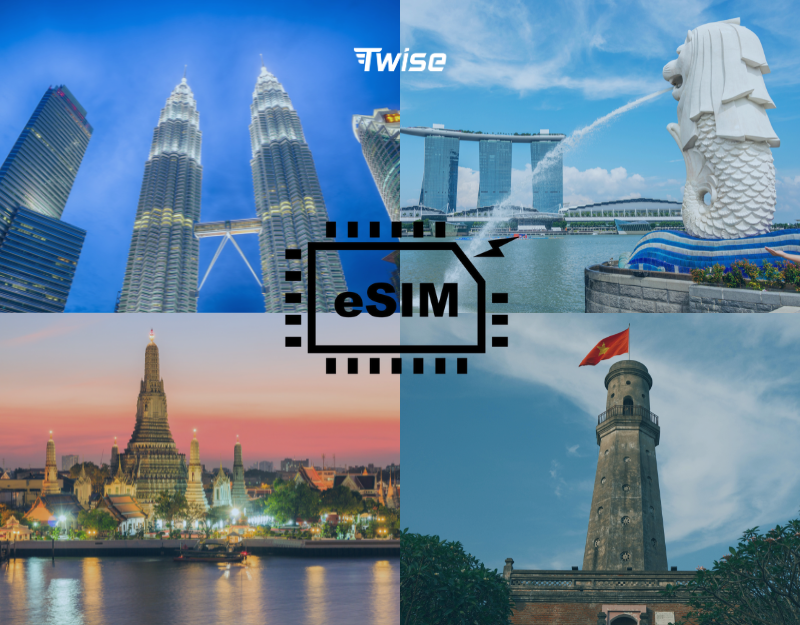
Option 1: The 5-Country Power Explorer
Vietnam · Thailand · Singapore · Malaysia · Indonesia
Most Popular for Multi-Country
Best for: Backpackers, digital nomads, and business travelers doing a multi-city Southeast Asia circuit across the region’s five most-traveled hubs.
Vietnam (VN) — Vinaphone
Network: Vinaphone (state-owned, 4G/LTE nationwide)
Known for the most stable high-speed 4G infrastructure in the country. Strong in urban Hanoi and Ho Chi Minh City, and notably reliable in the rural northern highlands — Sa Pa, Ha Giang, and the mountain roads where secondary carriers frequently fail travelers.
Thailand (TH) — TrueMove H / DTAC (merged)
Network: Combined DTAC + TrueMove tower infrastructure
Following the landmark 2022–2023 merger, DTAC and TrueMove users now access a combined tower network that covers the islands and coastal areas previously in DTAC’s weaker zones. Bangkok to Koh Phi Phi with consistent 5G/4G: the post-merger network delivers this reliably for the first time.
Singapore (SG) — SIMBA
Network: SIMBA (MVN on Singtel infrastructure)
SIMBA is the high-value disruptor in Singapore’s market — running on Singtel’s infrastructure (the country’s top network) while offering significantly higher data allocations at lower price points than legacy carriers. For data-heavy travelers who want 5G speeds in the city-state without paying premium carrier rates, SIMBA is the smart choice.
Malaysia (MY) — Celcom
Network: Celcom (Malaysia’s gold standard for coverage reach)
Whether you’re navigating Kuala Lumpur’s highway system, staying in the Cameron Highlands tea country, or crossing into East Malaysia for Borneo adventures, Celcom provides the most consistent coverage reach of any Malaysian carrier. In the highland roads and jungle routes where TM and Digi thin out, Celcom holds.
Indonesia (ID)— Telkomsel
Network: Telkomsel (absolute leader across the archipelago)
In a country of 17,000 islands spanning 5,000 kilometers, carrier choice is more consequential than anywhere else in SEA. Telkomsel is the only carrier with meaningful signal infrastructure across Bali’s beach clubs, Lombok’s surf breaks, Flores’ dive sites, and the Gili Islands — where competing carriers frequently have no service at all.
The daily reset advantage: The 5-Country plan operates on a daily data reset model, ensuring you always have a fresh high-speed allocation for navigation, Grab hailing, and messaging at the start of each day — regardless of how much you streamed on the bus the night before.
Read more: Best Thailand eSIM for Tourists | Top Networks
Option 2: The Causeway Corridor Specialist
Singapore + Malaysia
Best for 3–7 Day SG-MY Trips
Best for: Travelers doing the popular Singapore–Malaysia route by bus across the Johor-Singapore Causeway, short-haul business commuters, and anyone whose itinerary is focused on the two-country corridor rather than a broader SEA circuit.
Singapore (SG) — SIMBA on Singtel infrastructure
Full 5G coverage across the island including Changi Airport, Marina Bay, Sentosa, and the business district. Seamless handover as you approach the Causeway checkpoint.
Malaysia (MY) — Celcom
Strong coverage from the Causeway through Johor Bahru, along the North-South Expressway to KL, and into the Cameron Highlands and Penang — the most common extension to a Singapore-based itinerary.
Fixed data option — why it often makes more sense here: A 5GB or 10GB fixed data plan for a 3–5 day Singapore-Malaysia trip is frequently more cost-effective and transparent than an unlimited daily plan. Both countries have excellent Wi-Fi coverage in hotels, cafes, and shopping centres — meaning your cellular data budget goes further when you’re not relying on it exclusively. A fixed pool of 10GB across five days in two small, well-connected countries is generous for most travel use cases.
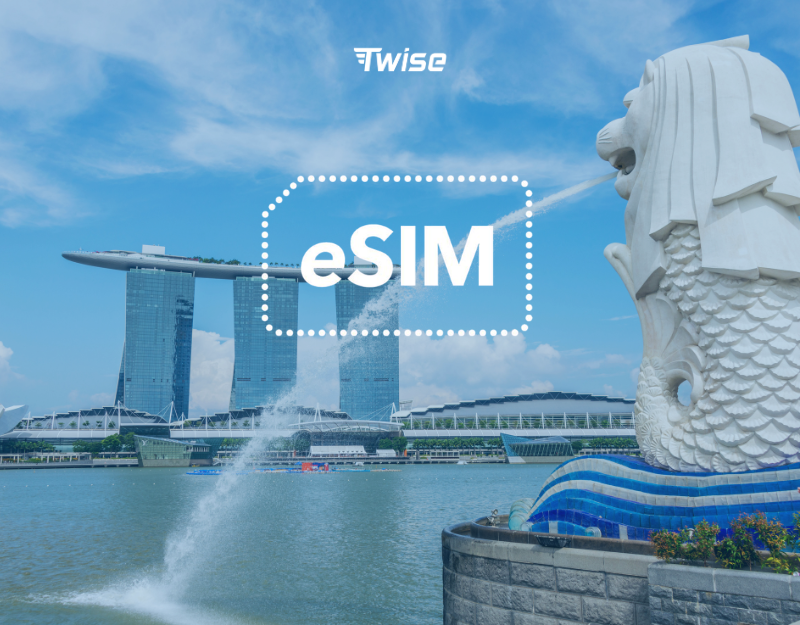
The Causeway crossing itself — whether by bus, car, or the cross-border rail service — takes you through one of the world’s busiest land border checkpoints. The eSIM auto-switches between Singapore and Malaysian tower networks as your device moves through immigration. No manual carrier selection, no roaming prompt — connectivity continues on the Johor side before you’ve collected your passport.
Option 3: Local SIM Cards — When the Traditional Route Still Wins
The Traditional Route
For Long Stays Only
Best for: Travelers spending 30+ days in a single country, digital nomads on long-stay visas, and anyone who needs a local phone number for domestic app registration or bank account setup.
A local SIM card remains the most cost-effective option for single-country extended stays. Monthly domestic plans from Telkomsel in Bali, Vinaphone in Vietnam, or AIS in Thailand can run as low as $10–20 for generous data allocations once you factor out the airport kiosk premium.
The tradeoffs are well-known: passport registration at a kiosk in each country, physical SIM management, the loss of your home number while the local SIM is active, and the logistical headache of topping up mid-trip in a language you may not speak. For a two-week multi-country loop, these tradeoffs make no sense. For a three-month solo stay in Chiang Mai, the economics shift clearly in the local SIM’s favour.
The registration reality: In several Southeast Asian countries — Thailand, Vietnam, Indonesia — local SIM registration requires a passport scan submitted to the carrier’s system. This is not a one-time, quick process at a kiosk. In Vietnam particularly, the registration process for foreign visitors has become more stringent, with online verification sometimes requiring follow-up documentation. For short-stay tourists, this overhead cost in time and privacy is rarely worth the savings over a regional eSIM.
Why Twise Multi-Country eSIMs Stand Out
The regional eSIM market has grown rapidly, and product quality varies enormously. Twise‘s approach to the Southeast Asia market has several structural advantages that distinguish it from generic aggregator offerings.
The Roaming IP Advantage: Because Twise eSIMs operate on international roaming protocols rather than locally-registered SIM profiles, your data traffic is routed through an international gateway. This has a practical benefit that goes beyond just coverage: your apps behave as if you’re connected to the open global internet from whichever country you’re physically in. In countries with any degree of content filtering or throttled foreign services, a roaming IP provides a consistently clean connection to the apps and services you rely on.
It also means there is no local registration process. Your passport stays in your bag. The eSIM is activated by QR code before you board, and connectivity begins the moment your phone connects to a tower at the destination airport.
Cost vs. convenience: the real comparison
| Metric | 5× Local SIMs (one per country) | Twise 5-Country Regional eSIM |
| Total cost (est. 14 days) | $35–65 combined | Often 20–30% cheaper all-in |
| Airport time cost | 5× registration queues (2–20 min each) | Zero — pre-activated |
| Passport uploads | Up to 5 separate submissions | None |
| Data continuity at borders | SIM swap required; connectivity gap | Auto-switches — no gap |
| Home number available | Inactive during local SIM use | Dual SIM — home number stays active |
| Network tier | Varies — depends on which kiosk you find | Tier-1 carriers specified by country |
| Unused data balance | Lost per country when you leave | Shared pool travels with you |
The cost comparison is closer than most travelers expect when airport kiosk premiums and time costs are factored in. A SIM card at Suvarnabhumi Airport costs meaningfully more than the same plan bought from a street-level 7-Eleven in Bangkok — and the kiosk is where most arriving travelers end up. A Twise eSIM purchased before departure captures the equivalent of the non-airport rate without the in-country step.
Decision Matrix: Matching Your Travel Style to the Right Plan
The right plan depends on three variables: how many countries, how many days, and how heavily you use data. The matrix below translates those variables into a clear recommendation.
Scenario A: Remote worker / heavy video user
Making video calls, uploading content daily, streaming on overnight buses across 3+ countries
→ 5-Country Unlimited (Daily Reset Plan)
Scenario B: Light-to-medium tourist
Google Maps, WhatsApp, occasional Instagram — 7–14 days, not streaming or uploading heavily
→ Fixed Data Plan (5GB or 10GB Total)
Scenario C: 2-week multi-country circuit
Crossing 3–5 countries in 10–15 days, mixed data use, priority on seamless border transitions
→ 5-Country Regional (Twise eSIM)
Scenario D: Singapore + Malaysia only
3–5 day Causeway corridor trip, business or leisure, good hotel Wi-Fi availability
→ SG-MY Corridor Plan (Fixed 5–10GB)
Scenario E: 30+ day single-country stay
Long-term Bali, Chiang Mai, or Vietnam stay. Needs local number for apps. Has time to register.
→ Local Domestic SIM (Monthly Plan)
Final Verdict: The Smart Way to See Southeast Asia
Southeast Asia rewards travelers who plan lightly and move freely. The best itineraries change — a border crossing moved up by a day, a last-minute island ferry, a detour into hill country that wasn’t on the original plan. What those itineraries do not reward is a connectivity setup that creates friction every time you cross a border.
A Twise Southeast Asia eSIM with unlimited data on Tier-1 networks — Vinaphone in Vietnam, DTAC-TrueMove in Thailand, SIMBA in Singapore, Celcom in Malaysia, Telkomsel in Indonesia — eliminates the connectivity layer of that friction entirely. One QR code, installed before you leave home. No queues. No registration submissions. No SIM cards in a jacket pocket you are not wearing. Data that switches carriers automatically as your bus crosses the Causeway or your ferry lands on a Balinese beach.
The best value in an eSIM is not the lowest price per gigabyte. It is the plan that works when you are standing in the middle of a Hanoi street market trying to find your hotel, when you need Grab in a Bangkok rainstorm, and when you are searching for the dive shop address on an Indonesian island that your offline map didn’t fully download. Tier-1 networks and a regional data plan that travels with your itinerary — that is the combination that delivers on that standard.
The final checklist before buying any SEA eSIM: (1) Does it name the specific carrier per country — not just the country? (2) Is it roaming-based or locally registered? (3) Does the high-speed data threshold match your daily usage pattern? (4) Can you install it before departure on home Wi-Fi? If all four answers are yes — you have found a plan worth buying.
Don’t let your data plan dictate your itinerary. Explore Twise’s Southeast Asia regional eSIM plans — Tier-1 networks across 5 countries, one QR code, zero airport queues. Explore Twise SEA Plans.
