

Is Barcelona Safe for Tourists? Safety, Scams, Maps & Mobile Data Tips
Is Barcelona Safe? A Situational Guide for First-Time Travelers
Barcelona is one of the most visited cities in Europe — and by most measures, one of the safest. Violent crime against tourists is genuinely rare. The city’s actual risk profile is narrower than most travel forums suggest: organized pickpocketing in predictable locations, targeting predictable behavior. Millions of people visit Barcelona every year without incident.
That said, petty theft here is professional-grade. Understanding how it works — and where — is what separates a confident trip from a stressful one. This guide covers the real risks, the right neighborhoods, the transit moments that matter, and why your phone connectivity is a more important safety tool than most travelers realize.
Quick Barcelona Safety Snapshot
| Topic | Quick Answer |
| Is Barcelona safe overall? | Yes — violent crime against tourists is very low |
| Biggest tourist risk | Organized pickpocketing |
| Violent crime risk | Low |
| Most targeted areas | La Rambla, Metro, Barceloneta beach |
| Safe neighborhoods | Eixample, Gràcia, El Born, most tourist zones |
| Is public transport safe? | Yes, but stay theft-aware during boarding |
| Is Barcelona safe at night? | Generally yes in busy areas |
| Most important prep tool | Reliable phone connectivity |
The short version: Barcelona’s safety challenges are real but narrow. They’re also predictable, which means preparation genuinely works.
Before arrival, many travelers activate a Spain eSIM to ensure they have data access the moment they land — maps, hotel contacts, and rideshare apps all available before clearing the airport doors.
Why Barcelona Feels “Unsafe” to Tourists Even Though Violent Crime Is Low
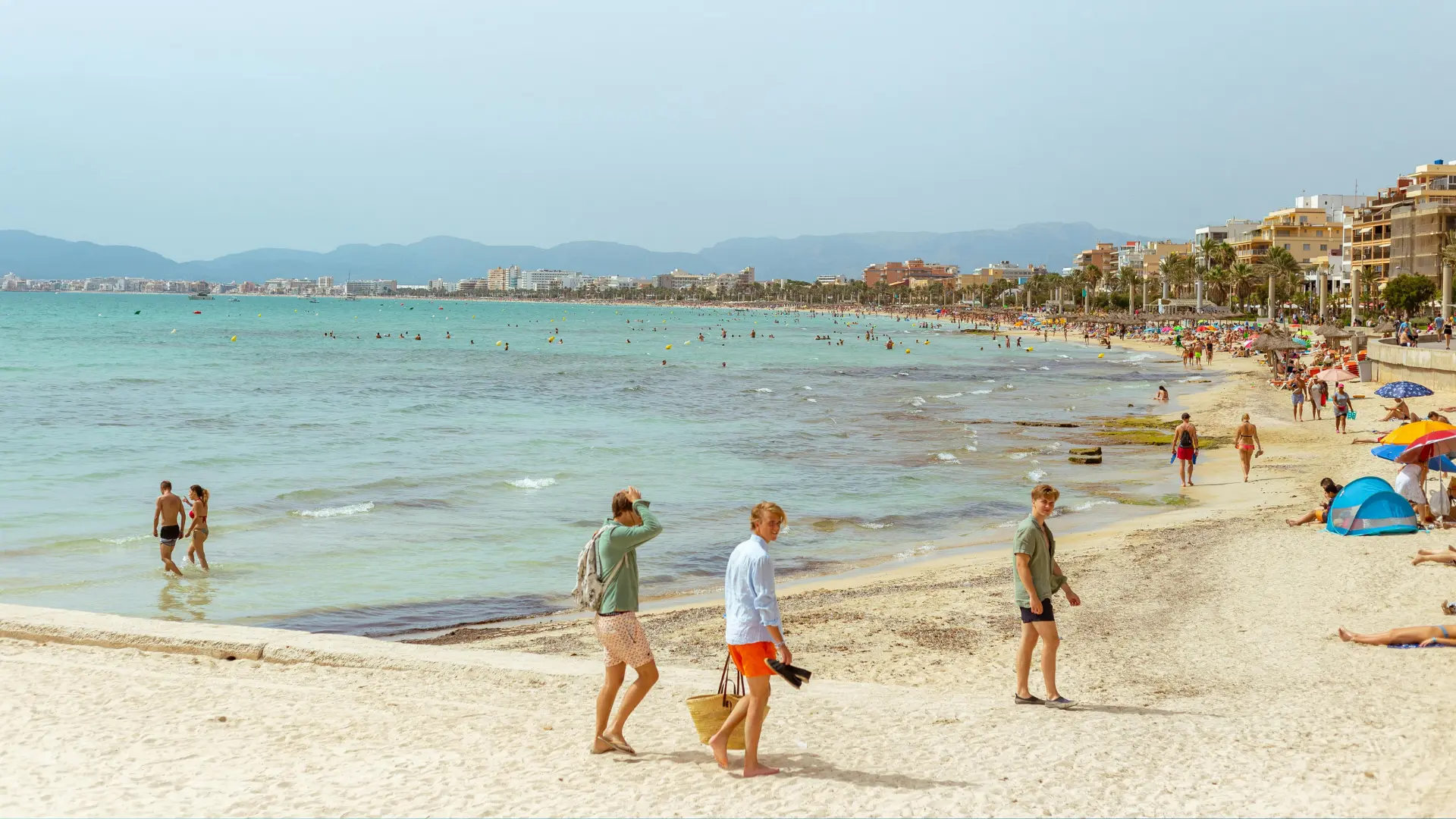
Search “Barcelona safe” and you’ll find a mix of alarming anecdotes and reassuring statistics that seem to contradict each other. The confusion is understandable — but it comes from conflating emotional discomfort with actual danger. These are different things.
Barcelona’s Crime Problem Is Mostly Opportunistic, Not Violent
Barcelona’s theft economy operates on a distraction model. Crews — often working in coordinated teams of two to four — identify tourists displaying predictable vulnerability signals (phone out, map open, luggage in tow, attention elsewhere) and execute quick, contact-free steals in crowded environments.
The key insight most travel advice misses: most tourists who lose valuables in Barcelona never physically interact with the thief at all. There’s no confrontation, no aggression, no threatening situation. You feel a bump or nothing at all, and the item is simply gone. This is important context — it means the “safety” question isn’t really about physical danger. It’s about awareness and target-avoidance.
The theft infrastructure exists because Barcelona’s tourism economy is enormous. La Rambla alone sees tens of thousands of people daily. For organized theft crews, this is an operating environment with natural cover, constant fresh targets, and easy crowd dispersal.
Why Tourists Are Disproportionately Targeted
Tourists behave differently from locals in ways that are immediately visible to anyone watching. They stop unexpectedly. They look up at buildings. They hold phones at eye level to navigate. They carry backpacks and roller cases. They hesitate at ticket machines. They’re less attuned to who’s standing next to them because the city itself is the distraction.
The more “tourist behavior” you display, the more visible you become to theft crews. This isn’t a judgment — it’s an operational fact. Awareness of this dynamic is what changes the equation. Someone who holds their bag in front of them on the Metro, who keeps their phone pocketed while walking busy stretches, who doesn’t leave valuables on a café table — that person is simply a lower-value target.
Why Anti-Tourism Protests Are Not a Physical Danger to Visitors
In recent years, Barcelona has seen organized protests against overtourism — water guns on La Rambla, demonstrations in tourist-heavy neighborhoods, residents expressing frustration at rising rents and overcrowding. International headlines sometimes make these sound alarming.
They aren’t a physical danger to individual visitors. These demonstrations reflect genuine political and housing frustration from residents navigating a city that’s been transformed by mass tourism. They’re directed at policy and systemic issues, not at individual tourists as people. The vast majority of visitors — even those who walk through affected neighborhoods — never encounter any hostility. Locals who work in tourism are generally welcoming; the tensions are structural, not personal.
Safety by Area: Where Tourists Feel Comfortable vs Where Awareness Matters More

Barcelona’s safety doesn’t divide neatly into “safe” and “dangerous” zones. It changes more by crowd density, time of day, and street type than by sharply delineated neighborhoods. Think of it as an awareness gradient — most areas are fine, a few require more attention, and the attention required is behavioral rather than fear-based.
Eixample: Safest Base for Most Tourists
The Eixample grid is where many first-timers should consider staying. Its broad avenues, residential character, and excellent Metro connections make it comfortable at virtually any hour. Crowds are thinner than the Gothic Quarter, which reduces pickpocket opportunity. The neighborhood runs from Passeig de Gràcia down through the Sagrada Família corridor and feels genuinely livable rather than tourist-saturated. Nighttime feels calm even on weeknights.
Gothic Quarter and La Rambla: Beautiful but High-Theft Zones
The Barri Gòtic is one of the most architecturally impressive areas in Barcelona — and also the most concentrated for pickpocket activity. Narrow medieval lanes create natural bottlenecks. Crowd density is high throughout the day. La Rambla, the pedestrian spine running from Plaça de Catalunya to the waterfront, is consistently cited by local police as the single highest-theft corridor in the city.
None of this makes the Gothic Quarter physically dangerous. You should absolutely visit it. But visit with bags secured in front, phone in a pocket, and awareness of who’s near you when you pause to photograph something. The risk here is entirely theft-based — and theft-aware behavior substantially reduces it.
El Born: Lively and Generally Safe
El Born sits between the Gothic Quarter and the sea, and it has a different feel — more locals, more independent restaurants, a genuinely active bar and café culture. It’s lively at night without the tourist-saturation feeling of La Rambla. Standard nighttime awareness applies (stay on populated streets after midnight, keep valuables secured), but El Born is comfortable for most travelers across most hours.
El Raval: Where Nuance Matters
El Raval borders the Gothic Quarter to the west, and it has a more complex reputation that sometimes gets flattened into “dangerous” by overly cautious travel advice. This doesn’t reflect the full picture.
The northern sections of El Raval — around MACBA (the contemporary art museum), the Filmoteca, and the Boqueria market side — see heavy daytime tourism and are fully integrated into the visitor circuit. Southern El Raval, particularly on isolated streets late at night, feels less comfortable and merits more care. Use populated routes, don’t walk alone through quiet streets after 2am, and you’ll navigate the neighborhood without issue. It’s not a no-go zone — it’s an area where street-level judgment matters more.
Barceloneta Beach: Theft Risk Higher Than Physical Danger
The beach itself is safe during daylight hours. The theft risk here is specific: unattended bags while swimming, phones left on towels, and distraction scams targeting people focused on the water. A common scenario involves someone engaging you in conversation while an accomplice goes through your bag. The solution is simple and well-established — don’t leave valuables unattended. A waterproof pouch for your phone, a minimal wallet, and a beach buddy who can watch things while you swim removes most of the risk entirely.
The Real Tourist Safety Risks
Metro Theft Happens During Transitions, Not While Sitting Still
Most guides say “be careful on the Metro” without explaining when. The actual high-risk moments are transitions:
- Escalators — someone behind you has momentary access to your bag
- Train doors closing — a classic snatch-and-step-off technique as doors shut
- Boarding confusion — when you’re focused on getting on with luggage, your attention is forward
- Luggage handling — lifting a bag into a rack briefly takes your hands and eyes off other items
- Airport transfer moments — newly arrived travelers managing luggage, orientation stress, and phone navigation simultaneously are among the most targeted
While you’re seated on the Metro, phone pocketed and bag in your lap or in front of you, the risk drops significantly. The dangerous seconds are the transitions.
Phone Theft Is More Disruptive Than Wallet Theft
This is something most safety guides don’t adequately address. Losing your phone in a foreign city isn’t just losing a device — it means losing:
- Hotel booking confirmation and address
- Boarding passes for onward flights
- Banking apps and contactless payment
- Navigation (Google Maps)
- Translation tools
- Rideshare app access
- Emergency contact numbers
- Passport and document photos stored in your camera roll
A stolen wallet is a bad afternoon. A stolen phone can cascade into a genuinely difficult situation: unable to navigate to the nearest police station, unable to contact your hotel, unable to access alternative payment, unable to call home. This is why phone security — keeping it in a front pocket, not on café tables, not dangling from your hand while walking — isn’t just about the device. It’s about maintaining your entire operational infrastructure.
This also underscores why having a separate, reliable data connection matters. If your phone has been on airport Wi-Fi-only and your phone gets taken, you’ve lost everything at once. Travelers who set up mobile data independently — via a Europe eSIM — have more resilience built into their setup.
Café and Restaurant Theft Tactics
Bags hanging on chair backs are a known target. Phones placed face-up on restaurant tables — a habit most people have — are easy to sweep in a distraction moment. The most common scenario involves someone approaching your table with a question, a flyer, or a map request while an accomplice lifts the phone from the opposite side of your view.
The counter-behavior: bag in your lap or between your feet with a leg through the strap, phone in your pocket while eating, and a brief skepticism toward unsolicited approaches while you’re seated with valuables on the table.
“Friendly Distraction” Scams
Barcelona has a well-documented inventory of distraction approaches used to create the moment for a theft:
- Friendship bracelet trick — someone ties a bracelet around your wrist before you can refuse, then demands payment or uses the distraction for a second person to access your bag
- Fake survey/petition clipboard — the clipboard covers your bag or pocket while you look at the paper
- Spilled drink trick — someone spills something on you, “helpers” swarm in to clean it up
- Fake metro helper — someone “helps” you at a ticket machine, sometimes with a stolen card in their hand
The common thread: any unsolicited physical engagement in a crowded area should prompt you to take one step back and check your immediate possessions before engaging. You don’t have to be rude — just aware.
Public Transport, Taxi, and Walking Safety in Barcelona
Is the Barcelona Metro Safe?
Yes. The Metro is efficient, well-lit, runs frequently, and is the right choice for most journeys across the city. It’s also used by millions of people daily without incident. The theft risk exists but is concentrated at specific stations and moments — primarily Plaça de Catalunya, Sants Estació, and the L9 airport line during arrival periods.
Practical Metro safety: bag in front, phone pocketed before boarding, don’t put luggage down on the platform, and hold your space during crowd surges at doors.
Is Walking at Night Safe?
In populated, well-lit areas: yes, comfortably so. Barcelona’s nightlife culture means central neighborhoods stay busy until 3–4am, which actually creates safety through foot traffic. The nuance applies to isolated back streets in El Raval and the older port areas after the bars have closed — not because violence is likely, but because empty streets in any city reduce the comfort factor and increase opportunistic risk. Stick to main roads and populated routes after midnight if you’re in less familiar territory.
Taxi and Rideshare Safety
Official Barcelona taxis (black and yellow) are reliable and regulated. Uber and Cabify both operate in the city and function as expected. Before getting in, confirm the license plate matches your app, verify the driver’s name, and share your ride status with someone if you’re traveling alone late at night. Avoid unlicensed touts at the airport or outside nightclubs — these are the situations where rideshare apps genuinely earn their safety value.
Airport Arrival Safety Tips
El Prat Airport arrival is one of the highest-vulnerability moments of any trip. You’re disoriented, managing luggage, potentially jet-lagged, and figuring out navigation all at once. The L9 airport Metro line is a known pickpocket corridor during busy arrival periods.
Have your transit route already planned before clearing customs. Know whether you’re taking the Metro, the Aerobus, or a rideshare — and have the app open and ready if it’s the latter. Luggage management on escalators and in Metro carriages requires both hands and divided attention, which is exactly when bags are most accessible.
This is the moment where having mobile data already active — not hunting for airport Wi-Fi — makes the arrival sequence calmer and more controlled.
Why Connectivity Is a Real Travel Safety Tool in Barcelona

In modern cities like Barcelona, phone connectivity directly affects navigation confidence, transport safety, emergency communication, and your ability to recover from a problem. This isn’t a marketing point — it’s a practical operational reality that most travelers only appreciate after they’ve experienced being disconnected in an unfamiliar city.
How Travelers Actually Use Mobile Data for Safety
- Google Maps walking routes — knowing exactly which street to turn down rather than pausing at corners to reorient
- Checking safer late-night transit options — verifying the last Metro time vs. rideshare availability
- Verifying rideshare drivers — confirming plate and name match before getting in
- Translation conversations — communicating with pharmacists, police, or hotel staff in an emergency
- Contacting the hotel — sending your address to a taxi driver, asking for local recommendations
- Accessing digital tickets — Metro QR codes, museum entry, airport boarding passes
- Emergency WhatsApp calls — reaching family or travel companions when voice calls are expensive
- Locating the nearest police station or pharmacy — without needing to ask strangers for directions
None of these functions work reliably on sporadic Wi-Fi, and none of them are available at all if your roaming plan was never activated.
Why Losing Connectivity Creates Vulnerability
A dead or disconnected phone in Barcelona creates a cascade of problems: you can’t navigate to your hotel, can’t verify which rideshare is yours, can’t call ahead if you’re running late, can’t access your booking if the hotel needs confirmation. In the event of phone theft specifically, having cloud-stored contacts, your hotel address accessible from another device, and Find My iPhone activated becomes the difference between a manageable situation and a genuinely difficult one.
Understanding how much data you’re likely to need helps with planning — Twise‘s data calculator is useful for estimating usage across maps, messaging, and streaming before you commit to a data plan. And if you want to track consumption while you’re there, this guide to checking roaming data usage is worth bookmarking.
Why Many Travelers Install a Europe eSIM Before Arrival
The alternative to a travel SIM — relying on your home carrier’s international roaming — often involves per-day charges, unexpected overages, or discovering that your plan doesn’t cover data at useful speeds. An eSIM installed before departure activates as soon as the plane lands, which means maps, messaging, and rideshare apps are all functional during the airport arrival sequence — the highest-stress transition of the trip.
There’s no physical SIM to swap, no retail store to find, and no airport kiosk with inflated pricing to navigate. Check whether your device supports eSIM before departure — most modern smartphones do.
Spain eSIM vs. Europe eSIM
| Option | Best For | Examples |
| Spain eSIM | Spain-only trips | Barcelona city break, Madrid + Barcelona itinerary |
If your trip is Barcelona-only, a Spain plan is typically better value. If you’re continuing to other countries, a Europe-wide plan eliminates the need to switch or top up.
For general tips on managing costs while traveling, Twise’s guide on how to save mobile data and money covers practical habits that reduce usage without sacrificing functionality.
Connectivity Checklist Before Landing in Barcelona
- Offline maps downloaded (Google Maps or Maps.me for the city center)
- Hotel address saved in notes — not just in a booking email
- Emergency contacts accessible offline
- WhatsApp working with data connectivity confirmed
- Home carrier roaming disabled (to avoid accidental charges)
- eSIM activated and tested before departure
- Find My iPhone (or Android equivalent) enabled
- A small backup of key contacts and addresses in your notes app
10 Smart Safety Tips for Barcelona Tourists

1. Keep Your Phone Off Café Tables
The moment your phone is flat on a table, it’s accessible to anyone approaching from the opposite side. This is the single most common phone-theft scenario in Barcelona’s dining culture. Pocket it during meals. If you need it for translation or menus, hold it rather than setting it down.
2. Wear Backpacks on Your Front in Crowded Transit
A backpack worn normally on the Metro is a backpack someone behind you can open without you noticing. In crowded carriages — especially at Catalunya, Sants, or airport platforms — move the bag to your front. It feels awkward for thirty seconds and prevents a much more awkward situation.
3. Avoid Carrying Your Passport Daily
Your passport doesn’t need to be in your pocket for most daily activity in Barcelona. Leave it in the hotel safe and carry a digital copy instead — a photo on your phone and a PDF in cloud storage covers most ID requirements you’ll encounter. If your passport is stolen along with your wallet, the administrative recovery process adds significant stress to an already difficult situation.
4. Download Offline Maps Before Exploring
Stopping on a busy pedestrian street to wait for maps to load makes you a standing target. Download the city’s offline maps the night before — Google Maps lets you save areas for offline use. Navigation then works without data, which also helps if you hit a connectivity gap.
5. Stay Aware During Metro Boarding Moments
The five seconds when you’re stepping onto a train while managing a bag or backpack are when most Metro thefts occur. Consciously place your bag in front during these transitions. If someone is pressing unusually close during boarding, that pressure is sometimes deliberate.
6. Don’t Let Strangers “Help” With Ticket Machines
Unsolicited assistance at Metro ticket machines is almost never genuine. Common scenarios involve someone using a card-reader near yours, “accidentally” swapping your card, or distraction while the machine is mid-transaction. Use the machine, complete the transaction, take your card, and move away before engaging with anyone around you.
7. Use Crossbody or Zippered Bags
Shoulder bags with magnetic clasps and backpacks with external pockets are the easiest targets. A crossbody bag worn in front, or any bag with zipper closures rather than open tops, significantly reduces access opportunity in crowd environments.
8. Keep a Backup Payment Method Separate
If your wallet is taken, having a second card in a different location — hotel room safe, phone case, a different pocket — means you’re inconvenienced rather than stranded. Many travelers keep one card in their wallet and one card in a passport holder stored separately.
9. Avoid Isolated Beach Areas Late at Night
Barceloneta’s seafront promenade is pleasant during beach hours and into the early evening. The quieter stretches south of the main beach, after the beach bars close, are where late-night vulnerability increases. If you’re walking back from the beach late, take the lit seafront road rather than cutting through darker side streets.
10. Keep Your Phone Charged and Connected
A dead phone isn’t just an inconvenience — it removes your navigation, your emergency contacts, your rideshare access, and your hotel information simultaneously. A portable power bank is worth carrying, and having a reliable data plan (not Wi-Fi dependency) means your connectivity doesn’t lapse when you step away from the hotel. Your phone is your operational infrastructure in a foreign city. Treat it accordingly.
Bottom Line: Barcelona’s Real Risk Profile in Plain English
Barcelona is a very safe city from a violent crime perspective. Physical assault and robbery-with-threat are genuinely rare in the areas tourists visit. The Economist Intelligence Unit, Numbeo, and annual Spanish crime statistics consistently show Barcelona’s violent crime rates as low by European urban standards — and dramatically lower than many cities that tourists visit without concern.
The real issue is pickpocketing, which is sophisticated, organized, and specifically designed to target people displaying tourist behavior in high-density areas. It’s a real problem — but it’s also a manageable one. The tactics are well-documented, the locations are predictable, and the behavioral adjustments required aren’t particularly burdensome. Keeping your bag in front on the Metro, your phone off the table at restaurants, and your awareness up in the Gothic Quarter — that’s most of what preparation requires.
Travelers who prepare their navigation, transit plans, and mobile connectivity before arrival experience Barcelona far more confidently than those who improvise at the airport. Having offline maps ready, a reliable data plan active from the moment you land, and your key information backed up means that even if something goes wrong, you have the tools to respond. A Europe eSIM installed before departure is one of the most practical things you can do — not because Barcelona is dangerous, but because Barcelona rewards travelers who show up with their infrastructure in place.
Frequently Asked Questions
Is Barcelona safe for solo female travelers?
Yes. Barcelona is among the more comfortable Southern European cities for women traveling alone. The standard awareness that applies to any urban environment — staying on populated streets at night, not leaving drinks unattended, being clear in situations that feel uncomfortable — applies here too. La Rambla and the Gothic Quarter late at night have a heavier crowd with more intoxication, so many solo female travelers prefer to navigate those areas earlier in the evening. Eixample and El Born are comfortable at virtually any hour.
Is Barcelona safe at night?
Generally yes in areas that stay populated — and Barcelona’s nightlife culture means much of the city stays busy until well after midnight. The Old Town neighborhoods are livelier (and thus more comfortable) at 11pm than many northern European cities are at 9pm. The nuance: isolated streets in El Raval after 2am, and stretches of the waterfront away from the main promenades, warrant more caution. Populated routes, rideshare over walking long distances late at night, and staying in groups when exploring unfamiliar areas at night all reduce the residual risk.
What are the biggest tourist scams in Barcelona?
The most common include:
- Friendship bracelet — wrist-tied before you refuse, payment demanded
- Distraction clipboard — fake survey used to cover bag access
- Ticket machine “helper” — card-swapping or distraction at the Metro
- Unsolicited drink offer/spill — distraction for a second-person theft
- CD or gift handoff — item pressed into your hands, then payment aggressively requested
All operate on the same principle: create a moment of distraction or social obligation, use it for access. A polite but firm “no” and one step back is the correct response to any unsolicited engagement in a tourist area.
Is the Barcelona Metro safe?
Yes. It’s the right way to get around the city. The theft risk is real but concentrated at specific stations (Catalunya, Sants, the airport line) and specific moments (boarding, escalators, door transitions). Standard precautions — bag in front, phone in pocket — cover most of the risk. The Metro is efficient, well-mapped, and preferable to taxis for most cross-city journeys.
Is El Raval dangerous?
No — not in the way the reputation sometimes suggests. Northern El Raval around MACBA, the Filmoteca, and the Boqueria market area is actively visited by tourists and heavily populated throughout the day. Southern El Raval requires more navigational judgment late at night — avoid isolated streets after midnight, prefer populated routes, don’t walk alone in the quieter stretches. It’s an area of genuine urban character rather than a no-go zone, and the vast majority of visitors who pass through it experience no problems.
Is Barcelona safer than Paris or Rome?
Barcelona’s violent crime rate is comparable to or lower than both. All three cities have active pickpocket economies targeting tourists, with similar hotspots (metro systems, crowded landmarks, beach areas). Paris has additional security considerations around the banlieue — areas tourists rarely visit — and Rome’s Termini station area has a comparable reputation to Barcelona’s Gothic Quarter for petty theft. Barcelona’s concentrated tourist economy means the theft problem is visible, but it’s not worse than its European peer cities by objective measures. The behavioral preparation that works in Barcelona works in Paris and Rome too.
What should I do if my phone gets stolen in Barcelona?
Act quickly and in this order:
- Use another device immediately to log into iCloud (Find My iPhone) or Google’s Find My Device — you can lock or erase the phone remotely
- Contact your hotel — if you’ve saved the address and number offline or on a companion’s phone, this is straightforward
- File a police report (denuncia) at the nearest Mossos d’Esquadra station — you’ll need this for insurance claims; the online report at policia.es is also accepted by most insurers
- Contact your bank to freeze cards if any were stored in the phone’s wallet
- Change critical passwords from another device, prioritizing email and banking
This is why having your hotel address, emergency contacts, and insurance details accessible offline or on a second device matters. Travelers with a Europe eSIM on a second device — or who’ve backed up critical info to a travel companion’s phone — navigate this situation significantly more smoothly than those who had everything on a single device with no offline backup.
