




Cancun is genuinely safe for tourists — particularly in the Hotel Zone, where millions of international visitors travel each year without incident. The U.S. State Department currently rates Quintana Roo at Level 2 (“Exercise Increased Caution”), the same advisory tier as France, Germany, the United Kingdom, and Japan. That context matters. Most articles about Cancun safety skip it entirely.
Tourist infrastructure in Cancun is heavily reinforced: National Guard presence on Boulevard Kukulcán, dedicated tourist police units, resort security coordination, and CCTV coverage throughout the Hotel Zone. This isn’t incidental — it’s structural. Tourism accounts for roughly 90% of Quintana Roo’s economy. The incentive to protect visitors is built into the region’s financial survival.
Preparation and connectivity are now part of how experienced travelers manage safety in any unfamiliar city. That applies to Cancun too.
Short Answer: Yes — With the Right Zone Awareness
Cancun is safe to visit in 2026 for the vast majority of tourists. The Hotel Zone (Zona Hotelera) is among the most heavily policed tourist corridors in the Americas.
The U.S. State Department Level 2 advisory for Mexico — the same rating applied to France, Germany, and the UK — means “exercise increased caution.” It does not mean avoid travel. It does not include specific warnings against Cancun’s tourist zones, the Hotel Zone, or Cancun International Airport.
“Cancun’s Hotel Zone is one of the most heavily policed tourist corridors in the Americas.”
Most tourists who encounter problems in Cancun weren’t victims of random danger. They were in situations that followed a recognizable pattern — unofficial transportation, impaired judgment, or a moment of navigational disorientation. Those risks are avoidable with basic preparation.
Why National Mexico Headlines Don’t Reflect Cancun’s Tourist Zones
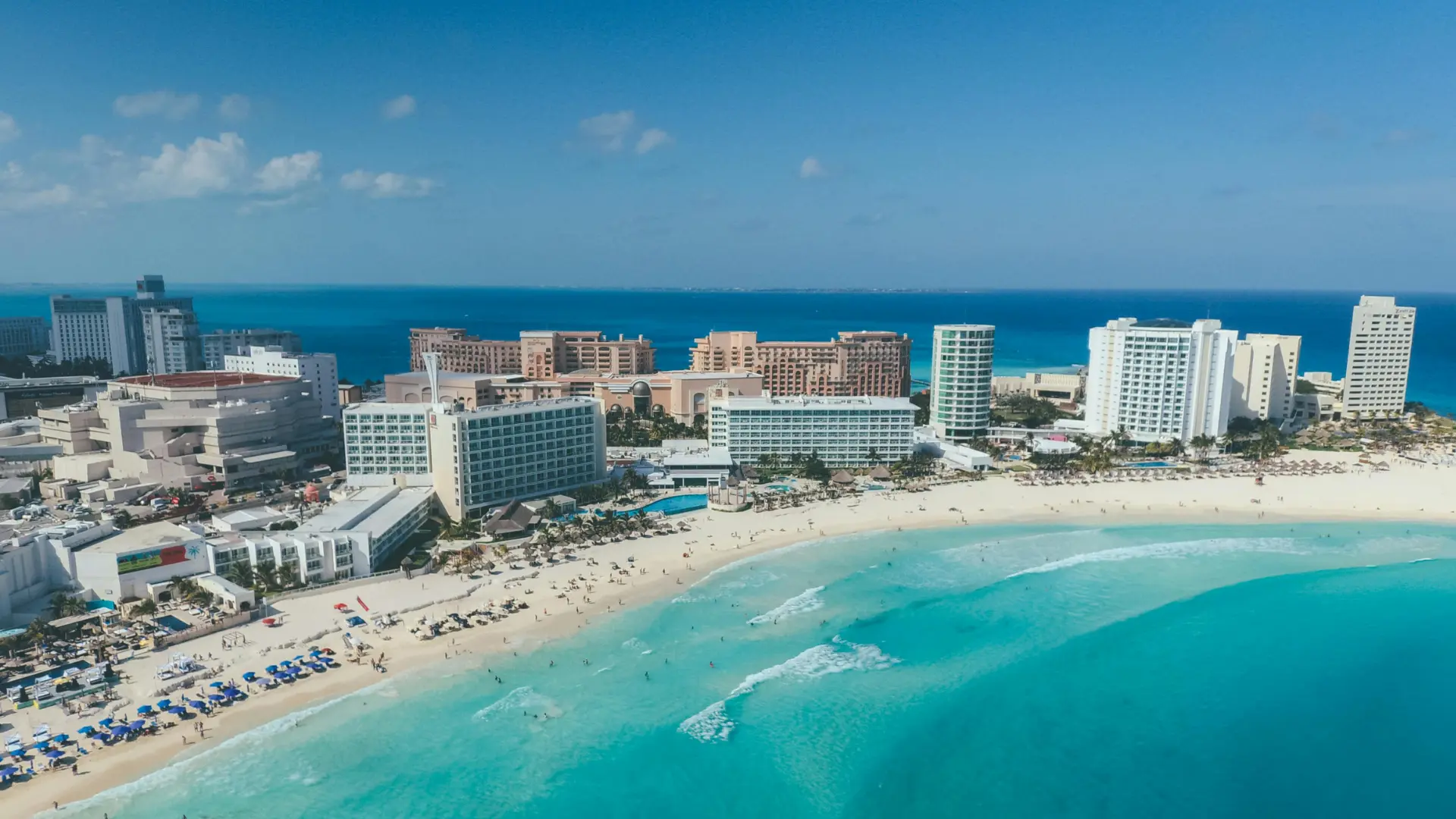
Mexico’s Regional Differences Matter More Than National Headlines
Mexico spans roughly 2 million km² — approximately the size of Western Europe. Using national crime headlines to assess safety in Cancun is like using news from Eastern Ukraine to assess a trip to Lisbon.
The locations most frequently cited in Mexico crime reporting — Tijuana, Juárez, Culiacán — are 2,000 to 3,000 km from Cancun. Geographically, Cancun is closer to Miami than it is to most of the cities generating those headlines.
Quintana Roo operates as a separate administrative and security environment from the rest of Mexico. Its policing priorities, tourist infrastructure investment, and security coordination reflect a region whose entire economic model depends on international visitors feeling safe.
Why Quintana Roo Prioritizes Tourist Security
The incentives are structural. When ~90% of a state’s GDP flows from international tourism, the government has a direct financial stake in maintaining safety for visitors.
In practice, that translates to:
- National Guard presence along Boulevard Kukulcán throughout the year
- Policía de Turismo (Tourist Police) units operating specifically in visitor areas
- CCTV infrastructure across the Hotel Zone and key transit points
- Resort-to-municipality security coordination covering major accommodation zones
- Cancun International Airport operating under its own distinct security protocols
These aren’t emergency measures — they’re permanent infrastructure.
The Numbers Most Safety Articles Ignore
Cancun receives 6 to 8 million international visitors annually. The proportion experiencing a serious security incident is extremely small relative to that volume. Popular European destinations with comparable or higher petty crime rates — Barcelona, Paris, Rome — receive far less safety scrutiny in travel media.
The disproportion isn’t based on data. It’s based on headline association.
Safety by Area: Hotel Zone vs. Downtown vs. Outlying Areas
Safety in Cancun generally decreases the farther you move from major tourist infrastructure, particularly late at night. Think of it as a gradient: the Hotel Zone is the most controlled environment; downtown requires more awareness; areas beyond tourist corridors at night require the most caution.
Hotel Zone (Zona Hotelera)
The Hotel Zone is a 14-mile tourist corridor running along Boulevard Kukulcán. It has the highest concentration of resorts, tourist police, CCTV coverage, and nightlife infrastructure in the region.
For most tourists, the Hotel Zone is where they spend the majority of their trip — and it’s the safest part of Cancun for good reason.
What’s safe: Walking during the day and evening, beach access, resort hopping, nightlife on the main boulevard.
Practical late-night guidance: Stay on the main boulevard rather than isolated side streets. Use Uber or verified taxis between venues rather than walking long stretches. Avoid empty beach exits well away from resort clusters after midnight.
Primary risk: Opportunistic theft, not violent crime. Treat it the way you’d treat a busy tourist district in any major city — aware, not paranoid.
Downtown Cancun (El Centro)
Downtown offers a more authentic experience: local markets, better-value restaurants, cultural sites, and a residential character that the Hotel Zone doesn’t have.
During daytime, commercial areas like Parque Las Palapas and Avenida Tulum are safe and worth exploring. After dark, increased awareness applies — avoid isolated streets once bars close, and don’t wander into residential areas you’re not familiar with.
By Latin American urban standards, downtown Cancun is not particularly dangerous. Context and awareness apply, as they do in any city center.
Areas and Situations to Avoid
- Isolated roads and beaches after midnight
- Non-tourist residential neighborhoods unfamiliar to you
- Empty beach sections well away from resort clusters at night
- Transportation from unlicensed drivers
- Moving between venues while heavily intoxicated
Playa del Carmen and Tulum: Different Safety Profiles
Playa del Carmen is generally tourist-friendly, with Quinta Avenida serving as the main commercial corridor. Nightlife is busier and more chaotic than the Hotel Zone. Pickpocket and scam exposure is higher, and foot traffic navigation at night requires more attention.
Tulum is safer in its tourist zones but has more fragmented security infrastructure than Cancun. Uber availability is inconsistent — which matters more than it sounds. Distances between locations are longer, transportation is less organized, and navigating without reliable mobile data creates genuine logistical problems. Mobile data reliability becomes operationally important in Tulum in a way it isn’t in the Hotel Zone.
Common Tourist Scams in Cancun (And How to Avoid Them)
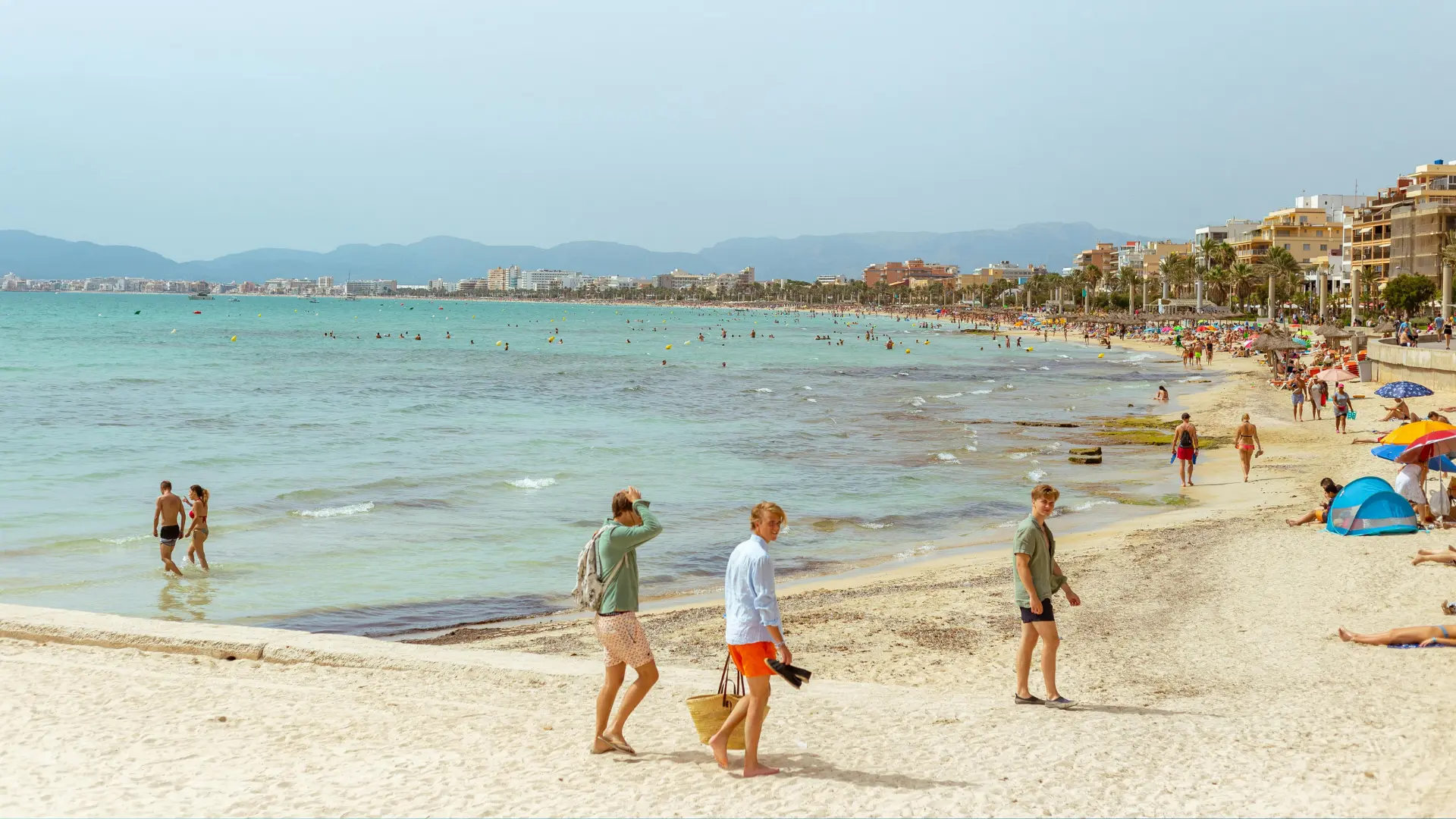
Most tourists in Cancun don’t experience violence. Many do encounter opportunistic scams — particularly during arrival and nightlife, when judgment is impaired or attention is split.
Airport Transportation Solicitation
The stretch between customs exit and the official taxi or shuttle desk is one of the highest-pressure moments of any Cancun trip. Unofficial “helpers” approach arriving passengers offering rides at inflated prices, or commission-based redirects to specific resorts.
Fix: Use only the official taxi desk inside the terminal. Pre-book a shuttle or hotel pickup before arrival. Never follow anyone who approaches you unsolicited before you’ve exited the arrivals area.
Inflated Taxi Fares
Unlicensed taxis without official SEMOVI designation may charge 3–5x standard rates. Some drivers claim meters are broken or quote informal “tourist prices.”
Fix: Use ADO buses for airport transfers where practical, Uber where available, or negotiate and agree on a fare before entering any taxi.
Fake Tour Representatives
Common near resort lobbies and on the beach. Operators offer discounted tours or activities in exchange for attending a “brief presentation” — which is a timeshare pitch.
Fix: Book tours through your hotel concierge, verified operators on the official tourism registry, or well-reviewed platforms.
ATM and Card Skimming
Standalone ATMs in tourist areas, especially at night, carry skimming risk.
Fix: Use ATMs inside banks or inside reputable hotels. Cover your PIN. Consider a travel card with strong fraud protection and transaction alerts.
Beach Vendor Overcharging
Food, drinks, and souvenirs on public beaches are routinely quoted at informal tourist rates.
Fix: Ask for the price before accepting anything handed to you. Don’t handle items you don’t intend to buy.
Currency Exchange Traps
Unauthorized exchange booths display favorable-looking rates that often include hidden fees or misleading math presented quickly.
Fix: Use bank ATMs for the best exchange rates. Check the current rate on Google before any cash exchange transaction. Avoid street-level exchange booths entirely.
The Tourist Behaviors That Create Most Safety Problems
Most tourists who have a difficult experience in Cancun describe situations that followed a predictable pattern — not random danger.
Excessive Intoxication in Unfamiliar Environments
The majority of serious tourist incidents involve significant alcohol consumption. Impaired judgment leads to accepting unofficial rides, losing orientation, losing valuables, and becoming separated from a group — each of which creates its own chain of problems.
The Zona Hotelera nightlife is genuinely enjoyable. This isn’t prohibition advice. It’s situational awareness: the environment is unfamiliar, and impaired decision-making in unfamiliar environments is where problems start.
Accepting Unofficial Transportation at the Airport
The period between exiting customs at Cancun International Airport and reaching your hotel is the highest-friction window of the entire trip. Unofficial drivers sometimes operate inside the terminal itself.
The fix is simple: pre-book transportation. Have your hotel’s address and confirmation accessible offline before you clear immigration — not dependent on finding airport Wi-Fi after you land.
Losing Navigation Access
A dead phone battery or no data connection means no Google Maps, no Uber, no WhatsApp contact with your hotel. At Cancun airport, which exits travelers directly into a busy road environment, that disorientation happens fast.
Tourists unfamiliar with Boulevard Kukulcán regularly misjudge distances. The Hotel Zone is 14 miles long — destinations that look adjacent on a resort map are a significant walk apart. Navigation breakdown is one of the most common causes of unnecessary stress on arrival.
Purchasing or Accepting Illegal Substances
Illegal substance transactions create disproportionate legal and physical risk. The issue isn’t moral judgment — it’s that buyers have no recourse and no protection. Police encounters in this context carry serious consequences regardless of tourist status.
Relying Entirely on Public Wi-Fi
Cancun airport Wi-Fi is congested and unreliable during peak arrival hours. Waiting for a connection to confirm hotel details, contact a driver, or access a reservation adds friction during the highest-pressure window of the trip. Unencrypted public Wi-Fi also exposes sensitive data — banking apps, email, travel confirmations.
Many experienced travelers now treat reliable mobile data as part of basic travel safety preparation, not a luxury add-on.
Why Mobile Data Is a Real Travel Safety Tool
For modern travelers, mobile data is no longer just convenience. It directly affects navigation, transportation verification, emergency communication, and situational awareness — especially during the first hour after landing.
Why the First 30 Minutes After Landing Matter Most
Immigration exit at Cancun International Airport leads directly into an active solicitation environment. Without data connectivity already active, you can’t contact your hotel on WhatsApp, verify an Uber, load Google Maps, or access your confirmation email.
Having connectivity active before clearing customs closes this vulnerability entirely. The airport Wi-Fi dependency — waiting, searching for the network, entering credentials, finding it congested — is an entirely avoidable friction point.
This isn’t hypothetical. It’s the specific window most Cancun travelers describe as most stressful.
How Travelers Actually Use Mobile Data for Safety in Cancun
- Verifying Uber driver details (name, photo, plate number) before entering a vehicle
- Sharing live location via WhatsApp with family or travel partners throughout the day
- Using Google Maps to identify walking routes in the Hotel Zone at night
- Contacting hotels and resorts via WhatsApp — the standard communication method in Mexico
- Translating conversations in local markets and restaurants
- Accessing reservation confirmations and QR codes offline and on demand
- Checking beach flag conditions and real-time weather updates
- Reaching emergency contacts if a situation develops
Mobile Network Quality in Cancun
| Network | Coverage Quality | Notes |
| Telcel | Excellent | Largest network; best coverage across Hotel Zone, downtown, and airport |
| AT&T Mexico | Strong | Good in tourist areas and major corridors |
| Movistar | Functional | More variable; less consistent outside main zones |
Coverage is excellent along Boulevard Kukulcán and at Cancun International Airport. It becomes more variable on Tulum highway stretches and in areas away from main tourist infrastructure.
The Problems With Airport Wi-Fi and International Roaming
Airport Wi-Fi during peak arrivals is unreliable — congested, slow, and occasionally unavailable for stretches. International roaming plans from home carriers are frequently worse: bill shock is common, many plans throttle speeds after a small data threshold, and some cut off unexpectedly.
SIM kiosk queues at Cancun airport can run 20–40 minutes during busy arrival windows, and setup requires navigating a foreign-language process immediately after a long flight.
Wondering how much data you’re actually using while traveling? That’s worth checking before you leave — many travelers are surprised.
Why Many Travelers Install a Mexico eSIM Before Departure
An eSIM is a digital SIM that activates via QR code before travel. There’s no physical SIM card to swap, no kiosk queue, no language friction on arrival. Activate it at home and your phone connects to a local network the moment the plane lands.
For Cancun-specific travel, a Mexico eSIM offers optimized single-country pricing and coverage via Telcel and AT&T Mexico — the networks with the strongest Hotel Zone and airport presence.
For itineraries that also include the U.S. or Canada, a North America eSIM covers all three countries under one plan.
Before buying anything, it’s worth checking whether your device supports eSIM — most smartphones made after 2019 do, but it’s a 30-second check worth doing before departure. You can also learn how to save mobile data while traveling to stretch your plan further.
10 Practical Safety Tips for Cancun in 2026

- Pre-book airport transportation. Eliminates arrival solicitation pressure entirely. Use your hotel’s shuttle, a verified transfer service, or ADO buses — sorted before you land, not at the arrivals exit.
- Download Google Maps offline before your flight. If data fails or you switch networks, offline maps still work. Save your hotel, the airport, and the main Hotel Zone area while still on home Wi-Fi.
- Use Uber carefully. Uber operates in Cancun but has experienced friction with local taxi associations. Always verify the plate number, driver name, and photo before entering. In Tulum, availability is inconsistent.
- Know the ADO bus system. ADO is the official intercity bus network — safe, affordable, and connects Cancun airport, Playa del Carmen, and Tulum. Often more reliable than taxis for longer routes.
- Understand beach flag colors. ancun’s open ocean conditions can change faster than many Caribbean beaches.
Beach flag color Meaning Green Safe Yellow Caution, currents present Red Dangerous, stay out Black Water closed - Avoid displaying valuables in crowded public areas. Cameras, expensive jewelry, and visible cash are opportunistic theft triggers — especially in downtown markets and busy nightlife areas
- Use hotel safes for passports and backup cash. Keep a digital copy of your passport accessible offline. Carry only what you need for the day.
- Stay connected to your group at night. Share your live location on WhatsApp with at least one person in your group before heading to a new venue. It takes 10 seconds and is one of the most effective safety habits of any trip.
- Know Mexico’s vaping restrictions. Vaping devices and e-cigarettes are banned for import into Mexico. Customs can confiscate them at arrival — this catches a significant number of travelers off-guard every year.
- Keep your phone charged and connected. Maps, rideshare, WhatsApp hotel communication, and emergency contacts all require a working phone. A portable charger is worth more than most travel accessories in Cancun.
Emergency Contacts and Tourist Support in Cancun
| Service | Contact |
| General Emergency (Police, Fire, Ambulance) | 911 |
| Tourist Police — Cancun | 998 885 2277 |
| Quintana Roo State Police | 911 |
| U.S. Embassy — Mexico City | +52 55 5080-2000 |
| U.S. Consulate — Mérida (regional) | +52 999 942-5700 |
| Canadian Embassy — Mexico | +52 55 5724-7900 |
| LOCATEL Tourist Assistance | 078 |
| SECTUR Tourism Hotline | 800 008 9090 |
Your hotel concierge is your most accessible resource for any incident. They deal with tourist issues regularly and can navigate local systems — police, hospitals, taxi disputes — far more effectively than most visitors can on their own. Save your accommodation’s WhatsApp number before arrival.
What the U.S. State Department Level 2 Advisory Actually Means
Level 2 means “exercise increased caution.” It does not mean avoid travel, avoid Cancun, or that tourists are in danger. It is a routine precaution framework applied to dozens of the world’s most popular tourist destinations.
The 4 Advisory Levels, Simply Explained
| Level | Designation | Meaning |
| Level 1 | Exercise Normal Precautions | Lowest concern |
| Level 2 | Exercise Increased Caution | Routine awareness; common for popular destinations |
| Level 3 | Reconsider Travel | Elevated concern; non-essential travel discouraged |
| Level 4 | Do Not Travel | Highest concern; active danger or instability |
Countries With Level 2 Status Alongside Mexico in 2026
France, Germany, the United Kingdom, Belgium, Spain, Japan, and Australia all share Level 2 status. Level 2 is the standard operating reality for most international travel — including Europe’s most visited cities.
This context is almost always absent from “Is Cancun safe to travel?” coverage. Its absence creates misleading alarm.
What the Quintana Roo Advisory Specifically Says
The advisory applies to specific state-level contexts — it does not issue uniform warnings across all tourist zones. It does not include specific warnings against the Zona Hotelera, Cancun International Airport, or resort travel. It does not recommend against tourism to Cancun. It recommends awareness of surroundings — which is standard advice for international travel anywhere.
How to Read Advisory Language Accurately
Advisories are precaution frameworks, not predictive danger maps. They’re written for the broadest possible audience, including travelers with no prior international experience. A Level 2 advisory for Mexico written to cover someone traveling to Tijuana is not the same practical guidance as a document intended for someone staying at a Cancun all-inclusive.
Read the actual advisory text at travel.state.gov rather than relying on headlines.
Canadian travelers: Canada’s advisory (“Exercise a high degree of caution” for Quintana Roo tourist areas) carries similar framing to Level 2 — standard awareness, not avoidance.
UK travelers: The UK FCDO advises awareness of crime but does not advise against travel to Cancun tourist areas.
Bottom Line: Cancun’s Real Risk Profile in Plain Language
Cancun is genuinely safe for the vast majority of tourists. The Zona Hotelera is a high-security, high-infrastructure tourist corridor that receives millions of visitors annually with relatively low serious incident rates. Quintana Roo’s economic dependence on tourism creates structural security investment that most regions cannot match.
The real risk in Cancun is concentrated in situations that follow a recognizable pattern: unofficial transportation, impaired judgment in unfamiliar areas, or a moment of navigational disorientation that created an opening for opportunists. These are not unavoidable risks — they’re avoidable behaviors.
Good preparation is what separates a smooth Cancun trip from a stressful one. Book transportation in advance. Download offline maps before your flight. Keep data access active from the moment you land. Treat the airport exit as a high-attention window rather than an afterthought. Cancun rewards prepared travelers.
Travelers who sort out transportation and mobile connectivity before departure consistently report smoother, lower-stress arrivals. A Mexico eSIM from Twise means you land connected — no queues, no congested airport Wi-Fi, no friction at the worst possible moment.
FAQ: Is Cancun Safe?
Is Cancun safe to walk around in 2026?
Yes — particularly in the Zona Hotelera and commercial areas of downtown during daytime. At night, standard urban awareness applies: stay on main commercial streets, use rideshare between distant venues, and travel in groups where possible.
Is Cancun airport safe?
Yes. Cancun International Airport is a modern, well-secured international facility. The primary caution: avoid unofficial transportation solicitations from individuals who approach you before you’ve reached the official taxi desk or your pre-arranged transport.
Is Uber safe in Cancun?
Generally yes. Verify the driver’s name, photo, and license plate before entering the vehicle. Note that Uber has experienced friction with local taxi associations in Cancun — in most cases this is inconvenient rather than dangerous, but it’s worth being aware of.
Are taxis safe in Cancun?
Licensed taxis with official SEMOVI designation are generally safe. Use the official taxi desk inside the airport terminal rather than accepting offers from drivers outside. Agree on a fare before starting any trip.
Is Cancun safe for solo female travelers?
Yes, in tourist zones, with standard solo-travel precautions. Avoid isolated areas at night, use rideshare rather than street-hailed taxis, and keep mobile data active for navigation and emergency contact.
Is Cancun safer than Cabo?
Both are popular Mexican resort destinations with similar safety profiles for tourists who stay within tourist infrastructure. Los Cabos has its own high-security tourist corridor. Neither is significantly safer or more dangerous than the other for tourists following standard practices.
Is Cancun safe during spring break?
Cancun during spring break is busy, loud, and commercially intense — but not uniquely dangerous. Higher tourist density does mean more opportunistic scam activity and more intoxication in the environment. The same precautions apply with added emphasis on group movement and rideshare use.
Is Cancun safe for families?
Yes. All-inclusive resorts in the Zona Hotelera are among the most family-appropriate tourism environments in the Americas. Beach flag awareness — particularly Red and Black flags — is the most practically relevant safety consideration for families with children.
Is the Hotel Zone safe at night?
Yes, with normal awareness. Boulevard Kukulcán is active, well-lit, and regularly patrolled. Moving between venues by Uber or verified taxi rather than walking long stretches is best practice after midnight.
Can tourists drink tap water in Cancun?
No. Tap water in Cancun is not safe for drinking. Use bottled water for drinking and brushing teeth. All reputable hotels and resorts provide purified water; most restaurants use filtered water for cooking and ice.
Is Cancun safe to travel during hurricane season?
Hurricane season runs June through November, with peak activity in August through October. Modern resorts are built to withstand storms, and authorities issue advance warnings. Travel insurance with storm coverage is strongly recommended for trips during this window. Track advisories from the National Hurricane Center (nhc.noaa.gov) if traveling in peak months.
Can I use my phone normally in Cancun?
It depends on your carrier’s international plan. Many standard roaming plans throttle speeds or charge per-MB rates that add up quickly. Local options — a SIM card or a pre-installed eSIM — typically provide faster, more reliable data at lower cost. Check whether your device supports eSIM before departure.
Should I buy a SIM card at Cancun airport?
It’s possible, but kiosk lines can be long at peak arrival times, and setup requires navigating a foreign-language process immediately after a potentially long flight. Many travelers now install a Mexico eSIM before departure so data is active the moment the plane lands — no queues, no friction, and no unnecessary roaming charges on arrival.
