

T-Mobile in Japan vs Japan eSIM: Roaming, Coverage, Cost & Data Limits
Yes, T-Mobile works in Japan through international roaming. Your experience depends on whether you are using basic plan roaming, a paid International Pass, or combining T-Mobile with a separate Japan eSIM for mobile data. For many U.S. travelers, the most practical setup is not choosing one or the other — it is keeping T-Mobile active for calls and your U.S. number, while using a Japan local eSIM as the primary data line.
Does T-Mobile Work in Japan?
Yes. T-Mobile roams on Japanese carrier networks — including NTT Docomo and KDDI — so your phone can connect when you land. What “works” means in practice depends on your specific plan.
Most postpaid T-Mobile plans include free data and texting in 215+ countries, including Japan, but the included data runs at reduced speeds — typically 2G — which can feel slow for maps, translation apps, or train route searches. High-speed data requires either a plan that includes it or a separately purchased International Pass. Read more here.
Before relying on T-Mobile in Japan, check three things: your exact plan’s international benefits, whether your device supports international roaming, and whether your phone is unlocked if you also plan to install a second eSIM.
Should You Use T-Mobile or a Japan eSIM?
| Traveler situation | Better option | Why |
| U.S. T-Mobile customer needing light data | T-Mobile roaming | Convenient, may already be included |
| Need calls and U.S. number active | T-Mobile International Pass | Pass includes unlimited calling |
| Daily maps, train apps, translation, browsing | Japan eSIM | Better fit for repeated mobile data use |
| Hotspot for laptop, tablet, or second phone | Compare both | Both T-Mobile Pass and Twise Japan KDDI eSIM include hotspot |
| Want to avoid fixed high-speed data caps | Japan KDDI eSIM | Unlimited local data option available |
| Need U.S. SMS for account verification | Keep T-Mobile active | Use T-Mobile for number, eSIM for data |
| Not a U.S. T-Mobile customer | Japan eSIM | T-Mobile International Pass requires a T-Mobile account |
| Need a Japanese phone number | Local Japan eSIM | Buying a Japan eSIM inside Japan |
For many U.S. T-Mobile customers, the best setup is keeping T-Mobile active for calls, texts, and U.S. number continuity, then using a Japan local eSIM as the mobile data line. This gives you the calling benefit of T-Mobile without depending on its roaming data allowance for daily app use.
T-Mobile International Pass for Japan: Cost, Data, and Hotspot
T-Mobile International Pass is the most practical option for T-Mobile customers who want high-speed data and calling in Japan without paying per-MB rates. The pass must be added to a qualifying postpaid plan.
| Pass | High-speed data | Calling | Hotspot | Price |
| 1 Day (512MB) | 512MB | Unlimited | Included from pass data | $5 |
| 1 Day (2GB) | 2GB | Unlimited | Included from pass data | $10 |
| 10 Day (5GB) | 5GB | Unlimited | Included from pass data | $35 |
| 30 Day (15GB) | 15GB | Unlimited | Included from pass data | $50 |
Prices as of June 2026. Verify current pricing in the T-Life app or at t-mobile.com before purchase.
The 1-Day 512MB pass at $5 suits travelers with a single arrival day or very light needs. The 10-Day pass at $35 is the most common choice for a typical Japan trip of one to two weeks. The 30-Day pass at $50 makes sense for longer stays where calling matters.
What happens when high-speed data runs out
After the high-speed allowance is exhausted, the connection does not stop — but it falls back to the basic roaming speed included in your plan, which is typically reduced to 2G on standard postpaid plans. For travelers who exhaust 5GB in ten days, the remaining trip may involve noticeably slower performance on maps and apps.
This is the central tradeoff of the pass system: it is capped, and Japan’s travel app demands — frequent transit lookups, map routing, restaurant searches, QR ticket scanning — add up quickly across a full day of sightseeing.
T-Mobile Roaming Without an International Pass

Some T-Mobile postpaid plans include international roaming benefits that cover basic data, texting, and calling in Japan without a separate pass purchase. For light travelers who mainly need messaging and occasional maps, this may be sufficient.
The practical limitation is speed. Basic-speed international data on most plans runs at 2G, which can handle simple text-based tasks but feels slow for image-heavy maps, restaurant photo browsing, transit app interfaces, or uploading photos. In Japan specifically, where travelers frequently switch between train lines, walking routes, and local searches throughout the day, speed matters more than in destinations where movement is slower.
Prepaid T-Mobile customers and users on older or limited plans should verify their exact international roaming terms before departure. Not all T-Mobile plans share the same roaming experience, and assuming benefits that do not exist is one of the most common mistakes travelers make before arriving.
Japan eSIM: How It Compares to T-Mobile Roaming
A Japan eSIM installs a digital SIM profile on your phone, connecting it to a Japanese carrier network directly rather than through roaming agreements. Twise‘s Japan KDDI eSIM runs on the KDDI network — one of Japan’s three major carriers — and is designed specifically for travelers who need reliable local data throughout the trip.
Why KDDI local data matters for Japan travel
KDDI is one of Japan’s primary national carriers, with strong coverage across Tokyo, Osaka, Kyoto, and major transit corridors. A local carrier eSIM connects to that network as a direct subscriber rather than through an international roaming arrangement, which typically means more consistent performance for the kind of data-heavy tasks Japan travel requires.
That said, no provider should promise perfect coverage everywhere. Underground sections of the Tokyo Metro, rural mountain routes, and some tunnel segments on long-distance rail lines will have varying signal quality regardless of carrier. Downloading offline maps before going out remains good practice.
Unlimited local data vs fixed high-speed pass
This is the most meaningful practical difference between the two options. T-Mobile International Pass provides a fixed high-speed data allowance — 5GB over 10 days or 15GB over 30 days. Once that is used, speed drops. Twise Japan KDDI eSIM offers an unlimited local data option, which removes the need to track remaining gigabytes during the trip.
Unlimited data is not necessary for every traveler. Light users who mainly check messages and glance at maps will be comfortable within a 5GB pass. Travelers who use Google Maps heavily, share hotspot with a travel companion, upload photos regularly, or video call family will likely appreciate not watching a data counter.
Data-only does not mean limited for most Japan travelers
Twise Japan KDDI eSIM is data-only — it does not include a Japanese phone number, local calls, or SMS. For most short-term tourists, this is not a meaningful limitation. The apps that matter most in Japan run over internet data:
Google Maps, Apple Maps, transit apps (Suica, Hyperdia, Google Maps transit), translation (Google Translate, DeepL), WhatsApp, iMessage, FaceTime, LINE, hotel apps, email, and QR ticket scanning all work on data-only.
The exception: some local Japanese services — certain restaurant reservation systems, delivery apps, or services requiring Japanese SMS verification — will not work without a local phone number. Twise’s KDDI eSIM will not solve those needs. For travelers who encounter them, keeping T-Mobile active for U.S. SMS access handles most account verification situations that matter to foreign visitors.
Head-to-Head Comparison
| Feature | T-Mobile roaming / International Pass | Twise Japan KDDI eSIM |
| Account requirement | Requires T-Mobile account | No T-Mobile account needed |
| Data type | International roaming data | Local Japan KDDI network data |
| High-speed data | Fixed cap by pass size | Unlimited option available |
| Calling | Included with International Pass | Not included |
| SMS | U.S. number stays active | Not included |
| Phone number | Keeps U.S. number | No Japanese number |
| Hotspot | Included from pass high-speed data | Included |
| Setup | T-Life app or T-Mobile account | eSIM profile installation |
| After data cap | Speed reduces to plan’s roaming speed | N/A (unlimited option available) |
| Main risk | Data caps, speed after threshold | Requires compatible unlocked eSIM device |
| Best combined use | Keep for calls and U.S. SMS | Use as primary mobile data line |
Do You Need a Japanese Phone Number for Travel?
Most short-term travelers in Japan do not need a Japanese phone number. The apps that cover daily travel — maps, transit, translation, messaging, hotel communication, email, QR codes — all work over internet data.
A local Japanese number becomes relevant in specific situations: certain restaurant reservation platforms, some delivery services, and services that send verification codes via Japanese SMS. These are edge cases for short-term tourism. If any of them apply to your trip, keeping T-Mobile active for your U.S. number handles the scenarios that affect foreign visitors — domestic Japanese SMS verification is a separate issue that neither T-Mobile nor a data-only eSIM resolves for non-residents.
The practical setup for U.S. T-Mobile customers: keep T-Mobile active for calls and U.S. SMS, use the Japan eSIM for mobile data. Both systems run simultaneously on dual-SIM iPhones and most modern Android devices.
Real Japan Travel Scenarios
First-time tourist covering Tokyo, Kyoto, and Osaka: This traveler will use maps and transit apps constantly — platform identification, transfer timing, walking routes between stations and attractions. T-Mobile’s basic roaming may feel slow for this level of use. A Japan local eSIM is the stronger fit. Adding T-Mobile’s International Pass provides calling convenience if needed.
Family or couple sharing hotspot: If one device needs to share data with a partner, child’s tablet, or laptop, both T-Mobile International Pass and Twise Japan KDDI eSIM support hotspot. The difference is data budget. A 5GB pass shared between two devices over ten days can run short. An unlimited local data option removes that calculation.
Business traveler: Typically wants T-Mobile active for U.S. number continuity and calling into domestic numbers. Also needs reliable Japan data for meetings, email, and occasional video calls. The combined setup — T-Mobile for calls, Japan eSIM for data — is the most practical and common configuration for this use case.
Rural travel, ski trips, or long rail routes: Local network data generally performs at least as well as roaming data in areas outside major cities, but offline maps remain important for mountain areas, tunnels, and long stretches on limited-stop limited express trains. No provider guarantees signal in all locations.
Setup Checklist Before You Fly
If using T-Mobile roaming or International Pass:
- Confirm your exact plan’s Japan roaming benefits in T-Life or My T-Mobile
- Check International Pass pricing and choose the right duration before departure
- Enable Wi-Fi Calling in the U.S. before leaving if you plan to use it
- Understand what happens to speed after your high-speed data is exhausted
- Confirm your device supports international roaming
If using Twise Japan KDDI eSIM:
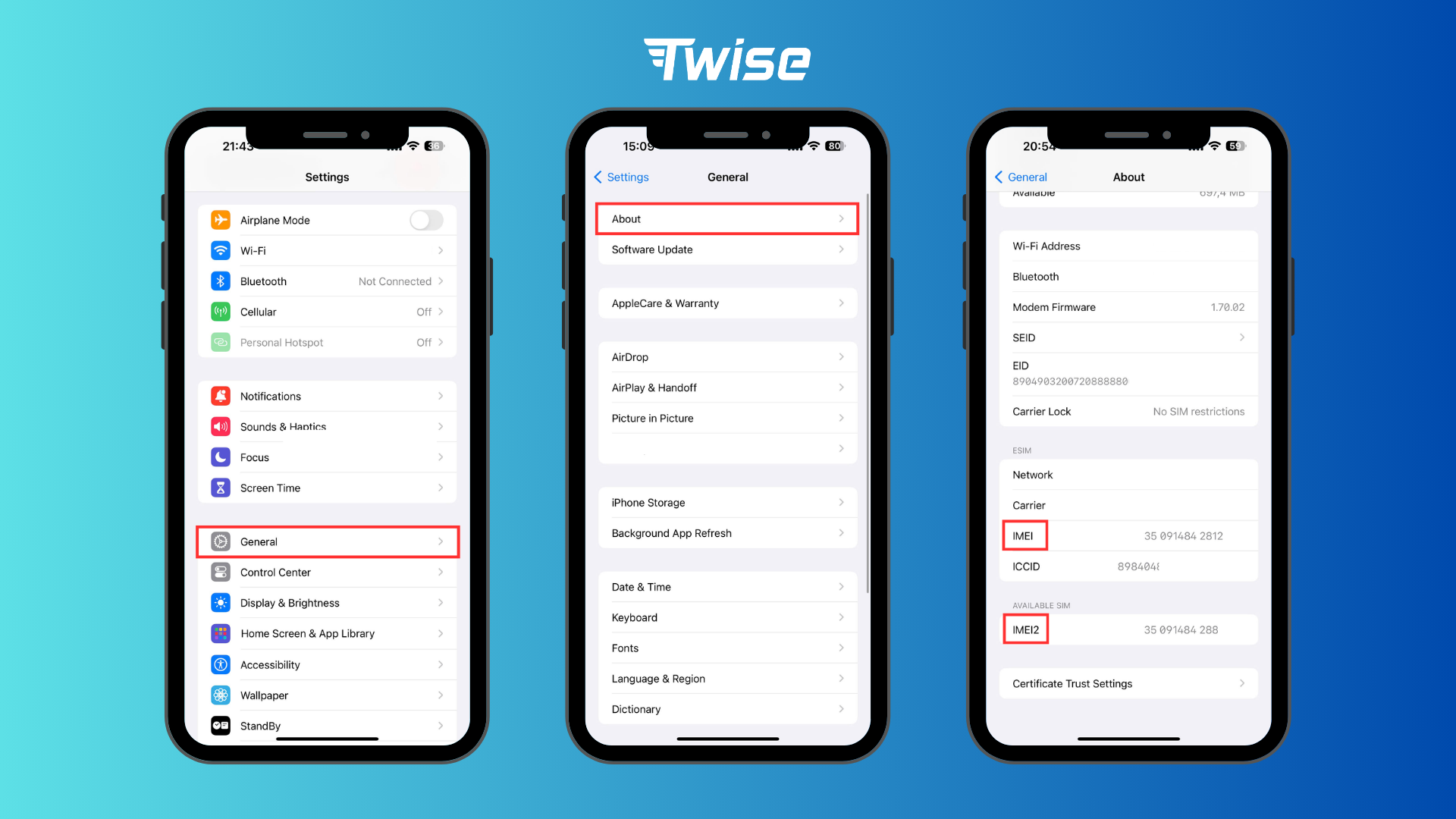
- Confirm your phone supports eSIM — check Settings → Cellular on iPhone, or Settings → Connections → SIM Manager on Android
- Confirm your phone is carrier-unlocked — contact your carrier if unsure
- Install the eSIM profile before travel if the product instructions allow it
- Check activation timing carefully so validity does not start before arrival
- Download offline maps (Google Maps or Apple Maps) before the flight
Dual-line setup on iPhone or Android:
- Set Japan eSIM as the default cellular data line
- Turn off data roaming on the T-Mobile line to prevent accidental roaming charges
- Keep T-Mobile line available for calls and texts
- Follow eSIM-specific instructions for whether data roaming needs to be enabled on the Japan eSIM line
Common Mistakes to Avoid
Assuming all T-Mobile plans behave the same internationally. Postpaid, prepaid, legacy, and newer plans have different roaming terms. Checking before departure takes two minutes and prevents surprises.
Treating International Pass high-speed data as unlimited. The pass includes unlimited calling, but data is capped. After the allowance, speeds drop. A 5GB cap sounds comfortable until maps, hotspot, and translation apps run through it faster than expected.
Waiting until landing to set everything up. Airport Wi-Fi in Japan exists but can be congested. Verification codes, eSIM downloads, and app setups are easier to handle at home before the flight.
Expecting the data-only Japan eSIM to receive SMS. Twise Japan KDDI eSIM does not include a Japanese phone number or SMS. For U.S.-side SMS verification, keep T-Mobile active. For services that specifically require Japanese SMS, neither option fully solves this.
Forgetting hotspot battery drain. Sharing data via hotspot with a laptop or tablet keeps the cellular radio continuously active. Battery drains noticeably faster. A power bank is practical for full-day sightseeing days that involve hotspot use.
About Twise Japan eSIM
Japan is one of the most transit-heavy travel destinations in the world. A typical day in Tokyo or Osaka involves multiple train transfers, walking routes between stations, restaurant lookups, and translation needs — all of which depend on fast, reliable mobile data.
Twise Japan KDDI eSIM is built on the KDDI local network, one of Japan’s three major national carriers. It is designed for travelers who want a Japan-first data setup rather than depending on roaming data caps.
All plans install digitally before or after arrival. No physical SIM, no store visit, no deposit.
For Japan specifically: if calls and your U.S. number matter, keep T-Mobile active alongside the Japan eSIM. If data is the priority, the KDDI eSIM handles the maps, transit, and daily app use that make a Japan trip work smoothly.
Related Articles
Japan eSIM Unlimited Data | Best choice for travelers
eSIM vs pocket wifi Japan: Which is better in Japan?
FAQs
