

When Is Best Time to Visit Cancun? A Season-by-Season and Traveler-by-Traveler Guide
The answer for “When Is Best Time to Visit Cancun?” is usually December to April, when the weather is drier, the sea is warm, and beach days are easier to plan. But if you are asking “when is best time to visit Cancun,” the smarter answer depends on your trip style: spring break nightlife, family resorts, whale shark tours, cenotes, cheaper hotels, or fewer sargassum days. This guide breaks Cancun down by month, season, destination area, and travel friction, including peak demand, rideshare coordination, maps, hotel apps, and when to activate a Mexico eSIM so your phone works before the airport transfer pickup line.
Quick Answer: When Is Best Time to Visit Cancun?
For most travelers, the best time to visit Cancun is December to April. This is the drier, more comfortable period, with sunny beach weather and lower rain risk than late summer and autumn. The trade-off is demand: Christmas, New Year, Presidents Day, and spring break push hotel prices, airport lines, restaurant reservations, and beach-club availability higher.
The most balanced months are usually late January, February, early March before the heaviest spring break surge, and late April after Easter. These windows offer strong beach weather without the most extreme peak-demand pressure. Travelers who care more about value than perfect weather can also look at May, early June, or late October to early November, while accepting warmer humidity, more rain risk, or changing sargassum conditions.
| Featured snippet answer
The best time to visit Cancun is generally December to April for dry weather and reliable beach days. For fewer crowds and better value, consider late January, February, late April, May, or early November, depending on your tolerance for humidity, sargassum, and rain risk. |
Best months by travel goal
The strongest Cancun timing decision starts with the question most travelers skip: what do you want the trip to do? A nightlife-focused spring break trip, a honeymoon, a family all-inclusive stay, and a cenote plus Mayan ruins itinerary should not be booked by the same rule.
| Travel goal | Best timing | Why it works | What to watch out for |
| Best overall weather | December to April | Drier skies, warm sea, easier beach planning | Peak hotel rates and higher restaurant demand |
| Best balance of weather and crowd control | Late January, February, late April | Still strong beach weather with fewer extreme holiday spikes | Events and school calendars can still lift prices |
| Spring break nightlife | Early to mid-March | Peak energy, beach clubs, group travel, nightlife demand | Surge pricing, packed ride-share zones, stricter local rules |
| Family resorts and theme-style day trips | Late March to April, or June school holidays | School calendars align; resorts run full programming | Airport, hotel app, and transfer coordination gets busier |
| Lower prices | May, early June, late October, early November | Shoulder-season rates and thinner crowds | Humidity, rain risk, or sargassum variability |
| Whale sharks and water activities | June to August | Seasonal marine activities operate in the region | Hotter weather, more planning around storms and sea conditions |
| Fewer sargassum concerns | Often winter to early spring | Lower historical seaweed probability than peak warm months | No month is guaranteed; check current beach reports |
Cancun Season-by-Season, With a Month Table
Dry season, spring break, summer, hurricane season – quick paragraphs

Dry season, roughly December through April, is Cancun at its easiest. This is when the classic brochure version of Cancun is most likely: bright beach days, more comfortable evenings, and fewer rain interruptions. It is also when the destination becomes more expensive because travelers from the US, Canada, Europe, and Latin America are escaping winter at the same time.
Spring break season, especially March into early April, is not simply a weather season. It is a demand season. Flights, airport transfers, beach clubs, ride-share pickups, restaurants, hotel check-ins, and nightlife reservations all behave differently when thousands of travelers arrive on similar dates. During these weeks, the problem is less “Can I get to Cancun?” and more “Can I coordinate every step once everyone else is trying to do the same thing?”
Summer brings heat, humidity, strong sun, and a different kind of Cancun. It can be excellent for travelers who want warm water, pool days, whale shark tours, or family resort activities, but it requires more flexibility around afternoon storms, hydration, sunscreen, and sea conditions. Summer is also when mobile data becomes more practical: you will use maps, weather apps, hotel apps, ride-share, ferry updates, and group chats more often because plans move around heat and rain.
Hurricane season in the Atlantic officially runs from June 1 to November 30 according to the NOAA National Hurricane Center. That does not mean Cancun is unsafe for that entire period, but it does mean travelers should treat September and October differently from February. Build flexibility into flights, buy travel insurance where appropriate, monitor official forecasts, and avoid booking a tight same-day connection after a long beach stay.
| Featured snippet answer
Cancun has its easiest travel weather from December to April, its highest party and price pressure around March spring break, its hottest and most humid conditions in summer, and its most weather-sensitive planning window during the Atlantic hurricane season from June through November. |
Month-by-month at a glance
Use this table as a planning filter rather than a hard rule. Cancun weather is tropical, so even good months can have rain and even wetter months can have beautiful beach days. The real planning advantage comes from matching month, crowd level, and digital logistics before you book.
| Month | Weather and crowd note | Best for | Watch out for |
| January | Dry, sunny, premium winter demand | Reliable beach weather, couples, resorts | High prices around New Year and winter escapes |
| February | One of the best balance months | Beach days, honeymoons, first-time visitors | Book restaurants and transfers early |
| March | Warm, busy, spring break peak | Nightlife, group trips, beach clubs | Peak demand, ride-share surges, airport queues |
| April | Still strong weather, Easter impact | Families, beach plus day trips | Semana Santa/Easter can lift prices and crowds |
| May | Hotter, shoulder-season value | Lower hotel rates, pool-focused trips | Humidity and possible sargassum increase |
| June | Start of hurricane season, hot | Whale shark season, family resorts | Rain bursts, storm monitoring, stronger sun |
| July | Hot, busy with summer holidays | Water activities and resort stays | Heat, humidity, crowded beaches |
| August | Hot and humid, active tropical season | Travelers prioritizing water and resort deals | Storm risk and flexible scheduling |
| September | Lower demand, higher weather sensitivity | Budget travelers with flexibility | Rain, storms, fewer perfect beach days |
| October | Often the riskiest weather month | Deals and quiet trips if flexible | Hurricane monitoring, rain disruption |
| November | Transition month, improving weather | Value before holiday peak | Early month can still be weather-variable |
| December | Dry season returns, holiday spike | Classic Cancun beach trip | Christmas/New Year demand and premium pricing |
Best Time by Area – Cancun Does Not Behave Like One Trip
Many answers to “when is best time to visit Cancun” treat Cancun as if every traveler is sleeping in the same resort and moving the same way. In reality, the best month depends on which part of the region you use as your base and how often you leave it.
- Hotel Zone: December to April is the safest bet for beach weather and walkable resort days. March is best for nightlife energy but worst for quiet beach access, beach-club reservations, and transport pressure. If your hotel uses an app for room access, restaurant booking, resort chat, or activity scheduling, install it before arrival and keep mobile data live because resort Wi-Fi can be weak on beaches and in elevator areas.
- Downtown Cancun: This area is more practical for travelers who want restaurants, local buses, supermarkets, and lower hotel costs. It is less dependent on perfect beach weather, so May or November can work well. You will use maps more often here because addresses, bus stops, and pickup points are less resort-contained than in the Hotel Zone.
- Costa Mujeres and Playa Mujeres: These quieter resort areas suit families, couples, and travelers who care about the hotel experience more than nightlife. Dry season is still best, but shoulder months can be attractive if the resort has strong pools, restaurants, kids programs, and shuttle support. The key timing issue is transfer coordination from the airport, because the area is farther from the main Hotel Zone.
- Isla Mujeres: Winter and spring are excellent for calmer beach days, but ferry timing becomes part of your trip logic. A strong plan includes downloaded ferry confirmations, offline maps, and live data for schedule changes. If your Cancun trip depends on a same-day ferry connection after landing, do not rely on airport Wi-Fi and hotel Wi-Fi as your only connectivity.
- Riviera Maya and Playa del Carmen: This works better for travelers who want to combine Cancun flights with beaches, cenotes, beach clubs, and day trips south. December to April is strongest for weather, but May and November can be good value. Sargassum varies significantly by beach and day, so check current reports from resources such as Sargassum Monitoring before locking in a beach-heavy itinerary.
- Tulum: Tulum is more spread out than many first-time visitors expect. The best timing is usually the dry season, but the best connectivity plan is just as important as the best weather plan. Beach road traffic, cenote routes, hotel WhatsApp messages, QR-code menus, maps, and ride arrangements make live mobile data much more valuable than a hotel-only Wi-Fi mindset.
- Chichen Itza, cenotes, and inland day trips: If your Cancun trip includes inland ruins or cenotes, the dry season is more comfortable for long walking days. Summer can still work, but you need early starts, hydration, sun protection, and offline maps. Live data matters because pickup points, tour vans, and weather changes are often coordinated by app or WhatsApp rather than formal signage.
- Cozumel and Holbox add extra transport layers. Each ferry, shuttle, or boat link adds a new point where messages, maps, and schedule updates matter. The more island transfers you add, the more important it becomes to set up your local data before arrival instead of troubleshooting at the port.
| Featured snippet answer
The best time for Cancun depends on your base. The Hotel Zone is best from December to April, Isla Mujeres and Riviera Maya require more ferry and transfer planning, and inland day trips are easiest in the dry season when heat and rain are less disruptive. |
Mexico eSIM vs Roaming vs Local SIM for Cancun
Connectivity is not just a convenience in Cancun. It affects how fast you leave the airport, whether your driver can find you, whether your hotel app loads, whether maps update when traffic changes, and whether your group can coordinate when everyone separates between beach, mall, restaurant, and ferry terminal.
Comparison table
| Option | Coverage starts | Setup time | Best for | Main limitation |
| Mexico eSIM | Before landing if installed pre-departure and enabled on arrival | 5-10 minutes before the flight | Airport pickup, maps, hotel apps, rideshare, WhatsApp, beach days | Requires an eSIM-compatible, unlocked phone |
| International roaming | Usually immediately on landing | No setup if roaming is enabled | Travelers who prefer not to install anything | Often expensive for data-heavy trips; speed can be capped |
| Local Mexican SIM | After buying in Mexico | 15-30+ minutes plus store visit and setup | Longer stays or travelers needing a local number | Not useful during the airport-to-hotel arrival window |
| Airport/hotel Wi-Fi | Only in covered zones | Instant when available | Backup at airport, lobby, cafe, or room | Does not cover curbside, transfer areas, beaches, ferries, taxis, or day trips |
A local data plan is most valuable during the first two hours of the trip, not after you are comfortable at the resort. Cancun Airport transportation services recommend booking transfers in advance, and the airport area has multiple pickup and transport layers that can be confusing for first-time visitors. Checking your driver message, vehicle details, terminal notes, and hotel address requires a live connection when you are already moving through arrivals. See the Cancun Airport transportation guide for how many transport options compete for attention after landing.
Pick Mexico eSIM timing based on your arrival and route
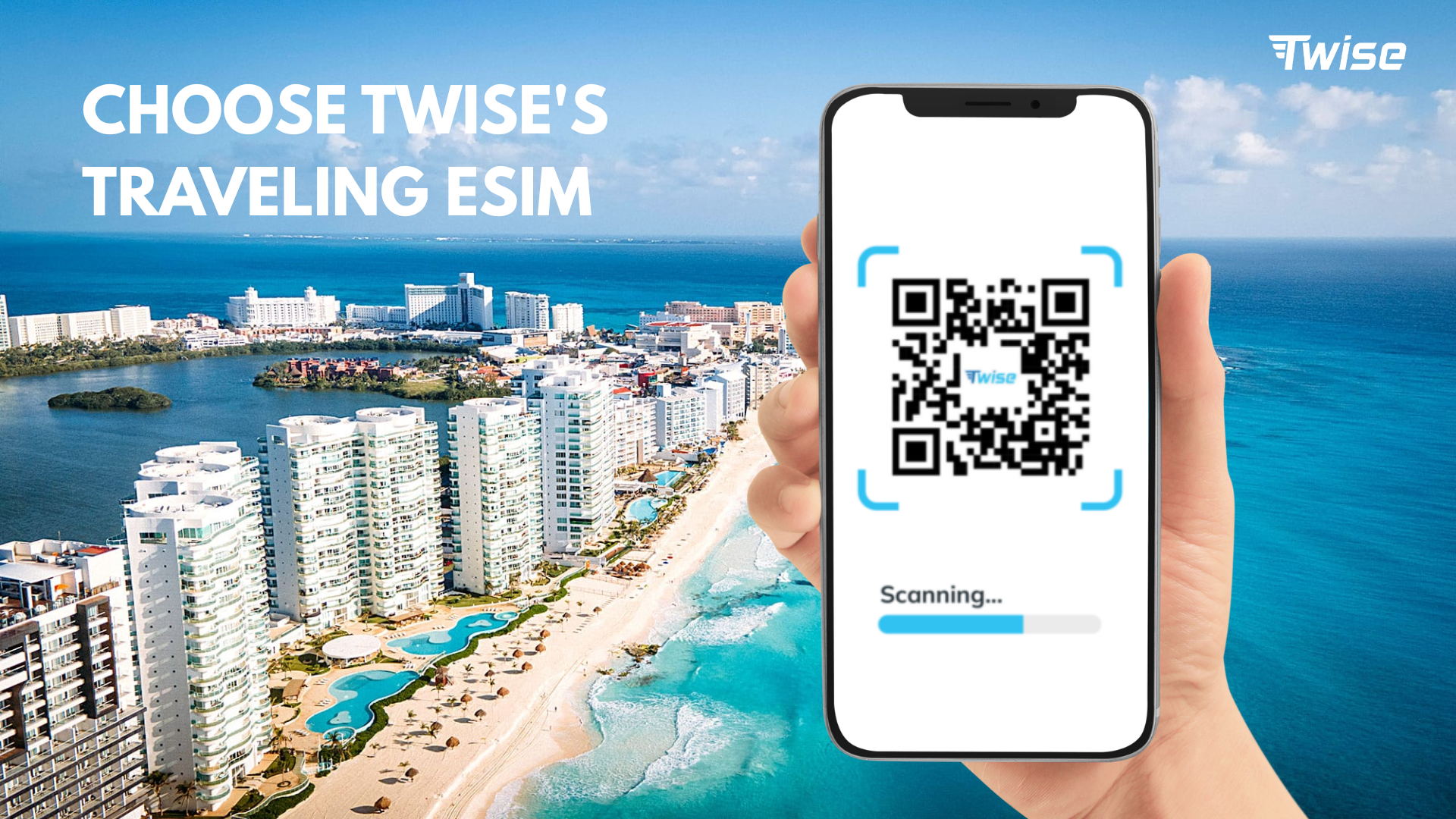
The best timing is simple: buy and install your Mexico eSIM before departure, keep your home SIM active for important OTP messages if needed, and switch mobile data to the Mexico eSIM when the plane lands or when the plan instructions say activation begins. Do not wait until baggage claim to discover that your phone is locked, your payment app needs verification, or your hotel confirmation is buried in email.
For a Cancun-only trip, a Twise Mexico eSIM keeps the setup focused on the country you are visiting. For a wider itinerary that includes the US, Central America, or multiple countries, compare plan coverage before buying. The practical decision is not only price; it is whether your phone works at the exact points where Cancun creates friction: immigration, luggage, transport pickup, hotel app login, maps, beach-club booking, and day-trip coordination.
A good eSIM timing rule: install before flying, confirm the QR code or app setup is complete, screenshot the setup instructions, turn off unnecessary background sync, and test that the eSIM line appears in your phone settings. Then enable data on arrival. This prevents the most common travel-tech failure: needing the internet to finish setting up the thing that was supposed to give you internet.
The Connectivity Problems Generic Cancun Guides Do Not Mention
Most Cancun travel guides answer weather and hotel price questions, then treat connectivity as an afterthought. For international visitors, connectivity is part of the itinerary. Cancun is a beach destination, an airport transfer destination, a hotel-app destination, a WhatsApp destination, and a map-heavy day-trip destination at the same time.
Cancun Airport transfers and rideshare coordination need live data
Airport arrival is the first stress test. Pre-booked shuttle providers, taxis, hotel transfers, and app-based rides all depend on finding the right person, sign, island, terminal, or vehicle. Uber lists service for Cancun International Airport through its own CUN airport pickup page, but travelers should still treat airport pickup as a live-coordination moment rather than a guaranteed curbside process like in some US airports. Local rules, pickup points, driver instructions, and traffic can change the real experience.
This is why mobile data matters more than generic airport Wi-Fi. Wi-Fi can help while standing still, but the hard part begins when you walk away from the terminal, look for a transfer sign, message the driver, verify the hotel address, or follow directions to a pickup point. If your connection drops at that moment, your transfer problem becomes a travel problem.
Beach destinations overload mobile networks during peak demand
Peak demand in Cancun is not just about hotel prices. It also concentrates thousands of people into the same beach clubs, clubs, restaurants, ferry docks, and hotel corridors. During spring break, Christmas/New Year, Easter, and major event weekends, the same apps become essential for everyone at once: maps, Uber, WhatsApp, hotel apps, restaurant booking, mobile payments, and social uploads.
A data plan cannot eliminate congestion, but it gives you a better chance than relying only on public Wi-Fi. It also lets you switch locations, message your group, or re-route without hunting for a lobby connection. For group travelers, the real risk is not one person losing Instagram; it is losing the group chat exactly when the pickup point, dinner time, or beach-club entry changes.
Hotel apps and resort Wi-Fi do not follow you beyond the property
All-inclusive resorts increasingly push services into apps: mobile check-in, restaurant reservations, activity schedules, spa bookings, room service, resort maps, and chat with the front desk. These apps are useful, but they can create a hidden dependency. You may need internet before your room is ready, while walking between buildings, on the beach, in a taxi, or during a day trip where resort Wi-Fi no longer exists.
The smartest approach is to download the hotel app before flying, log in if possible, screenshot your reservation, and keep mobile data active until you have confirmed room access and the resort Wi-Fi actually works. For large resorts, weak Wi-Fi in far buildings, beach zones, elevators, and pool areas is common enough that mobile data should be treated as backup infrastructure, not a luxury.
Maps matter more than people think: Hotel Zone, cenotes, ferries, day trips
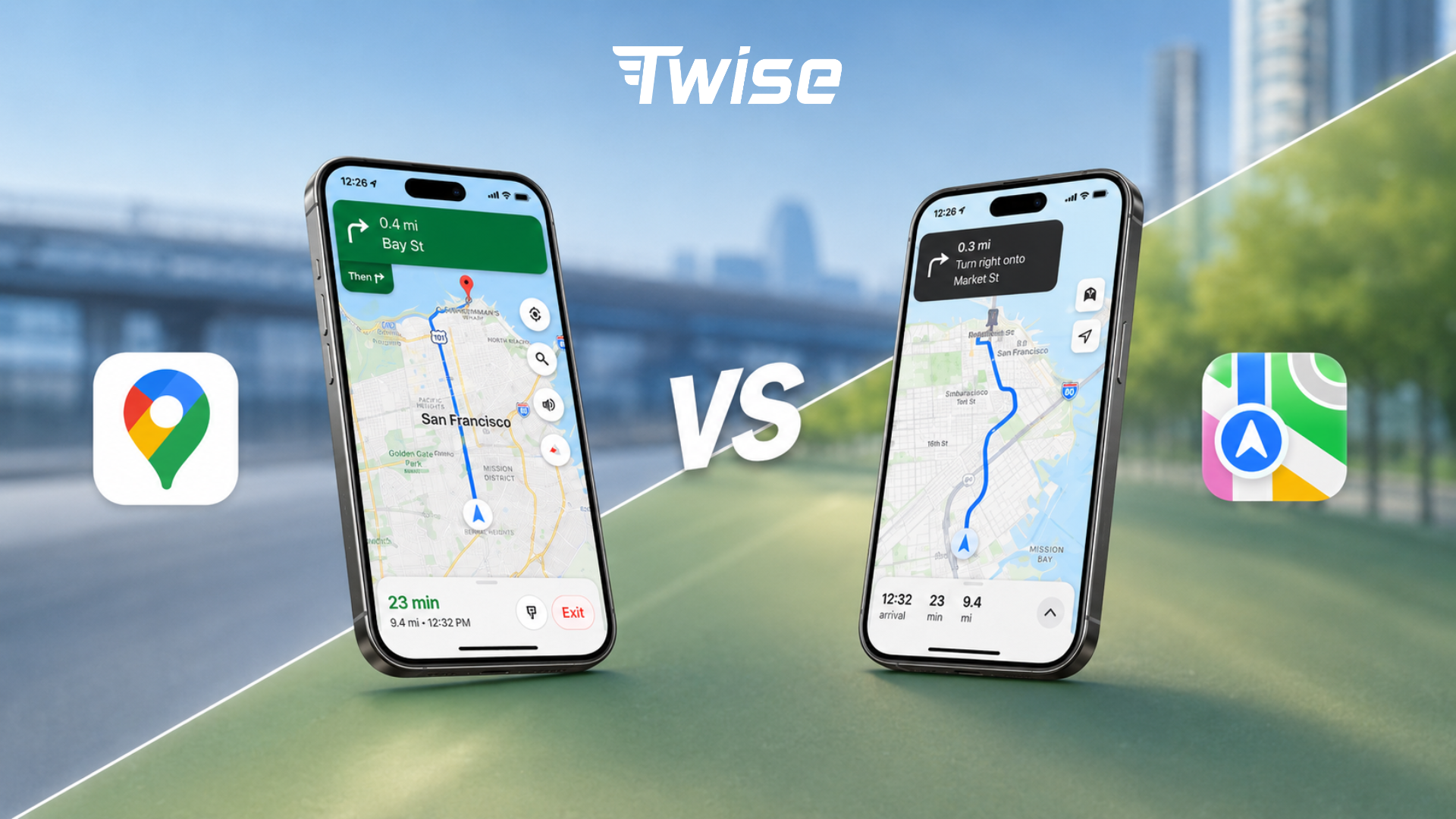
Cancun looks simple on a map until the trip starts moving. The Hotel Zone is long and linear. Downtown is more local and address-specific. Cenotes may be on rural roads. Ferries to Isla Mujeres depend on port choice and departure time. Day trips to Chichen Itza, Tulum, Playa del Carmen, or Xcaret can involve multiple pickup zones. Offline maps are helpful, and Google explains how to save them in its offline maps guide, but offline maps cannot always handle live traffic, driver messages, changed pickup points, or road closures.
Use offline maps as a safety net, not the whole plan. Save the hotel, airport terminal, ferry dock, restaurant, tour meeting point, and nearest pharmacy. Then keep mobile data available for live updates. Cancun timing is about weather, but Cancun execution is about movement. The best month still feels stressful if you cannot reach the right pickup point.
Apps and Mobile Data Setup Before You Go
Set up your digital travel stack before the airport day. The worst time to download a hotel app, retrieve an eSIM QR code, reset a banking password, or find a tour confirmation is when you are standing in arrivals with luggage and patchy Wi-Fi.
- Mexico eSIM: buy and install before departure, then enable data when your plan instructions say to activate. Use Twise Mexico eSIM for a Cancun-focused data setup.
- Airline app: keep delay, baggage, gate, and rebooking alerts visible, especially during storm-sensitive months.
- Hotel or resort app: download early, log in, check whether restaurant reservations or room requests are handled inside the app.
- Maps: save offline areas for Cancun, Hotel Zone, airport, fehttps://twise.tech/mexico-esim/rry docks, and any day-trip routes. Do not depend on offline maps for live pickup changes.
- Rideshare and transfer apps: add your card, verify your phone number, and confirm airport or hotel pickup rules before landing.
- WhatsApp: many drivers, tour operators, restaurants, and small businesses use it for confirmations and live location sharing.
- Weather and hurricane monitoring: during June to November, keep official forecasts bookmarked, especially if your itinerary includes ferries or tight flight connections.
- Banking app and OTP access: international card verification can happen at hotels, beach clubs, rentals, and transport counters. Make sure you can receive or approve security prompts.
A practical 24-hour checklist: screenshot your hotel address, transfer confirmation, passport page, insurance information, tour pickup message, ferry ticket, and eSIM instructions. These screenshots are not a replacement for mobile data, but they reduce panic if a connection drops in the first hour.
Common Timing Mistakes First-Time Visitors Make
- Choosing only by weather and ignoring demand. December to April is the easiest answer, but it is also when many other travelers have the same idea. A first-time visitor who books March without reservations, airport transfer planning, or mobile data is not just booking good weather; they are booking into maximum competition for space and services.
- Assuming spring break is one week. Cancun sees multiple waves: US college spring break, Canadian school breaks, Easter/Semana Santa, and family travel. That means demand can stretch across several weeks, not one neat date. Always check your exact hotel dates, not just the month.
- Treating sargassum like a fixed season. Sargassum can change by beach, current, wind, and week. Winter to early spring is often safer for a beach-first itinerary, but no month is guaranteed. Check current reports close to departure and choose a hotel with strong beach maintenance if the beach is the core reason for your trip.
- Booking a remote resort without thinking about movement. A beautiful resort outside the Hotel Zone can be perfect, but it changes the importance of transfers, food delivery, taxi coordination, and tour pickup. The farther you are from central areas, the more important live data becomes.
- Relying on hotel Wi-Fi for the whole trip. Hotel Wi-Fi is useful once you are checked in. It does not help at the airport curb, in a shuttle queue, on a ferry, on a beach, in a taxi, or at a cenote pickup point.
- Downloading apps after arrival. Many apps require phone verification, email access, card confirmation, or updates. Set up rideshare, hotel, airline, maps, WhatsApp, and eSIM before departure so you are not solving app problems during the most stressful part of the trip.
- Ignoring hurricane-season flexibility. Traveling June through November can still be enjoyable, often cheaper, and less crowded. But it should be planned with looser connections, refundable options where possible, insurance consideration, and official weather monitoring from sources like the National Hurricane Center.
- Choosing the wrong “best” month for your real travel style. February may be excellent for a calm couple trip. March may be excellent for nightlife. June may be excellent for water activities. November may be excellent for value. The best Cancun timing is personal, but the worst timing is the one chosen without understanding the trade-offs.

FAQs
