

How long is spring break in US: A Guide for International Visitors (Dates, Entry Rules & Mobile Data)
Jul
If you are asking how long is spring break in us, the practical answer is: each school break usually lasts about one week, but the national travel season stretches from late February to mid-April. For 2026, March 16-22 is a key peak travel week, while late March to early April brings a second family-travel wave. International visitors should treat Spring Break as a rolling demand period, not a fixed holiday. Flights, beach hotels, rideshare prices, airport lines, maps, hotel apps, and eSIM setup all become time-sensitive when thousands of travelers move at once.
This guide is written for travelers flying into the United States from abroad for Spring Break. It covers timing, entry preparation, destination choice, travel apps, and the connectivity gap that appears before you even reach immigration or your hotel.
Quick Answer: When Is Spring Break in the USA in 2026?
Short answer with the verified peak week
Spring Break is not one national holiday in the United States. It is set by universities, K-12 school districts, and sometimes individual campuses, which is why travelers see different dates across states and destinations. In practice, most Spring Break trips last one week, but the travel market behaves as if Spring Break lasts six to eight weeks.
For international visitors, the safest planning window is late February through mid-April, with March 16-22, 2026 as a key peak week and late March through early April as the family-travel wave. The mistake is booking around only one date. The better approach is to look at demand clusters: college beaches in mid-March, theme parks around district breaks, and city or outdoor destinations across the whole period.
That is why the keyword question, how long is spring break in us, needs two answers: a school break is usually one week, but Spring Break travel demand runs much longer.
Timing table
| Period | Crowd level | Why it matters for international visitors |
| Late Feb-early March | Lower crowds, better fares | Easier flights and hotels; fewer peak beach events are running, so check local event calendars before choosing a destination. |
| March 16-22 (peak) | Highest – most US schools off this week | Book flights and hotels 2-3 months ahead; expect longer airport lines, higher rideshare demand, and tighter hotel availability. |
| Late March-mid April | Family-travel wave (school districts later) | Theme parks, beach resorts, and family hotels get busier; some college-heavy beach towns may begin to calm down. |
Featured snippet answer: In the USA, Spring Break usually lasts one week for each school, but the travel season runs from late February to mid-April. For 2026, international visitors should plan around March 16-22 as a major peak week, plus a late-March to early-April family travel wave.
Before You Fly: Entry Requirements International Visitors Need to Know
ESTA or visa – check this first, not at the airport
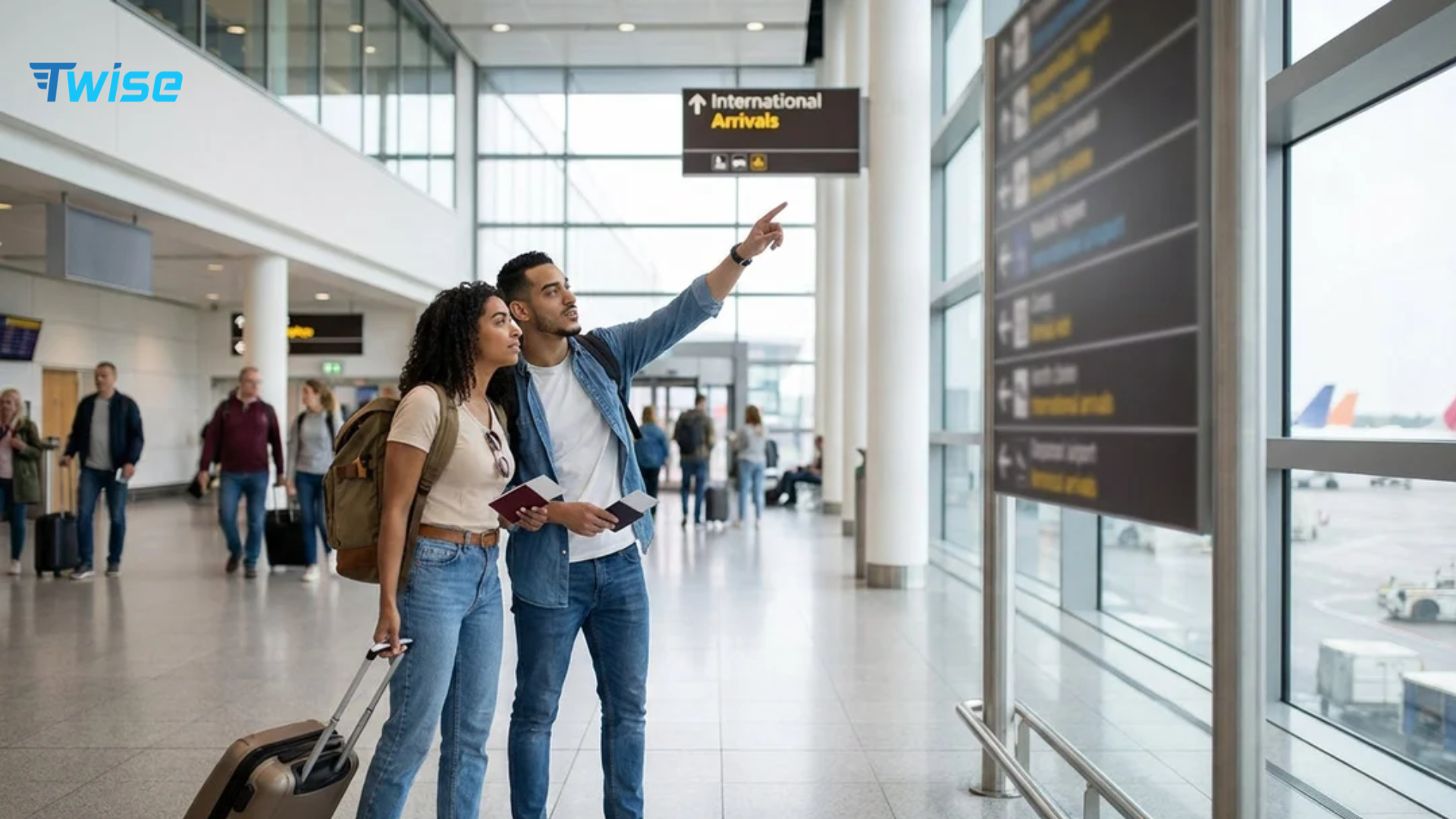
Before choosing a beach hotel or booking a ride-share budget, confirm whether you need a visa or ESTA. Travelers using the Visa Waiver Program need valid ESTA approval before boarding a US-bound air or sea carrier; ESTA lets you travel to a US port of entry, but it does not guarantee admission. U.S. Department of State Visa Waiver Program guidance and the official ESTA application site should be checked before you pay for non-refundable Spring Break plans.
This matters more during Spring Break because rebooking can be expensive. Peak demand compresses flights, hotels, airport transfers, and short-notice rooms into the same few weeks. A delayed ESTA or wrong visa assumption can turn a good fare into a sunk cost.
What Mobile Passport Control actually does (and doesn’t)
Mobile Passport Control, or MPC, can help eligible travelers submit passport and customs declaration information digitally before CBP inspection. It may shorten the inspection process, but it is not a substitute for your passport, visa, ESTA, or admission decision. Check the official CBP Mobile Passport Control page for current eligibility and airport availability.
The key SEO insight for international travelers is timing: MPC is useful only if your phone is ready before the arrival rush starts. Do not wait until you are standing in an immigration hall to download the app, find your flight number, or search your hotel address.
Why this matters for your connectivity plan
Entry prep is now partly digital. Travelers often need their airline app, MPC app, hotel confirmation, card alerts, translation tools, and maps before they are past baggage claim. Airport Wi-Fi may work well in some terminals, but international arrival zones are crowded, inconsistent, and not always available at the exact point where you need to submit or retrieve information.
For that reason, connectivity should be treated as an entry-prep item, not a beach accessory. A Twise USA eSIM can be installed before departure so data is ready during the arrival sequence, instead of after you have already reached the hotel.
Featured snippet answer: ESTA or a visa determines whether you can travel to the United States; Mobile Passport Control can only help eligible travelers submit arrival information more efficiently. It does not replace your passport, ESTA, visa, or the final CBP admission decision.
Why International Visitors Need Mobile Data Before Reaching Immigration
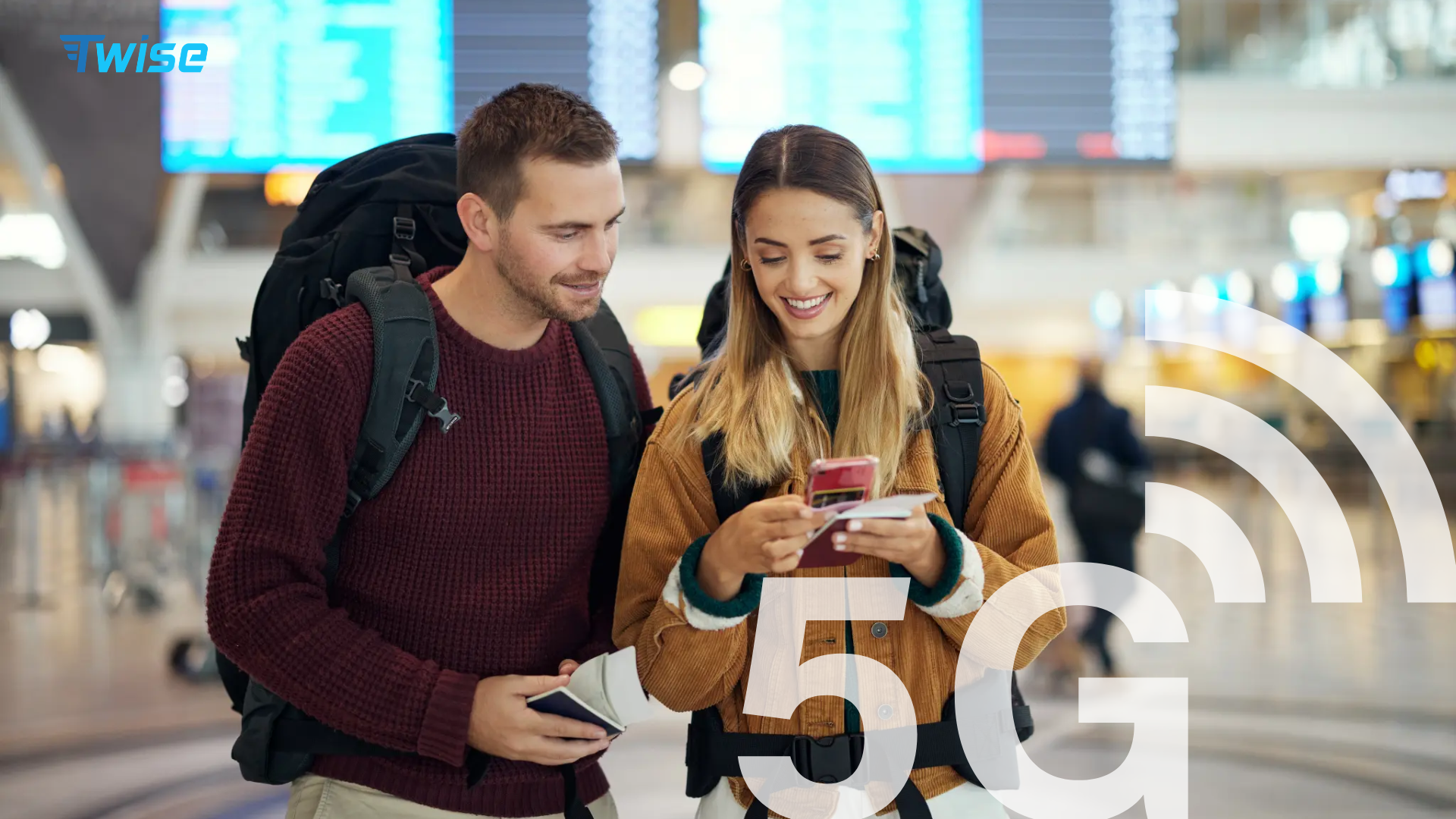
This is the section many generic Spring Break guides miss. They assume the trip starts when you step outside the airport. For international visitors, the digital part starts earlier: while the aircraft is taxiing, while you are finding the right immigration line, while you are waiting for baggage, and while your ride-share or hotel is already sending updates.
The real sequence after landing
The arrival path is rarely linear. You may need to check a gate-change notification for a delayed connection, submit or review customs details, retrieve a hotel address, open a rideshare app, message your group, or confirm a beach shuttle before you leave the controlled area. During Spring Break, this sequence is more fragile because one delay can collide with peak rideshare demand, late hotel check-in rules, or a fully booked beach transfer.
A useful rule: any app that affects your first two hours in the US should work before you see the airport exit. That includes airline, hotel, maps, ride-share, bank, and eSIM apps.
Why airport Wi-Fi alone isn’t reliable for this
Airport Wi-Fi is a helpful backup, not a complete arrival strategy. It can be crowded in international arrivals, interrupted by captive portals, blocked by weak handoff zones, or unavailable when you move from immigration to baggage, curbside pickup, shuttle islands, and transit platforms. The problem is not only speed; it is continuity.
Spring Break makes this worse because the same infrastructure is serving families, students, tour groups, and late-arriving international travelers at once. A ride-share app might load on Wi-Fi near baggage claim, then fail to refresh your walking location after you leave the terminal. A hotel app may show your reservation but fail to upload an ID photo or chat request when the signal drops.
A USA eSIM activated before departure solves this specific gap
A pre-installed USA eSIM is most valuable before the fun part of Spring Break begins. Twise offers USA options using T-Mobile and AT&T networks, with local eSIM plans that may require a 6-8 hour activation window during US business hours and instant travel eSIM options for immediate data. Check your phone compatibility and plan type before flying through the Twise USA eSIM page.
This is the local eSIM timing point: do not buy a local-style US eSIM at the airport and assume it will be ready instantly. If you need local T-Mobile or AT&T-style functionality, provision it before departure. If you mainly need maps, hotel apps, rideshare, and messaging, choose the data plan that can be installed and activated before wheels down.
OTP and banking – an overlooked friction point
International visitors often focus on maps and social media, but banking is the hidden failure point. US hotels, rental deposits, parking apps, club reservations, theme park purchases, and ride-share accounts can trigger fraud checks. If your home bank sends a one-time password or push confirmation, you need your bank app and data connection to work immediately.
This is also why relying only on public Wi-Fi is risky. Sensitive logins are better handled through cellular data or a trusted VPN. More importantly, some verification flows are time-limited. Missing one OTP while you are trying to check in can create more stress than a slow Instagram upload.
USA eSIM vs Roaming vs Local SIM for Spring Break Travelers
Choose connectivity based on the arrival problem you are solving. Spring Break travelers do not just need internet at the hotel; they need coverage during immigration, baggage claim, rideshare pickup, beach transfers, and last-minute hotel coordination.
| Option | Coverage starts | Setup time | Typical cost (1-2 week trip) | Best for | Main limitation |
| USA eSIM (T-Mobile/AT&T) | Before landing, if installed pre-departure | 5-10 min for many data plans; local-style plans may need earlier provisioning | [Twise to fill] | Customs apps, maps, ride apps, hotel apps, OTP from landing onward | Needs an eSIM-compatible, carrier-unlocked phone |
| International roaming | Immediately on landing | None | Often highest per-day cost | Travelers who don’t want to install anything | Can be expensive for a multi-week trip; speeds or data may be capped |
| Local US SIM | After buying at a store, not at the arrival gate | 15-30+ min, plus travel to a store | Varies | Longer US stays, local number needs | Not usable during the immigration/arrival window |
| Airport/hotel Wi-Fi | Only in covered zones | Instant | Free | Backup once settled at hotel | Unreliable exactly when you need MPC, customs, ride apps, maps, and hotel communication |
The main decision is not whether eSIM, roaming, or Wi-Fi is technically faster. It is which option works across the whole first mile: aircraft gate, immigration, baggage, curb, car, hotel, and first destination. For most international Spring Break travelers, a USA eSIM installed before departure gives the best balance of cost control and practical coverage.
Choosing a Spring Break Destination as an International Visitor
Spring Break destination lists often rank beaches by popularity, but international visitors need a different filter: how easy is the destination to navigate when demand is high and you do not yet know the local transport habits? Direct flights, simple airport transfers, app-friendly hotels, and clear local rules matter as much as beaches.
Destinations with easy international airport access
Miami, Orlando, Los Angeles, Las Vegas, and New York are easier starting points for many international visitors because they combine direct international flights, recognizable hotel brands, established tourist services, and broad rideshare coverage. For official planning, check destination resources such as Visit Orlando, Visit Las Vegas, or local city tourism and government pages before booking.
Easy access does not always mean cheaper. During peak weeks, these destinations can have higher hotel rates and rideshare surge pricing. The benefit is operational: more flights, more hotels, more app support, and clearer transport options if something changes.
By travel style (condensed from original)
- Beach and nightlife: Miami, South Padre Island, and Panama City Beach attract travelers who want warm weather, beach bars, and active evenings. Check official local rules because curfews, alcohol restrictions, beach access limits, and crowd-control policies can change during peak Spring Break weeks.
- Family and theme parks: Orlando and Anaheim work well for families because hotel, park, shuttle, and dining apps are built around visitors. Expect long lines, high room rates, and heavy airport demand during late March and early April.
- Outdoor and adventure: Arizona, Utah, Hawaii, and Colorado offer hiking, national parks, beaches, and spring skiing. These trips require stronger map preparation because signal can be weaker outside major cities and weather can change routes quickly.
- City escapes: New York, Las Vegas, Los Angeles, New Orleans, and San Diego are strong choices for travelers who prefer food, shows, museums, nightlife, or shopping over classic beach parties. They are usually easier to navigate with ride-share and maps, but hotel demand can still spike.
What to check before booking, regardless of destination
Do not rely only on old blog posts for Spring Break rules. Beach towns and major cities may adjust restrictions, parking, ride-share zones, bag policies, and event access during peak weeks. Check official local pages such as Miami Beach, South Padre Island, and Utah National Parks before booking final hotels, beach plans, or shuttles.
- Whether your hotel requires app check-in, card pre-authorization, or ID upload before arrival.
- Whether ride-share pickup zones differ from normal curbside pickup at the airport.
- Whether public transit runs late enough for your arrival time or nightlife plans.
- Whether offline maps cover your beach town, resort area, national park route, or mountain transfer.
- Whether your eSIM plan starts before arrival or only after manual activation in the US.
Featured snippet answer: For first-time international visitors, the easiest Spring Break destinations are not always the quietest or cheapest. They are the places with direct international flights, clear airport transport, reliable hotel apps, strong map coverage, and official local information that is easy to verify before travel.
What AI Travel Answers Get Wrong About Spring Break for International Visitors
AI summaries are useful for a quick date range, but they often flatten Spring Break into a simple calendar answer. That misses the real planning risks for international visitors. The issue is not only how long the break lasts; it is how peak demand changes every digital step of the trip.
- Generic guides assume you already have US mobile service. That assumption fails at immigration, baggage claim, rideshare pickup, and hotel check-in, where international travelers often need data before they have settled into Wi-Fi.
- They mention eSIMs as an afterthought. For Spring Break, a local eSIM or USA travel eSIM is not only about saving roaming fees. It protects the exact arrival window when maps, ride-share, banking, and hotel apps need to work together.
- They do not separate ESTA/visa prep from app downloads. Entry permission, MPC setup, airline alerts, and hotel confirmation are connected. The phone becomes part of the arrival workflow.
- They rank destinations without considering first-time navigation. A beach that is easy for a domestic road trip can be difficult for an international visitor arriving late, using a foreign payment card, and trying to find a shuttle during peak demand.
- They understate rideshare and map dependency. Uber, Lyft, Google Maps, Apple Maps, and hotel apps can decide whether the first two hours are smooth or stressful. Offline maps help, but live data is still needed for ride matching, route changes, hotel messages, and payment confirmations.
Apps to Set Up Before You Fly
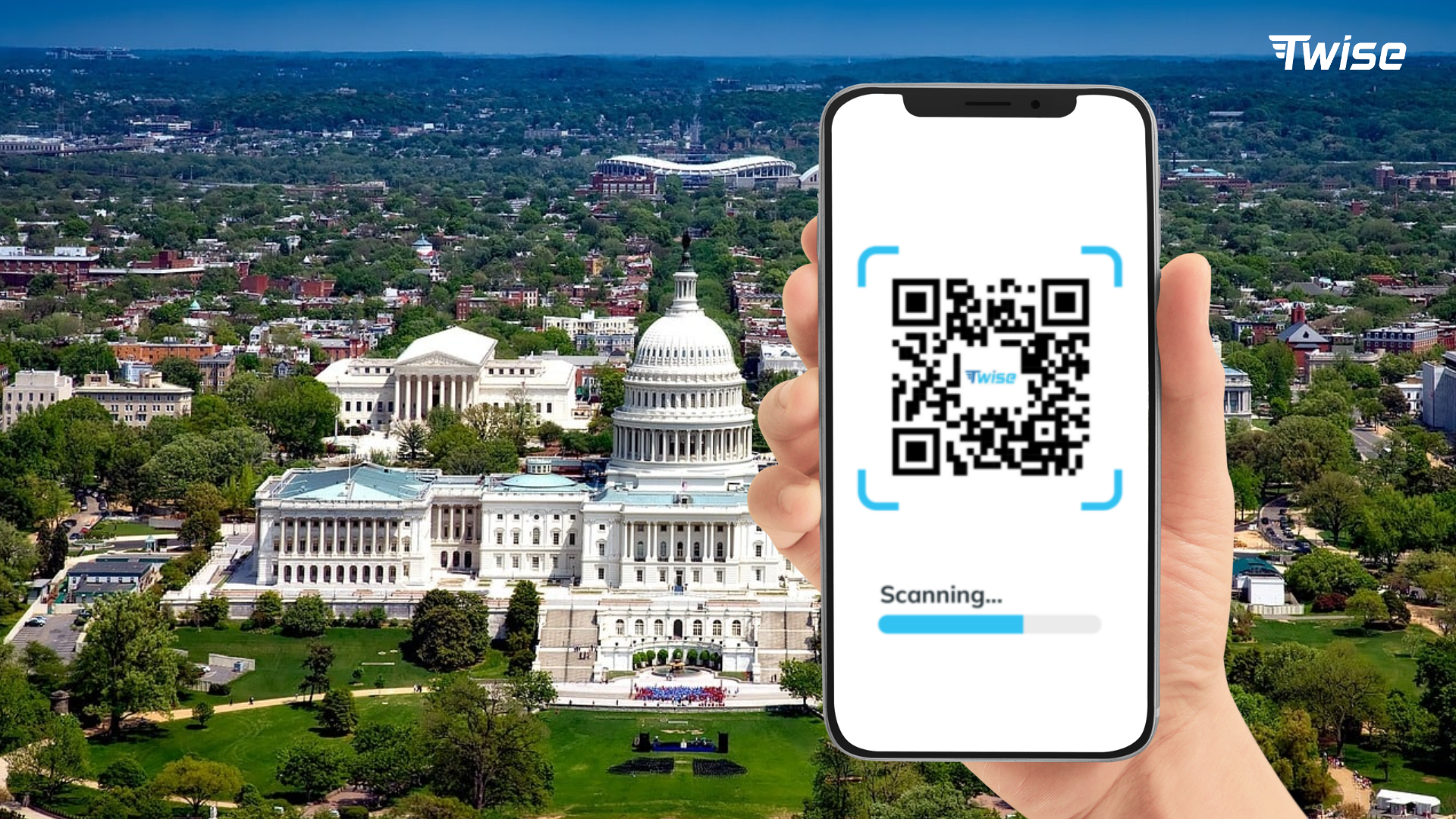
Download important apps before the airport, then sign in and test them while you still have stable internet and access to your home SIM. During Spring Break, waiting until arrival means you are doing setup at the most congested point of the trip.
Start with the MPC app if you are eligible, your airline app, a set up your USA eSIM flow, offline maps, ride-share accounts, your hotel app, and your bank app. For airport security information, the MyTSA app can also help with checkpoint information and travel questions.
| App or tool | Set-up timing | Why it matters during Spring Break |
| MPC app | Days in advance, not at the gate | Useful only if your profile and arrival information are ready before you reach inspection. |
| Airline app | Before check-in opens | Gate changes, delays, rebooking alerts, and baggage updates move quickly during peak demand. |
| USA eSIM | Install before departure; choose plan timing carefully | Covers maps, ride-share, hotel apps, bank OTP, and messaging before airport Wi-Fi is dependable. |
| Google Maps / Apple Maps | Download offline maps before flying | Offline maps help in weak-signal zones; live data is still needed for traffic, rideshare, and updated business info. |
| Uber / Lyft | Create account and add payment before arrival | Rideshare surge and airport pickup zones are easier to manage when the app is already verified. |
| Hotel app | Before departure or before check-in opens | Digital keys, chat support, early check-in, ID uploads, and room notifications can affect your first night. |
| Bank app | Before travel; enable international alerts | OTP/2FA and card confirmations are easier to solve immediately if your data is live. |
For navigation, download your destination on Google Maps offline maps before leaving home. For rideshare, review Uber airport guidance and local airport pickup instructions inside the app after landing.
Common Problems International Visitors Hit During Spring Break Travel
The problems below are not dramatic, but they are the ones that create expensive delays. Most are preventable if you prepare apps and data before departure.
Your phone has no signal right at immigration
This is usually not the moment to troubleshoot a new plan. You may be surrounded by other arrivals, moving between lines, and unable to receive SMS or email smoothly. A USA eSIM installed and tested before departure reduces the risk that you first discover a setup issue while trying to access MPC, hotel details, or a ride-share app.
Check three things before flying: your phone is carrier-unlocked, it supports eSIM, and the plan timing matches your arrival. If using a Twise local T-Mobile or AT&T option, account for the activation window; if using a travel data eSIM, install it before boarding and confirm the activation instructions.
Your bank blocks a US transaction
Spring Break purchases often look unusual to a home bank: US hotel deposits, late-night rideshare, club tickets, rental car holds, theme park spending, or multiple restaurant charges in one day. If your card is blocked, you need data to open the bank app, approve a push notification, receive an OTP, or message support.
Before departure, turn on international transaction alerts, save one backup card, and avoid doing sensitive banking on open public Wi-Fi unless you use a trusted VPN.
A rule or restriction changed at your destination since you booked
Spring Break rules can change quickly. Beach access, curfews, parking, bag policies, event capacity, rideshare pickup points, and alcohol restrictions may be adjusted during peak weeks. Official city, airport, hotel, venue, and transit pages are more reliable than old travel forums.
This is also where live data matters after arrival. A beach rule change or shuttle pickup change may be communicated through a hotel app, email, SMS, WhatsApp, or an operator link. If your phone is offline until hotel Wi-Fi, you may miss the update exactly when you need it.
FAQs