

Why Traditional GSM Networks are Shutting Down in Europe & Best Tips on How Travel eSIMs Keep You Connected
Sep
A GSM network is the legacy 2G technology that supported calls, SMS and basic mobile data across Europe. As European operators gradually shut down GSM and reuse spectrum for 4G LTE and 5G, travelers may wonder whether their phones, SIM cards or travel eSIMs will still work. This guide explains current 2G shutdown timelines in France, Germany and the UK, how GSM differs from LTE and 5G, what eSIM changes, how to check phone compatibility and practical ways to stay connected while traveling across Europe.
What Is a GSM Network?
A GSM network, short for Global System for Mobile Communications, is the digital cellular standard that became the foundation of widely deployed second-generation, or 2G, mobile networks.
GSM standardized mobile communication across countries, making international roaming easier. It originally focused on voice and SMS, while GPRS and EDGE later added basic mobile data.
What does GSM stand for?
GSM stands for Global System for Mobile Communications.
Traditional GSM networks commonly used 900 MHz and 1800 MHz frequencies in Europe. GSM also introduced the SIM-based subscriber model that remains familiar today.
Is GSM the same as 2G?
In practical travel terms, almost.
GSM is the main cellular standard associated with 2G networks. That is why operators often use the terms GSM shutdown and 2G shutdown when discussing the same transition.
What were GPRS and EDGE?
GPRS and EDGE were data extensions built on GSM.
GPRS introduced packet-based mobile data, while EDGE improved those speeds. Both are extremely limited compared with LTE and 5G.
If your phone shows E or EDGE, it has usually fallen back to a legacy 2G data connection.
Why GSM mattered for international travelers
GSM helped make international mobile travel easier by supporting:
- standardized roaming;
- SIM-based subscriber identity;
- interoperable voice and SMS;
- broader cross-border compatibility.
Before smartphones and travel eSIMs became common, GSM roaming was one of the main ways travelers stayed connected abroad.
What does G, E or EDGE mean on your phone today?
G, E or EDGE usually means your phone is connected to legacy 2G mobile data.
Simple messaging may still work, but maps, ride-hailing, booking apps and image-heavy websites can become slow.
Once a local GSM network is fully retired, EDGE is no longer available as a fallback.
Why Are European GSM Networks Shutting Down?
European carriers are retiring GSM because spectrum and infrastructure can be used more effectively for newer mobile technologies.
Operators need spectrum for 4G and 5G
Radio spectrum is limited.
When operators retire a GSM network, some frequencies can be reused, or refarmed, for LTE and 5G. This allows carriers to support modern mobile-data demand more efficiently.
Maintaining several network generations costs money and energy
Operators have often had to support 2G, 3G, 4G and 5G simultaneously.
Maintaining older infrastructure adds operational complexity as fewer customers continue relying on it.
Mobile-data demand has moved far beyond GSM
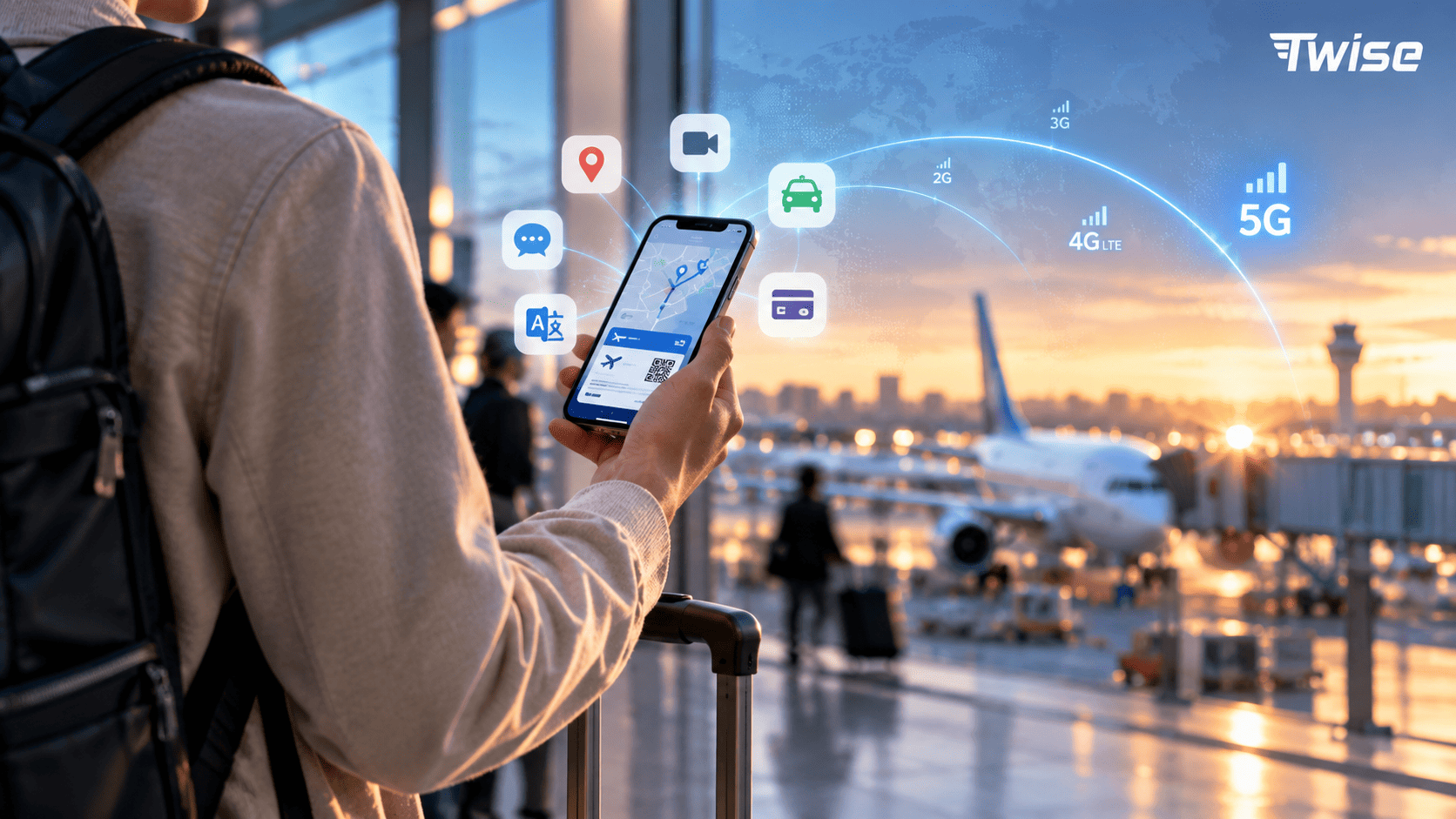
Modern travelers regularly use:
- Google Maps;
- mobile tickets;
- translation;
- ride-hailing;
- video calls;
- banking apps;
- messaging.
The practical network progression is:
- GSM/GPRS/EDGE: legacy voice, SMS and basic data
- 3G: older mobile internet
- 4G LTE: main modern mobile-data layer
- 5G: higher-capacity network where available
Legacy devices and IoT systems complicate the transition
2G is still used by some payment terminals, alarms, meters and other connected devices.
That is one reason GSM has survived longer than many 3G networks. Some operators are maintaining limited 2G support for specific IoT applications even after mainstream consumer retirement.
Is GSM Already Shut Down in Europe in 2026?
No. There is no single European GSM shutdown date.
Shutdown schedules vary by country and operator.
France — 2G retirement is happening during 2026
France is one of the most active markets in the GSM transition.
Orange is expanding its mainland 2G shutdown during 2026, with broader retirement scheduled between September and October.
Other French operators have separate timelines, so travelers should check the specific carrier rather than assuming the whole country switches off 2G on one date.
Germany — major shutdowns are planned for 2028
Germany’s major carriers have announced later timelines.
Deutsche Telekom plans to retire 2G on June 30, 2028. Vodafone targets mainstream retirement in September 2028, while Telefónica Deutschland plans to switch off 2G during the second half of 2028.
UK — 2G remains longer
UK operators are expected to retire 2G between 2029 and 2033.
Travelers using modern 4G or 5G smartphones should generally see little direct impact, but older devices may require replacement or compatibility checks.
Why shutdown dates can change
Schedules may depend on:
- operator decisions;
- regional pilots;
- IoT migration;
- regulatory coordination;
- spectrum strategy.
Last updated: October 2026
GSM vs 3G vs 4G LTE vs 5G: What Changes for Travelers?
| Technology | Typical label | Main traveler relevance in Europe |
| GSM / 2G | G, E, EDGE | Legacy calls, SMS and basic data |
| 3G | 3G, H, H+ | Older mobile data; retired in many markets |
| LTE | 4G, LTE | Main layer for maps, messaging and travel apps |
| 5G | 5G | Higher-capacity modern network where supported |
Why 4G matters even if you do not need high speeds
Most travel tasks do not require 5G.
Maps, WhatsApp, boarding passes and train apps generally work well over stable LTE. What matters is having access to a functioning modern network.
Where VoLTE fits in
VoLTE allows voice calls to run over LTE instead of falling back to 2G or 3G.
This matters for older phones that support LTE data but depend on legacy networks for voice calls.
Will Your Phone Still Work After a GSM Shutdown?
If your phone supports local 4G or 5G networks and required carrier features, a GSM shutdown does not normally prevent mobile data from working.
Check whether your phone supports 4G/LTE or 5G
Recent smartphones usually support LTE, while newer devices commonly support 5G.
Old backup phones should be checked separately.
Check European frequency-band compatibility
A phone can support 4G without supporting every LTE band used worldwide.
This matters most for imported regional models. Check your exact device variant rather than only the product name.
Check whether the phone is carrier-unlocked
An unlocked phone is usually required when installing a travel eSIM from another provider.
Check this before departure.
Check VoLTE if you need cellular voice calls
If normal cellular calls matter, confirm VoLTE compatibility rather than assuming LTE support alone guarantees voice service.
Why an old SIM/eSIM profile can still cause issues
Older plans or SIM profiles may not support every modern carrier feature.
If you rely heavily on your home number abroad, verify current network and roaming support with your carrier.
Does an eSIM Replace GSM?
No. An eSIM replaces the removable SIM card, not GSM or another mobile network generation.
SIM vs eSIM vs mobile network
| Term | Meaning |
| Physical SIM | Removable subscriber identity card |
| eSIM | Digitally installed subscriber profile |
| GSM / 2G | Legacy mobile network technology |
| LTE / 4G | Modern mobile network technology |
| 5G | Newer mobile network generation |
Can an eSIM use 4G and 5G?
Yes, depending on:
- device;
- eSIM plan;
- partner network;
- local availability.
Does having a 5G phone guarantee 5G with a travel eSIM?
No.
A 5G phone may still connect to LTE because of plan access, network conditions or local coverage.
Seeing LTE instead of 5G does not necessarily mean anything is wrong.
How Travel eSIMs Can Help as Europe Moves Beyond GSM
Travel eSIMs are useful because compatible plans can connect modern smartphones to eligible partner networks without requiring a physical SIM purchase after arrival.
Travelers can compare a Twise travel eSIM with home-carrier roaming or local SIM options before departure.
Mobile data ready for airport arrival
After landing, travelers often immediately need:
- maps;
- airport transport;
- hotel confirmations;
- WhatsApp;
- translation;
- taxi apps.
With a correctly installed travel eSIM, the phone can attempt to register on an eligible modern partner network without visiting a SIM kiosk.
Moving between European countries
A regional plan can reduce the need to buy a new SIM at every border.
For trips covering several countries, a Twise Europe eSIM can provide multi-country connectivity depending on the selected plan.
Always verify the exact destination list before purchasing.
Keep the home SIM for OTPs where appropriate
Dual-SIM phones can allow travelers to:
- use the travel eSIM for data;
- keep the home SIM active;
- receive eligible SMS or OTP messages.
Home-carrier roaming charges may still apply.
No SIM-shop or physical-card swap
A digital eSIM avoids replacing physical SIM cards while traveling.
Depending on the plan, travelers may receive the eSIM digitally and use it alongside their normal home line.
What GSM Shutdown Means During a Real Europe Trip
At the airport
The practical question is not whether you have 5G.
It is whether you can quickly open Maps, check airport trains, contact your hotel or request a ride.
Stable LTE is usually enough.
During hotel check-in
Reservation emails, booking apps and host messages often require internet access.
Keep the hotel address and booking confirmation downloaded offline as backup.
On trains and buses between cities
You may need mobile tickets, platform changes, delay alerts and route updates.
Modern mobile data is far more important for these tasks than continued GSM access.
When using translation
Download offline language packs before departure.
Coverage can still disappear in tunnels, rural areas or buildings even with a modern eSIM.
For payment or banking verification
Internet-based authentication can often work through mobile data.
SMS OTPs normally depend on your original phone number and home carrier. A data-only eSIM usually does not replace that function.
When messaging drivers, guides and hosts
WhatsApp and similar services need internet connectivity, not GSM specifically.
They can work over Wi-Fi, LTE or 5G.
In rural or remote areas
A 4G or 5G eSIM cannot create service where the partner network has no usable signal.
Keep offline maps, reservations and essential contact details available.
What to Do Before Traveling to Europe During the 2G Transition
1. Confirm the phone supports eSIM if you plan to use one
Check your exact device model and regional version.
2. Confirm 4G/LTE support and regional bands
Older or imported phones deserve extra attention.
3. Check carrier-lock status
Confirm the phone is unlocked before purchasing a travel eSIM.
4. Verify every destination in the eSIM coverage list
Do not assume that a plan labeled “Europe” includes every country on your itinerary.
5. Install the eSIM over stable Wi-Fi
Install before departure when appropriate.
Remember that installation and activation may not happen at the same time.
6. Set the correct mobile-data line
On Dual SIM devices, select the travel eSIM for mobile data.
7. Enable data roaming if the travel plan requires it
Many travel eSIMs require Data Roaming to connect to partner networks.
8. Keep offline backups
Save:
- maps;
- boarding passes;
- rail tickets;
- hotel addresses;
- insurance information;
- important contact numbers.
What to Do If Your Phone Shows Only E, EDGE or No Service in Europe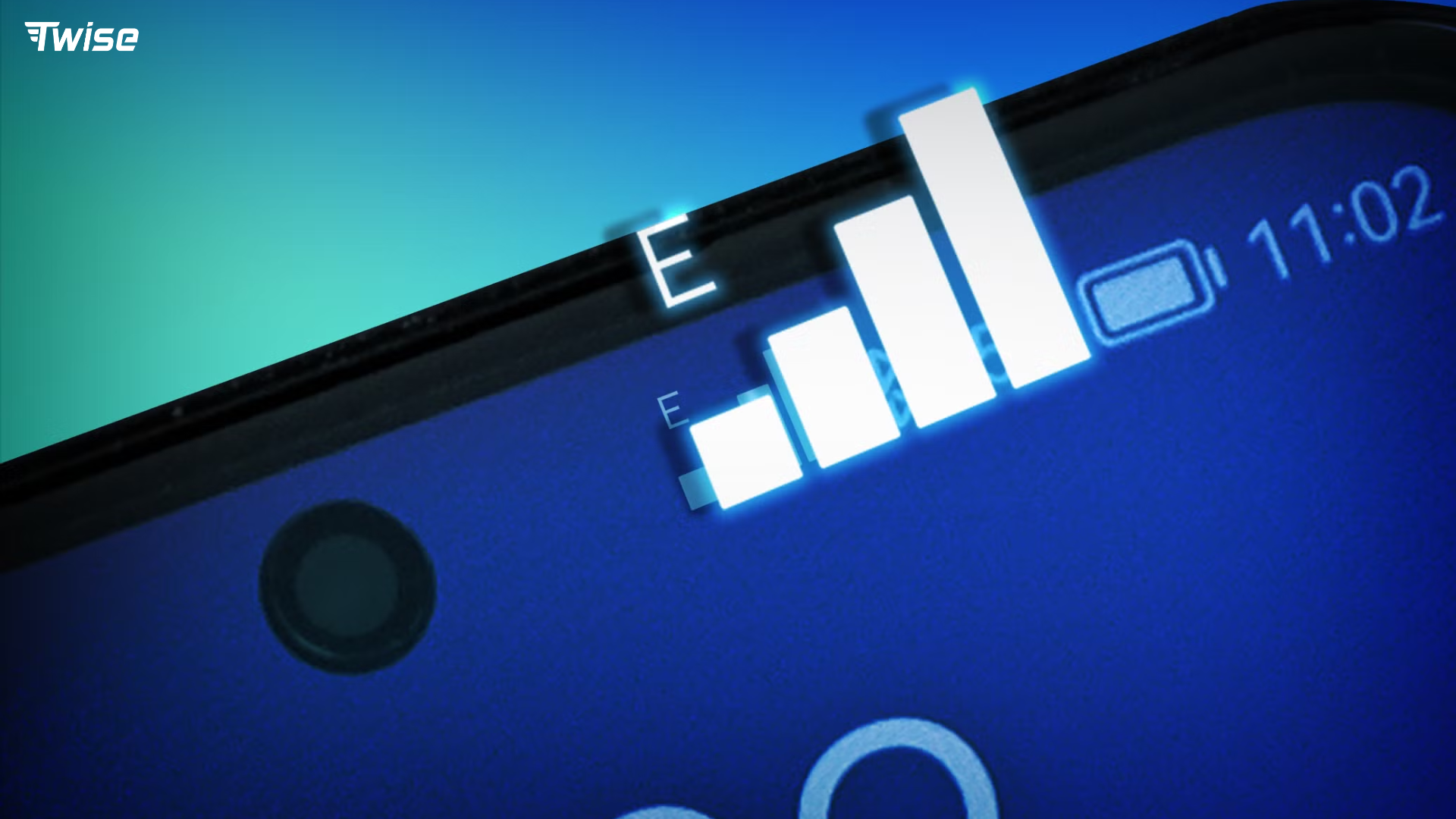
Check whether 4G/5G is enabled
Make sure the phone is not restricted to an older network mode.
Confirm the travel eSIM is selected for mobile data
Dual SIM users should verify which line is carrying data.
Turn data roaming on if required
Enable it on the travel eSIM if instructed by the provider.
Check automatic network selection
Automatic selection normally allows the phone to find an eligible partner network.
Use Wi-Fi while contacting support
Airport, hotel or café Wi-Fi can help while troubleshooting.
If your phone shows E or EDGE, it has connected to a legacy 2G service. Once that GSM network is retired, EDGE will no longer be available as a fallback.
eSIM vs Physical SIM During Europe’s GSM Shutdown
| Factor | Travel eSIM | Physical SIM |
| Depends on GSM? | No | No |
| Can use 4G/5G? | Yes, when supported | Yes, when supported |
| Requires card swap | No | Usually yes |
| Purchase before arrival | Usually | Sometimes |
| Local phone number | Plan-dependent | Often available |
| Device requirement | eSIM-compatible phone | Compatible SIM slot/device |
| Multi-country travel | Often convenient | Depends on package |
Neither format is inherently more future-proof.
Network compatibility, device support and plan coverage matter more than whether you use an eSIM or physical SIM.
Should Travelers Worry About Europe’s GSM Shutdown?
Most travelers with recent 4G or 5G smartphones do not need to worry about Europe’s GSM shutdown.
Probably little impact if…
Your phone is:
- relatively recent;
- LTE or 5G capable;
- unlocked;
- compatible with European bands;
- using a modern mobile plan.
Check carefully if…
You rely on:
- a 2G-only phone;
- a very old handset;
- an imported regional model;
- voice calling that depends on 2G fallback;
- an older connected device.
eSIM does not remove normal coverage limitations
An eSIM simplifies how mobile service is installed, but it does not guarantee signal everywhere.
For travelers, the best preparation is a compatible device, a suitable plan and offline backups.
FAQs About GSM Networks and Travel eSIMs in Europe
GSM is the main cellular technology associated with 2G networks. GPRS and EDGE later extended GSM with basic mobile data. For travelers, GSM shutdown and 2G shutdown usually refer to the same transition.
Yes, on some networks.
There is no single European shutdown date. France is undergoing major retirements in 2026, Germany’s major operators are mainly targeting 2028, and UK operators plan retirement between 2029 and 2033.
Yes, provided your phone, eSIM plan and partner carrier support an available network such as LTE or 5G.
The eSIM itself does not depend on GSM.
No.
5G depends on your device, plan, partner network and local availability. Your phone may use LTE even when it supports 5G.
Yes.
WhatsApp needs internet connectivity, not GSM specifically. It can work over Wi-Fi, LTE or 5G.
Possibly.
If you keep your home SIM active on a Dual SIM phone, you may still receive SMS according to your home carrier’s roaming support and charges. A data-only travel eSIM usually does not provide cellular SMS itself.
Europe’s GSM transition changes the network technology underneath your trip, but most travelers using recent smartphones will notice little difference. With a modern LTE or 5G device, a suitable mobile plan and basic offline backups, everyday travel tasks can continue without depending on legacy 2G infrastructure.
