

Cheapest Time to Visit London: Best Tips for Weather, Crowds, Transit Apps & Mobile Data

Jul
The cheapest time to visit London is usually January through March, especially after the New Year rush and outside school half-term dates. However, the lowest headline price is not always the best-value trip. Short daylight, colder weather, and occasional transport disruption can reduce how much you fit into each day. April–May and September–October usually cost more, but they give first-time visitors a stronger balance of mild weather, active attractions, and manageable crowds.
London is also a city where preparation can save as much money as timing. Using the same contactless card for every journey, booking timed attractions early, keeping flexible indoor backups, and arranging mobile data before landing can prevent expensive last-minute decisions. Visit London’s official seasonal guide also identifies January to March as the typical low-cost window, while this guide goes further by comparing the trade-offs month by month and explaining how to arrive ready to navigate the city.
Quick Answer – Best Time to Visit London by Goal
The best time to visit London is usually April–May or September–October. These shoulder-season months offer mild weather, manageable crowds, and active attractions. June–August has the longest days but the biggest crowds; November–February suits museums, theatre, and lower prices.
For travelers focused primarily on cost, January and February are usually the strongest candidates, with early March and November also worth checking. Compare total trip value rather than airfare alone: a slightly higher hotel rate in April or September may be worthwhile if longer daylight and better walking weather let you do more each day.
| Travel Goal | Best Time to Visit London |
| First-time sightseeing | April–May, September–October |
| Parks and flowers | April–May |
| Long daylight, outdoor events | June–August |
| Lower crowds | Jan–Feb, early March, November |
| Christmas lights, festive markets | Late November–December |
| Museums and theatre | November–March |
| Family travel | April, May, early June, September |
| Budget travel | January–February, November |
The cheapest time to visit London can shift around major exhibitions, football fixtures, school breaks, and one-off events. Before booking a low-season fare, compare accommodation for the exact dates and check whether your preferred attractions are open on your planned days.
| Common First-Time Mistake | Quick Fix |
| Assuming rain ruins the trip | Plan flexible museum/market backups |
| Visiting in summer without booking ahead | Reserve major attractions early |
| Tapping in/out with different cards | Use the same card or device every journey |
| Relying on public Wi-Fi while moving | Set up mobile data before you land |
London by Season: Weather, Crowds, Prices, and What to Do
Spring (March–May)
Spring is a transition season rather than one uniform experience. March can still feel wintry and often prices lower than April or May, while late April and May deliver longer daylight, greener parks, and more comfortable walking conditions. For budget travelers who can tolerate variable weather, early March can be a useful compromise between low winter rates and the start of spring activity.
Parks and walking conditions improve sharply through April into May, making this one of the best windows for Buckingham Palace, Westminster, Tower Bridge, museums, and markets without peak-summer pressure. Pack layers and a light rain jacket. Kew Gardens, Regent’s Park, Hyde Park, and South Bank walks are especially rewarding when daylight increases.
Summer (June–August)
Summer brings the longest days, outdoor dining, festivals, and riverside energy, but it is rarely the cheapest time to visit London. International tourism, school holidays, concerts, and major sporting events combine to push hotel demand upward. Even when airfare looks acceptable, central accommodation and timed-entry attractions may be expensive or unavailable.
Plan outdoor sights early or later in the day and avoid overloading midday, especially during heatwaves. Rooftop bars, river walks, outdoor festivals, and long-distance day trips benefit from extra daylight, but book priority attractions and restaurants in advance to avoid paying premium last-minute prices.
Autumn (September–November)
September and October are consistently among the best-value months for first-time visitors. The city stays active after summer, parks turn colourful, and sightseeing remains comfortable. September often retains mild weather without August’s heaviest holiday pressure, while October can offer reasonable hotel rates outside school half-term.
November is often cheaper, but the experience changes quickly as daylight shortens and festive demand begins. Food markets, theatre, museum-heavy days, and autumn park walks work well. Keep indoor alternatives flexible and check the switch-on dates for Christmas lights if festive atmosphere matters.
Winter (December–February)
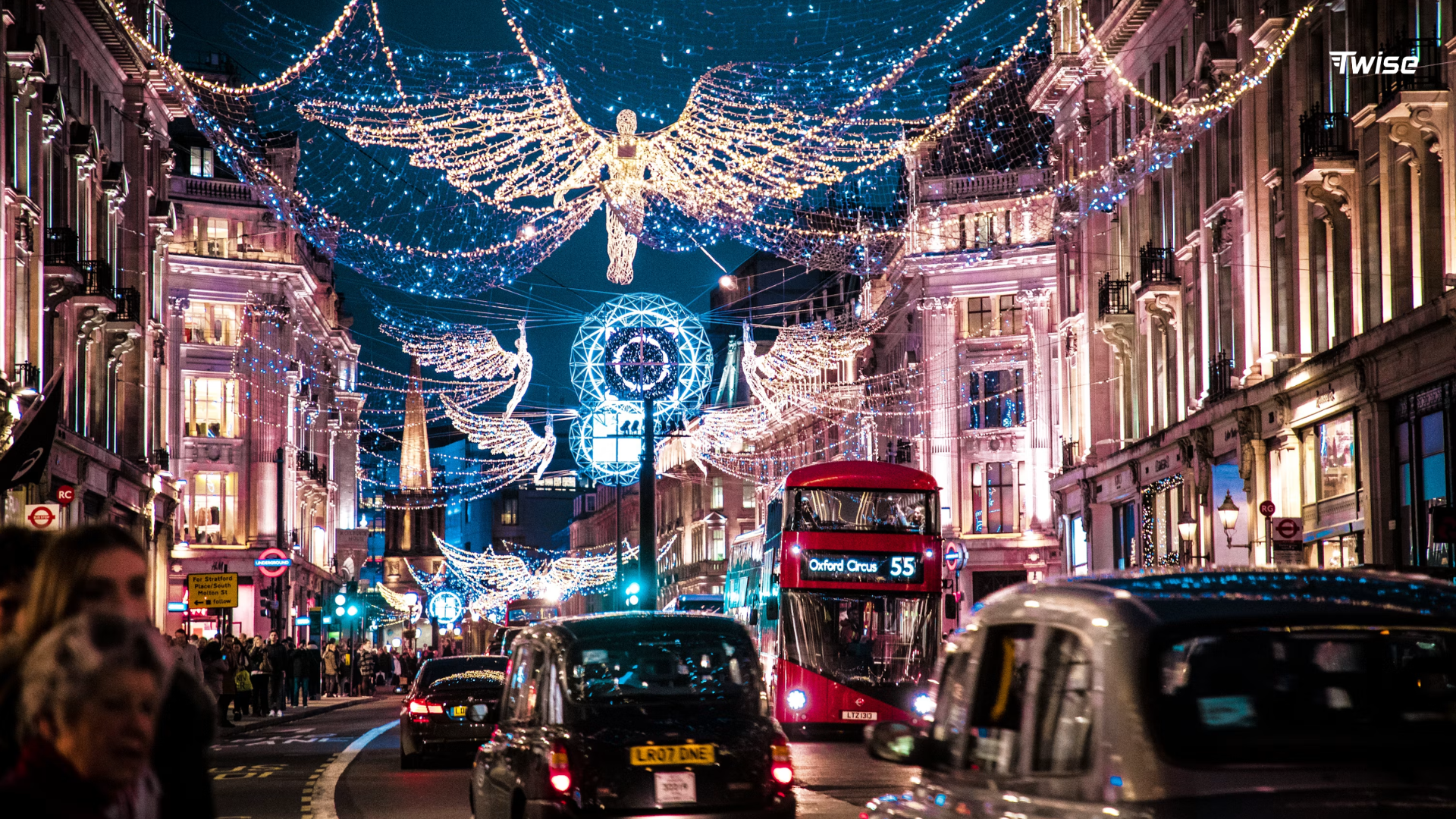
Winter contains both one of London’s most expensive periods and its cheapest period. Late December around Christmas and New Year can be crowded and costly, while the weeks after New Year often deliver some of the lowest hotel and flight prices of the year. January and February are especially attractive for travelers prioritizing museums, theatre, shopping sales, and quieter indoor attractions.
Shorter daylight means the itinerary should be structured differently. Use mornings for outdoor landmarks, then move to galleries, afternoon tea, theatre, or covered markets later. December is best for festive lights and ice rinks, but January and February are usually better for pure savings.
Month-by- Month London Travel Guide
Month matters, but exact dates matter more. A quiet January weekday can be dramatically cheaper than New Year’s weekend, while an October stay during school half-term may cost more than a nearby week. Use the table as a planning baseline, then check flights, hotels, and event calendars together.
| Month | Weather | Crowds | Prices | Best For |
| January | Cold, crisp | Low | Low | Museums, budget travel |
| February | Cold | Low | Low | Theatre, indoor sightseeing |
| March | Mild, variable | Low–moderate | Moderate | Better prices, mixed conditions |
| April | Mild, improving | Moderate | Moderate | First-time visitors, parks |
| May | Mild, pleasant | Moderate–high | Moderate–high | All-around best month |
| June | Warm, long days | High | High | Outdoor events |
| July | Warm, peak summer | Very high | High | Festivals, riverside |
| August | Warm, holidays | Very high | High | Families, outdoor life |
| September | Mild, pleasant | Moderate | Moderate | First-time visitors |
| October | Cooling, rain rising | Moderate | Moderate | Autumn colours, museums |
| November | Cold, rain | Low–moderate | Moderate–low | Pre-Christmas calm |
| December | Cold, festive | High (late month) | High | Christmas lights, shopping |
January is usually the clearest answer to “what is the cheapest time to visit London?” because post-holiday demand drops and many indoor attractions remain fully worthwhile. February can be similarly affordable, but family attraction demand may rise during half-term. March offers improving daylight, while November can be good value before peak festive weekends.
| What is the best month to visit London? May, September, and early October are often the best months because they balance mild weather, active attractions, and lower crowd pressure than peak summer. |
London Crowds – When the City Feels Busiest

Summer holidays
Late June through August is the busiest stretch because UK school holidays, international tourism, festivals, and long daylight all stack at once. Hotels near major stations and central attractions sell first. Travelers who must visit in summer can reduce costs by staying near an Elizabeth line, Overground, or Tube station outside the most expensive central zones rather than choosing a poorly connected bargain.
Christmas and New Year
December brings dense crowds around Oxford Street, Regent Street, Covent Garden, theatre districts, ice rinks, and festive markets. The atmosphere is excellent, but the period around Christmas and New Year is neither cheap nor quiet. Early December weekdays may be more manageable than the final two weeks of the month.
Bank holidays and school half-terms
UK bank holidays and school half-term breaks can raise demand at museums, family attractions, trains, and short-stay hotels even outside summer. These dates vary by year and sometimes by school region, so check them before committing to non-refundable bookings.
Event-driven spikes
Wimbledon, major football matches, concerts, Pride, Notting Hill Carnival, major exhibitions, and New Year’s Eve can create sharp local price and crowd spikes. The effect is often concentrated by neighborhood. A hotel near Wembley, for example, may be excellent value most weeks but expensive on a stadium event date.
How to avoid crowd friction
Book timed-entry attractions ahead, visit major sights early, reserve restaurants in high-demand neighborhoods, and avoid crossing the city during commuter peaks when possible. Group nearby attractions into the same day. This reduces transport time, data use, and the temptation to pay for taxis when the schedule slips.
When is London most crowded? London is busiest in summer, during Christmas and New Year, around UK school holidays, and during major events such as Wimbledon, Notting Hill Carnival, and large exhibitions.
London Weather Reality Check
Rain is manageable, but plans need flexibility
London rain is often intermittent rather than an all-day washout. The practical strategy is to build flexible clusters: pair Hyde Park with nearby museums, Borough Market with Tate Modern, or Covent Garden with the National Gallery. A compact umbrella and water-resistant outer layer are usually more useful than reorganizing the entire trip around a long-range forecast.
Heatwaves can affect transport
Hot days can make some Tube journeys uncomfortable, particularly on deep-level lines and crowded platforms. Carry water, allow recovery breaks, and choose buses or walking for shorter journeys when conditions are comfortable. During extreme heat, avoid scheduling several distant attractions back-to-back.
Daylight shapes the itinerary
Long summer evenings support outdoor sightseeing, riverside walks, and day trips. Winter requires more deliberate sequencing: photograph outdoor landmarks earlier, reserve museums for the afternoon, and use evening hours for theatre, restaurants, or illuminated streets. Low-season savings are most valuable when the itinerary is adapted to the shorter day.
London is a walking city
Distances inside stations, museums, and between landmarks are frequently underestimated. A route that looks short on a map may involve long corridors, stairs, escalators, and crowds. Comfortable shoes, a realistic daily radius, and downloaded maps matter more than the perfect outfit.
Best Time to Visit London by Traveler Type
The “best” and “cheapest” windows differ by traveler. A museum-focused visitor loses little by going in February, while a family planning parks and day trips may gain more value from April or September even at a higher nightly rate.
| Traveler Type | Best Months | Note |
| First-time visitor | Apr, May, Sep, early Oct | Best balance of weather and crowds |
| Budget traveler | Jan, Feb, Mar, Nov | Lower prices, more indoor planning |
| Family traveler | Apr, May, early Jun, Sep | Avoid the busiest school-holiday weeks |
| Museum/theatre traveler | Nov–March | Indoor attractions shine in winter |
| Parks/neighbourhood traveler | Apr–Jun, Sep–Oct | Best for Hyde Park, Greenwich, Hampstead Heath |
| Christmas traveler | Late Nov–Dec | Lights, markets, festive theatre |
| Day-trip traveler | May, Jun, Sep, early Oct | Longer daylight for Windsor, Oxford, Bath |
Budget travelers should also compare the cost of location. A cheaper hotel with a direct rail or Tube connection can outperform a central room, but a deeply discounted property requiring several transfers may add time and daily transport costs. Check the final journey to the hotel at the actual arrival hour, not only the daytime route.
London Transit Basics for First-Time Visitors
Why public transport matters
First-time visitors do best by mixing Tube, Elizabeth line, buses, walking, Overground, DLR, National Rail, river services, and occasional taxis. No single mode is optimal for every journey. The Tube may be fastest across central London, while buses reveal the city above ground and walking is often quickest between nearby landmarks.
Contactless payment and Oyster
Most visitors can tap in and out with a contactless bank card, Apple Pay, or Google Pay across most Transport for London services. Oyster still has useful cases, including travelers whose foreign cards attract transaction fees or do not work reliably. Before departure, check whether your bank applies overseas charges and whether mobile wallet transactions count separately.
Daily fare capping
Pay-as-you-go journeys are capped daily, which protects visitors from paying indefinitely as they make more trips. The key rule is consistency: touch in and out with the same physical card or the same device every time. A phone wallet and the physical card linked to it are treated as different payment methods. See TfL’s official fare-capping guidance before traveling if you plan to use contactless payment extensively.
Airport arrival routes

Airport options vary by luggage, arrival time, hotel location, and budget. Heathrow has the Elizabeth line, Piccadilly line, Heathrow Express, coaches, taxis, and ride apps. Gatwick connects through Gatwick Express, Southern, and Thameslink services. Stansted and Luton have their own rail and coach combinations. The fastest service is not always the best value if it terminates far from your hotel.
Common transit mistakes
- Using different cards or devices and breaking the fare cap.
- Tapping in with a phone and tapping out with a physical card.
- Forgetting to tap out where required.
- Booking a hotel without checking late-night transport access.
- Assuming mobile signal is continuous everywhere underground.
- Not checking weekend engineering works before traveling.
Essential London Transit Apps to Download Before You Go
TfL Go
TfL Go provides official Tube maps, line status, bus arrivals, step-free routes, and disruption information. It is especially valuable when engineering works or station closures make the normal route unavailable.
Citymapper
Citymapper is useful for practical door-to-door decisions. It compares walking, bus, rail, and Tube combinations and can reveal when a bus or short walk is simpler than changing lines underground. Save your hotel and key stations before departure.
Google Maps or Apple Maps
Use Google Maps or Apple Maps for walking routes, saved places, restaurant discovery, and general navigation backup. Download offline areas, but remember that offline maps do not provide every live transport update. Save exact hotel addresses and entrance notes, not only property names.
Uber, Bolt, and black cab apps
Ride apps are useful late at night, with luggage, in bad weather, or during disruption. Traditional black cabs remain a practical option when available, particularly for short central journeys or travelers who value licensed street-hail convenience. Compare pickup time, surge pricing, and the walking distance to the pickup point before booking.
Rail and airport apps
Install a rail app such as Trainline or use National Rail resources if planning Windsor, Oxford, Bath, Cambridge, or airport transfers. Keep your airline, airport, and hotel apps ready for arrival-day changes. Mobile tickets should be downloaded or screenshotted where permitted in case signal drops.
Mobile Data Tips for London – Why Wi-Fi Is Not Enough
Why mobile data matters
Mobile data covers what hotel and café Wi-Fi cannot: Tube disruptions, bus arrivals, walking navigation, ride apps, mobile tickets, restaurant bookings, theatre tickets, platform changes, and group coordination while moving. A pre-arranged travel eSIM can be especially useful when arriving late, carrying luggage, or transferring directly to another city.
Public Wi-Fi has limits
Wi-Fi is available in many hotels, cafés, museums, airports, and stations, but it often requires a login and does not follow you between locations. Public networks may also be congested during peak periods. Treat Wi-Fi as a backup for large downloads, not the sole connection for live navigation and ticket access.
Underground coverage – improving, but not complete yet
As of mid-2026, mobile coverage had expanded significantly across the Underground, but travelers still should not assume continuous service in every tunnel or station. TfL’s June 2026 network update stated that the whole Tube network remained on track for 4G and 5G coverage by the end of 2026. Download routes, tickets, and hotel details before going underground.
eSIM vs roaming vs local SIM – for a multi-country Europe trip
The cheapest option depends on trip shape. A London-only visitor may prefer a UK-focused plan, while someone continuing to Paris, Amsterdam, Rome, or Zurich may save time and avoid repeated setup with a regional plan. Compare usable data, validity, hotspot support, calls, and coverage rather than choosing only by the lowest advertised price.
| Option | Setup Time | Cost | Best For | Drawback |
| Europe eSIM | Minutes, before departure | Varies by data and validity | Multi-country trips including the UK | Needs eSIM-compatible phone |
| UK-only eSIM | Minutes, before departure | Often efficient for one-country trips | Single-country UK-only trip | Does not cover EU legs unless stated |
| Roaming (home carrier) | None | Often highest for longer trips | Simplicity, no setup | Possible daily fees and data caps |
| Local SIM | After arrival, 20–30 min | Usually moderate | Long stays or local number needs | Store visit and possible ID checks |
| Public Wi-Fi | Instant, login required | Free/included | Cafés, hotels, stations | Unreliable while moving |
For a trip limited to London and the UK, compare Twise United Kingdom plans. For an itinerary crossing several European countries, use the regional comparison above and confirm that every destination is included before purchase.
Why this matters more on a multi-country trip
Do I need mobile data in London? Yes, for live transport updates, maps, ride apps, mobile tickets, and restaurant bookings while moving around the city, since hotel and café Wi-Fi only covers you at fixed locations.
For travelers landing in London partway through a wider Europe itinerary, the practical question is not only “do I need data in London?” It is whether switching countries forces another purchase, another installation, or another activation rule. Arrival and connection days are precisely when travelers need live data most: checking a gate change at Heathrow, locating the Elizabeth line, finding a St Pancras platform, or messaging a hotel after a delay.
A regional setup can reduce friction, but do not assume every Europe plan treats the UK identically. Check the country list, fair-use limits, activation conditions, and whether the plan is data-only. Keep your primary SIM available for banking or authentication messages if needed, while disabling expensive data roaming on that line.
Pre-Trip & Arrival Checklist
What should I prepare before visiting London? Install TfL Go and Citymapper, download offline maps, confirm your contactless payment works, book major attractions, and set up your eSIM before departure.
The cheapest time to visit London is only a good deal when the arrival plan works. Complete the high-risk steps before travel so a delayed flight, cold evening, or weak airport connection does not turn into an expensive taxi or missed booking.
| Before Departure | 24 Hours Before | After Landing |
| Install TfL Go and Citymapper | Screenshot hotel confirmation | Connect to mobile data or airport Wi-Fi |
| Set up your Europe eSIM | Screenshot airport-to-hotel route | Open TfL Go or Citymapper |
| Download offline maps | Charge a power bank | Confirm your transfer route |
| Check your contactless card/wallet works | Confirm eSIM installation steps | Message your hotel if needed |
| Book major attractions ahead | Check weather and disruptions | Use the same card for every Tube tap |
Store booking confirmations in more than one place, keep a screenshot of your accommodation address, and note the last practical route from the airport. A low-cost late flight can lose its savings if it forces an unplanned long-distance taxi after public transport options narrow.

Final Recommendation — When Should You Visit London?
Best overall choice
May, September, and early October provide the strongest balance of weather, active attractions, and manageable crowds for most first-time visitors. They are not usually the absolute cheapest months, but the additional daylight and walking comfort can improve total trip value.
Best for weather and outdoor activities
Late spring and summer suit parks, river walks, rooftop venues, open-air events, and day trips. May and early June often offer a better compromise than July or August because demand has not fully reached peak holiday pressure.
Best for lower prices and fewer crowds
January and February are usually the strongest low-cost choices, followed by early March and selected November dates. Avoid New Year, school half-term, major event weekends, and the late-November festive surge. Build an indoor-friendly itinerary and use daylight deliberately.
Best for festive atmosphere
Late November and December deliver lights, markets, decorated shopping streets, and seasonal theatre. The trade-off is higher demand in central areas. For a better-value festive trip, compare early December weekdays rather than weekends close to Christmas.
Bottom line
April–May or September–October work best for most first-time visitors. For the cheapest time to visit London, prioritize January, February, early March, or selected November dates. Whichever season you choose, set up transit apps, mobile data, and contactless payment before landing so you can move through the city confidently from the first journey.
FAQs About the Best Time to Visit London
