

Best Time to Visit USA – Virgin Islands: Weather, Hurricane Season & Staying Connected

Jul
For travelers searching for the best time to visit USA destinations but wanting a Caribbean island experience, the U.S. Virgin Islands follow a very different calendar from the mainland. December through April delivers the driest, breeziest beach weather, while mid-April through June and November offer the strongest balance of weather, availability, and price. September and October are usually the cheapest months, but they also sit inside the most disruption-prone part of Atlantic hurricane season. The right choice therefore depends on whether you prioritize reliable sailing conditions, quieter beaches, lower hotel rates, or maximum flexibility.
Quick Answer – Best Time to Visit by Travel Goal
The best time to visit the U.S. Virgin Islands is December–April for dependable beach weather. Mid-April–June and November are better for value with generally favorable conditions. September–October is normally cheapest, but travelers must accept the highest storm and disruption risk.
| Travel Goal | Best Time |
| Best beach weather | December–April |
| Best overall balance | Mid-April–June, November |
| Lowest prices | September–October |
| Fewer crowds | May, June, September–November |
| Sailing / boating | December–April |
| First-time visitor | January–May, November |
| Island-hopping | Dry or shoulder season |
For most first-time visitors, January through May is the easiest planning window because ferries, tours, restaurants, and beach services operate more predictably. Value-focused travelers should look closely at late April, May, early June, and November rather than chasing the absolute lowest September or October rate. A slightly higher room price can be worthwhile when the trip is less exposed to cancellations, reduced operating hours, and last-minute itinerary changes.
Seasons & Month-by-Month at a Glance
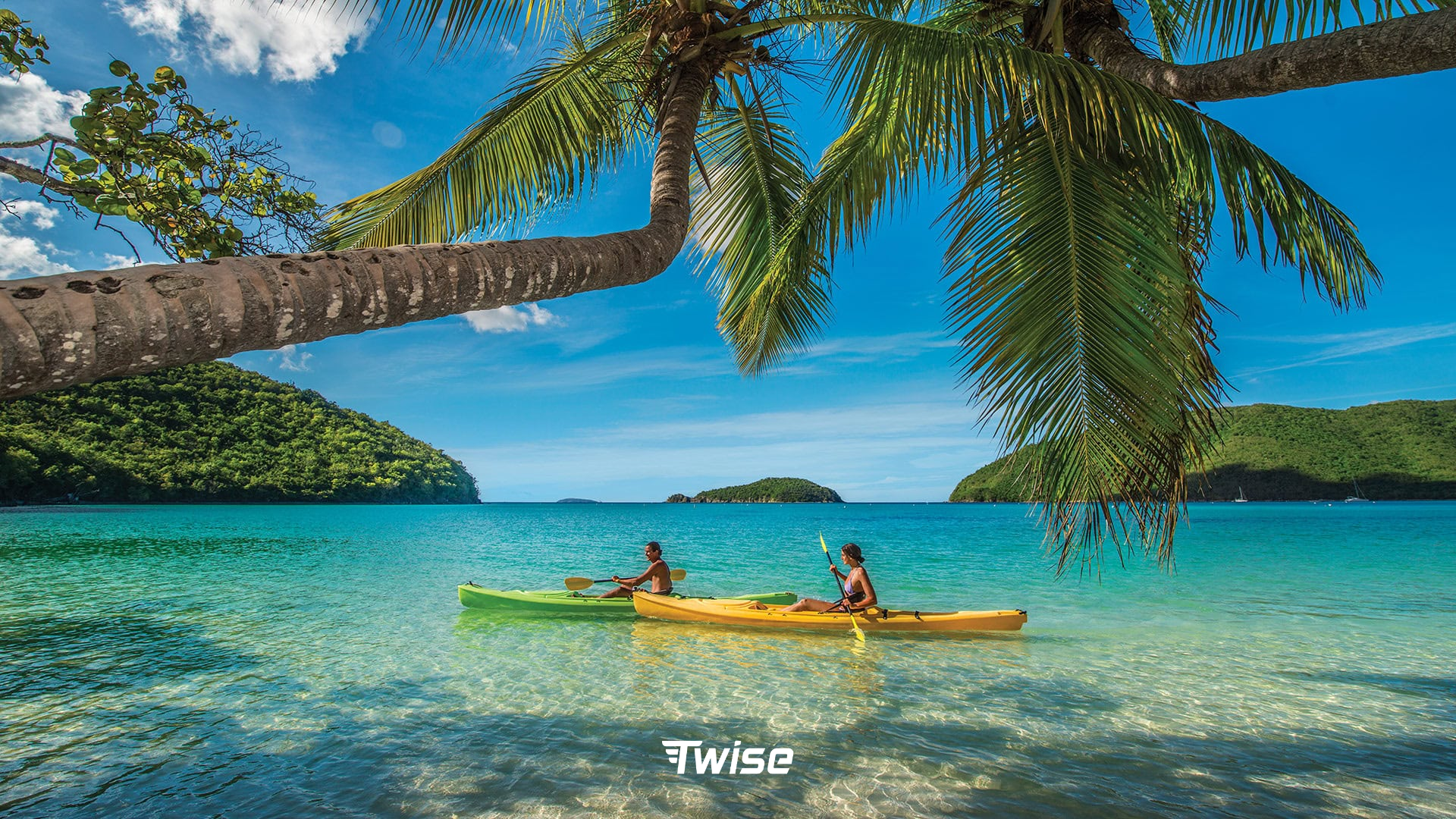
USVI temperatures remain warm year-round, so seasonality is driven less by cold versus heat and more by rainfall, humidity, trade winds, storm risk, and visitor demand. The table below combines weather, pricing pressure, and operational realities instead of treating every month as a separate version of the same conclusion.
| Period | Weather & Crowds | Watch Out For |
| Jan–Mar | Peak weather, peak prices | Book early; March spring-break crowds |
| Apr–Jun | Shoulder-season sweet spot | Heat rising; hurricane season starts June 1 |
| Jul–Aug | Hot, humid, quieter | Reduced business hours, storm awareness |
| Sep–Oct | Cheapest, highest storm risk | Flexible booking + insurance essential |
| Nov | Transition, good value | Improving weather; book before Dec price surge |
| Dec | Weather turns great | Holiday pricing spikes fast |
The price-versus-risk tradeoff is clearest in September and October. Hotels may discount rooms because demand is low, but travelers can lose value through disrupted flights, canceled ferries, closed excursions, or insurance exclusions. November is often the more practical bargain: rates can remain below winter peaks while conditions trend drier. For travelers comparing the best time to visit USA regions, USVI low-season savings should always be evaluated together with weather resilience, not room price alone.
September and October are usually the cheapest months to visit the U.S. Virgin Islands. They also carry the highest tropical-storm risk, so November or late April–June often provides better risk-adjusted value.
Hurricane Season – What It Actually Changes for Your Trip
The official Atlantic hurricane season runs from June 1 through November 30. The National Hurricane Center’s tropical cyclone climatology shows that Atlantic activity typically peaks around September 10, with most activity concentrated from mid-August to mid-October. That does not mean a storm will affect every trip, but it does mean uncertainty is materially higher during the period when hotel prices are lowest.
A storm does not need to make a direct landfall to affect an island itinerary. High winds, heavy rain, rough seas, or precautionary closures can disrupt:
- Flights into and out of St. Thomas or St. Croix, including onward connections.
- Passenger ferries, car ferries, water taxis, and private boat charters.
- Power, mobile networks, hotel internet, and card-payment systems.
- Hotel operations, restaurants, beach bars, dive shops, and tour schedules.
Book smart by choosing refundable or changeable flights and stays, buying insurance early enough for named-storm coverage to remain available, and reading weather-related exclusions rather than assuming every policy covers hurricanes. Keep at least one flexible day around ferry-dependent activities, save copies of confirmations offline, and monitor official advisories rather than relying only on weather-app icons.
Hurricane season in the U.S. Virgin Islands runs from June 1 to November 30. Risk is highest from mid-August through mid-October, with September historically near the seasonal peak.
Reliable mobile data becomes especially useful when hotel Wi-Fi, ferry operations, or transfer plans change during severe weather; screenshots and offline maps should still remain the backup.
Best Time to Visit St. Thomas, St. John & St. Croix
St. Thomas: January–May and November work best for first-time visitors who want the widest choice of flights, hotels, shopping, taxis, and day tours. December–March has the strongest weather but also the most cruise-day congestion around Charlotte Amalie and popular beaches.
St. John: December–April is ideal for hiking, snorkeling, sailing, and dependable ferry access, while May–June and November deliver a quieter version of the island. Because St. John has no airport, weather and ferry reliability matter more here than they do for a hotel-based St. Thomas stay.
St. Croix: January–April is the simplest window for beaches, diving, and outdoor sightseeing; May–June and November often provide better value with fewer visitors. St. Croix is farther from the St. Thomas–St. John ferry circuit, so inter-island connections need more lead time and stronger backup planning.
St. Thomas is usually the easiest U.S. Virgin Island for a first trip because it has the largest transport and accommodation base. Add St. John for national-park beaches and St. Croix for a slower, more independent stay.
Ferries & Island-Hopping by Season
St. Thomas ↔ St. John ferry planning: Red Hook to Cruz Bay is the core passenger route and normally takes about 20 minutes, with departures scheduled frequently through the day. The official Visit USVI ferry guide is the right starting point, but always recheck close to departure because weather, maintenance, holidays, and temporary port changes can affect operations.
St. Croix connections: St. Croix sits outside the quick St. Thomas–St. John hop. Ferry or seaplane availability can be limited and seasonal, while short inter-island flights may be more practical. Do not schedule a tight international departure immediately after a same-day St. Croix connection.
Boat charters and seasonal availability: Peak dry-season dates sell out early, especially around Christmas, New Year, spring break, and major events. Low-season availability can look plentiful online, but operators may reduce schedules for maintenance or cancel when seas become unsafe.
Live data is valuable for checking ferry updates, contacting a taxi, and coordinating a delayed arrival. Before departure, international visitors can compare Twise USA data plans and then confirm that the exact selected network supports the U.S. Virgin Islands.
Staying Connected in the U.S. Virgin Islands
Mobile data solves several USVI-specific problems at once: checking ferry and flight changes, sharing a live location with a taxi driver, opening offline-map backups, receiving weather alerts, retrieving tickets, and coordinating across islands. Wi-Fi is useful inside a hotel or restaurant, but it does not follow you onto a ferry, beach road, boat, or trail.
How U.S. coverage actually works in USVI: Many AT&T, T-Mobile, and Verizon plans treat the U.S. Virgin Islands as domestic coverage or domestic roaming rather than international roaming. However, the network partner, speed, and allowance can vary by plan. For example, Verizon’s domestic roaming guidance explicitly includes the U.S. Virgin Islands. Travelers should still verify their own plan before departure instead of assuming every prepaid, MVNO, or legacy plan has identical terms.
International visitors without a U.S. plan can review Twise travel eSIM options before departure, then review Twise USA coverage options for a local-network setup. Because a mainland USA profile does not automatically prove USVI compatibility, confirm that the exact T-Mobile or AT&T plan presented at checkout covers St. Thomas, St. John, and St. Croix before purchasing or activating it.
Real-world case – accidental BVI roaming: Near St. John, offshore cays, or on a boat, a phone may detect a British Virgin Islands tower more strongly than a USVI network. Watch the carrier name and any roaming alert. If your phone allows it, turn off automatic network selection and manually choose the approved U.S. or domestic-partner network. Do not disable roaming blindly if your U.S. plan relies on domestic roaming in USVI; first confirm the settings required by your carrier.
Connectivity options compared:
| Option | Best For | Cost | Setup Time | Drawback |
| Twise Local USA eSIM (T-Mobile/AT&T) | International visitors without a U.S. plan | Check current Twise plan price | ~5 min, before departure | Requires a compatible phone; confirm USVI coverage |
| U.S. carrier home plan | U.S. residents | Usually included in plan | None | Watch for BVI-tower roaming near St. John |
| Local carrier SIM (Liberty/Viya/Claro) | Longer stays | Varies by provider and package | Buy after arrival | Requires an in-person store visit |
| Hotel/public Wi-Fi | Backup only | Free | None | Unusable on ferries, beaches, and boats |
Crowds & Prices
December through April is high season. The weather is most reliable, but winter-escape demand pushes up hotel, villa, rental-car, and charter prices. Holiday weeks, Presidents’ Day, spring break, cruise-heavy days, and major local events can create sharp price spikes even inside an already expensive season.
Mid-April through June and November provide the best value for many travelers. The islands remain fully usable, but room rates and beach pressure may ease after Easter or before the December surge. Exact dates matter: Thanksgiving week can be expensive, while early or mid-November may still feel like shoulder season.
July through October is quieter and often cheaper, but the savings come with higher humidity, greater storm uncertainty, and more variable operating hours. The lowest advertised hotel rate is not necessarily the lowest total trip cost if a canceled charter, missed ferry, or rebooked flight forces additional spending.
For a first visit, target late April, May, early June, or November when possible. These windows usually deliver a better balance than the absolute cheapest dates and are especially useful for travelers building a multi-island itinerary.
Before You Go — Pre-Trip Checklist
| Timing | What to Do |
| 1–2 weeks out | Choose dates; book ferry-sensitive activities; check cancellation terms; confirm your phone is unlocked and eSIM-compatible if relevant. |
| 24 hours out | Screenshot ferry schedules, hotel details, transfer instructions, insurance documents, and offline maps; confirm network settings. |
| After landing | Connect to data; verify the displayed network; check the latest weather; confirm taxi, ferry, or hotel transfer timing. |
International visitors who have not chosen a destination plan can browse all Twise eSIM options before departure. Install the profile while on stable Wi-Fi, but follow the plan’s activation instructions carefully so the validity period does not begin earlier than intended.

FAQs
January through April offers the most dependable dry-season weather, but May and November often deliver better value. For a first trip, late April or May can be the strongest compromise between beach conditions, availability, and price.
September and October are normally the cheapest because they sit inside the peak-risk part of hurricane season. Travelers who want savings with less weather exposure should compare early June and November.
Atlantic hurricane season runs from June 1 through November 30. The most active period is generally mid-August through mid-October, so flexible booking and storm-aware insurance matter most then.
St. Thomas is the easiest first base because it has the broadest transport, hotel, taxi, and dining infrastructure. St. John is ideal for national-park beaches, while St. Croix works well for travelers seeking a more independent, less hurried stay.
Many major U.S. plans include USVI service as domestic coverage or domestic roaming, but speeds, partner networks, and allowances can differ. Check the exact terms of your plan before traveling, especially on prepaid, MVNO, or older plans.
Yes. Near St. John or on the water, a stronger BVI signal can trigger international roaming. Watch the network name, use manual network selection where available, and confirm the correct roaming settings with your carrier.
They need a reliable data option, but not every mainland USA plan automatically guarantees USVI coverage. Confirm the selected network’s island coverage before purchase and keep offline maps and saved ferry details as backups.
