

How Much Data Does Spotify Use Per Hour? Travel Data Guide
Spotify usually uses about 10–25MB per hour on Low quality, 40–45MB per hour on Normal, 70–85MB per hour on High, and 140–150MB per hour on Very High. Video podcasts are a separate category entirely — they can use several hundred MB to 1GB or more per hour, closer to YouTube than to music streaming.
For travelers on limited eSIM plans, Spotify music is one of the more manageable data uses. The key conditions: keep quality at Normal or Low, download playlists on Wi-Fi before going out, and treat video podcasts the same way you would treat YouTube — Wi-Fi only unless your plan has room.
Spotify Data Usage Per Hour
| Spotify setting | Approx. bitrate | Estimated data per hour | Travel recommendation |
| Low | 24 kbps | ~10–25MB | Best for preserving travel data |
| Normal | 96 kbps | ~40–45MB | Best balance for most travelers |
| High | 160 kbps | ~70–85MB | Fine for medium or larger plans |
| Very High | 320 kbps | ~140–150MB | Save for Wi-Fi or high-data plans |
| Audio podcasts | Varies | Similar to music, variable | Usually manageable on mobile data |
| Video podcasts | Video-based | Hundreds of MB to 1GB+/hour | Treat like video streaming, not music |
Important notes on these estimates
Actual usage varies by app version, device, content type, network conditions, and caching behavior. Replaying a downloaded song offline uses no mobile data — but downloading it in the first place does. Travelers should download playlists on Wi-Fi, not on cellular. Video podcasts are fundamentally different from music streaming: the same 60-minute episode that costs ~45MB as audio can cost 500MB–1GB+ as video.
How Spotify Compares to Other Travel Apps
Spotify music sits in a manageable middle range compared to most travel apps — far lighter than YouTube or FaceTime Video, heavier than messaging or maps.
| App or task | Approximate data | Travel priority |
| WhatsApp text | ~1–5KB per message | Essential |
| Google Maps live navigation | ~5–10MB per hour | Essential |
| Rideshare app | ~2–5MB per trip | Essential |
| Translation app | ~1–5MB per session | Essential |
| Spotify Low/Normal music | ~10–45MB per hour | Optional, manageable |
| Spotify Very High music | ~140–150MB per hour | Use carefully |
| Spotify video podcasts | Hundreds of MB–1GB+/hour | Wi-Fi recommended |
| YouTube 480p | ~500–700MB per hour | Wi-Fi or larger plan |
| FaceTime Video | ~300MB–1.2GB per hour | Wi-Fi or larger plan |
The practical rule: Spotify audio at Normal or Low quality is unlikely to be the thing that drains your travel plan. Problems appear when quality is set to Very High, when video podcasts run unchecked, or when Spotify runs simultaneously with maps, hotspot, and other data-heavy apps on a small plan.
Why Spotify Data Usage Changes

Audio quality controls bitrate directly
Higher quality means more audio data transmitted per second. Low quality at 24 kbps sends roughly one-sixth the data of Very High at 320 kbps. The difference between Normal and Very High is about 100MB per hour — not catastrophic, but meaningful on a 1–3GB travel plan over several days.
In noisy travel environments — airports, trains, buses, city streets — the difference between Normal and Very High is often inaudible. Very High quality is better reserved for quiet listening at the hotel or on Wi-Fi.
Streaming and downloading are different data events
Streaming uses data continuously as you listen. Downloading uses data upfront in exchange for offline playback that costs nothing afterward. For travelers, the calculus is straightforward: download on hotel or home Wi-Fi, listen offline during the day. Downloading a playlist on mobile data before understanding how large it is can consume several hundred MB unexpectedly.
Download at lower quality if device storage is tight — the data and storage savings compound over a long trip.
Caching reduces some repeat data use, but is not reliable
Spotify may cache recently played songs, which can reduce data use when replaying the same tracks. However, caching behavior depends on app version, storage availability, and network conditions. Travelers should not rely on caching as a primary data-saving strategy. Offline downloads are deliberate and reliable; caching is passive and variable.
Video podcasts change the data equation entirely
This is the most important distinction in the entire article. A video podcast episode on Spotify looks like a podcast in the interface, but it streams video — meaning data consumption is comparable to watching YouTube, not listening to music. A 60-minute audio podcast at Normal quality uses roughly 45MB. The same episode with video can use 500MB–1GB+ depending on quality.
Travelers who watch video podcasts on mobile data without realizing this distinction can drain a small eSIM plan in a single session. If the podcast has a video option, check before pressing play.
How Long Will 1GB, 3GB, 5GB, or 10GB Last on Spotify?
| Data available | Low quality | Normal quality | High quality | Very High quality |
| 1GB | ~40–90 hours | ~22–25 hours | ~12–14 hours | ~6–7 hours |
| 3GB | ~120–270 hours | ~66–75 hours | ~36–42 hours | ~18–21 hours |
| 5GB | ~200–450 hours | ~110–125 hours | ~60–70 hours | ~30–35 hours |
| 10GB | ~400–900 hours | ~220–250 hours | ~120–140 hours | ~60–70 hours |
These are audio-only estimates. Video podcasts will use data far faster — treat them as a separate budget.
For most travelers, 1GB covers a substantial amount of Spotify listening at Normal quality. The issue is rarely Spotify alone. Problems arise when Spotify runs alongside YouTube, FaceTime Video, hotspot use, and background app activity on a small plan. Always keep some data reserved for maps, rideshare, messaging, translation, and emergency contact — these matter most when you are outside Wi-Fi range and actually need help.
Spotify Music vs Audio Podcasts vs Video Podcasts
Music streaming is the lightest Spotify use case. At Normal quality, it is suitable for walking, commuting, road trips, gym sessions, and background listening throughout the day without significant data risk on plans of 3GB or more.
Audio podcasts behave similarly to music in terms of data. File size and bitrate vary by publisher, but most audio podcasts fall within a comparable range to Normal or High music quality. They are well suited for flights, long bus or train rides, and offline listening — download before departure for maximum data efficiency.
Video podcasts are the primary Spotify data trap for travelers. Episodes typically run 30–120 minutes. Users may not realize they are consuming video-level data because the interface looks the same as audio podcasts. On a limited eSIM plan, one long video podcast session can consume more data than a full day of everything else combined.
Travel recommendation: use mobile data freely for music and audio podcasts at Normal or Low quality. Switch to Wi-Fi before opening any video podcast.
How to Reduce Spotify Data Usage While Traveling
- Set cellular streaming quality to Low or Normal. In Spotify settings, find Audio Quality and set the Cellular Streaming option separately from Wi-Fi streaming. This prevents Spotify from using Very High quality when connected to a fast eSIM network. Low for maximum saving, Normal for a comfortable balance.
- Use Data Saver mode. Data Saver reduces audio quality and disables some data-heavy visual features. Find it in Settings → Data Saver. Best for: limited eSIM plans, travel days with heavy map use, airport waits, and public transit.
- Download playlists on Wi-Fi before leaving. Choose one to three essential playlists and download them at home or at the hotel before going out. Download podcasts before the flight. Confirm downloads are available offline before turning off Wi-Fi. Avoid downloading large playlists on mobile data unless you know the plan has room.
- Use Offline Mode when data matters. Offline Mode prevents Spotify from streaming new content over mobile data. Enable it when flying, on long trains, or whenever you want to be certain Spotify is not touching your eSIM data. Your downloaded content remains available; only streaming is blocked.
- Avoid video podcasts on mobile data. If a podcast has a video version, switch to audio-only if the option exists, or wait until you are on Wi-Fi. One hour of video podcast can cost more data than a full day of Normal-quality music.
- Turn off autoplay when data is limited. Autoplay continues playing recommended content after your playlist or podcast ends. This is particularly risky during long airport waits, road trips, or when a child’s device is left unattended. Turn it off before travel days.
- Check phone-level data usage periodically. On iPhone: Settings → Cellular → scroll to Spotify. On Android: Settings → Network → Data Usage → Spotify. Your real usage may be higher or lower than estimates depending on actual listening habits. Adjust quality or download behavior accordingly.
Where Spotify Data Gets Wasted While Traveling
Airport wait: A traveler streams at Very High quality for three hours during a delay. At 140–150MB per hour, that is roughly 420–450MB from one waiting session. At Normal quality, the same session uses under 140MB.
Road trip: Spotify and Google Maps run simultaneously all day. At Normal audio quality, both together use roughly 50–60MB per hour — manageable on most plans. Adding Very High quality or a video podcast in the car changes that significantly.
Hotel Wi-Fi mistake: A traveler assumes they are on hotel Wi-Fi but the connection dropped without notification. Spotify runs for two hours on mobile data. Checking the status bar before long listening sessions prevents this.
Child device via hotspot: A child uses Spotify or video podcasts on a tablet hotspotted from the parent’s phone. The parent’s eSIM plan absorbs all of that data. Setting the child’s device to offline mode with pre-downloaded content before going out is the cleaner solution.
Spotify Data Planning by Traveler Type
| Traveler type | Spotify behavior | Best approach |
| Light traveler | Occasional music | Small plan + Normal quality |
| Daily listener | 1–3 hours per day | Normal quality + offline playlists |
| Road trip traveler | Music for long drives | Larger plan or downloads on Wi-Fi |
| Family traveler | Multiple devices, possible video | Download first; avoid video podcasts on mobile data |
| Backpacker | Long transit days | Offline playlists + Data Saver |
| Business traveler | Podcasts between meetings | Normal quality; Wi-Fi for downloads |
| Heavy media user | Spotify + YouTube/TikTok combined | Larger or unlimited plan worth considering |
| Multi-country traveler | Music across borders | Regional eSIM + offline downloads |
If Spotify is the only data-heavy app being used, most plans of 3GB or more will be sufficient for a typical trip. If Spotify runs alongside YouTube, FaceTime Video, and hotspot use, plan size starts to matter more.
Pre-Trip Spotify Checklist
Before departure:
- Set cellular streaming quality to Low or Normal in Spotify settings
- Enable Data Saver if using a limited plan
- Download key playlists on home or hotel Wi-Fi
- Download podcasts before the flight — not at the airport
- Confirm downloads are available offline before disconnecting from Wi-Fi
- Avoid video podcasts on mobile data — save for Wi-Fi
- Turn off autoplay for travel days
- Check Spotify’s mobile data usage in phone settings to know your baseline
- Keep data available for maps, rideshare, translation, and hotel messages
- Set rules for children’s devices before departure, not mid-trip
- Confirm eSIM is installed and active before leaving if your plan requires pre-activation
- Check whether your eSIM plan allows hotspot if you will share data with a tablet or laptop
FAQ
How much data does Spotify use per hour?
Spotify uses roughly 10–25MB per hour on Low quality, 40–45MB on Normal, 70–85MB on High, and 140–150MB on Very High. Video podcasts can use several hundred MB to 1GB or more per hour and should be treated like video streaming rather than music.
How much data does Spotify use per song?
For a typical 3–4 minute song: Low quality uses under 1MB, Normal uses roughly 2–3MB, High uses roughly 4–6MB, and Very High uses roughly 8–10MB. For travel, Normal or Low quality is usually enough to keep data consumption reasonable.
How long does 1GB last on Spotify?
At Low quality, 1GB can last 40–90 hours of listening. At Normal quality, roughly 22–25 hours. At High quality, 12–14 hours. At Very High quality, about 6–7 hours. Video podcasts consume 1GB significantly faster.
What is the best Spotify quality for travel data?
Normal quality is the best practical setting for most travelers — it balances sound quality and data efficiency. Use Low if the plan is very small. Save Very High for hotel Wi-Fi or larger plans where data is not a concern.
Does Spotify use data if songs are downloaded?
No. Downloaded songs and podcasts play offline without using mobile data. However, the initial download does use data, so travelers should always download on Wi-Fi rather than on a travel eSIM.
Does Spotify drain battery faster on mobile data?
Yes, somewhat. Streaming over mobile data keeps the cellular radio active continuously, which uses more battery than playing downloaded content offline. On a full travel day combining Spotify streaming, GPS navigation, and messaging, battery drain can be noticeably faster than offline listening. Downloading playlists on Wi-Fi and using offline mode when out helps with both data and battery.
Can I use Spotify with a travel eSIM?
Yes. Spotify music and audio podcasts work well on mobile data from a travel eSIM, especially at Normal or Low quality. A small plan can cover many hours of audio listening. Video podcasts, Very High quality streaming, and Spotify combined with other data-heavy apps will require a larger plan. Always check plan details and hotspot rules if you plan to use Spotify on a connected device.
About Twise eSIM
If music, podcasts, or audio are part of how you travel — walking a new city, sitting through a long layover, or keeping children occupied on a transfer — having reliable mobile data matters from the moment you land.
Twise offers local eSIM plans built on actual carrier networks rather than wholesale roaming arrangements. For destinations where Spotify and streaming performance depend on consistent network quality, local carrier plans typically offer more stable speeds than generic travel eSIMs.
Current Twise eSIM options:
- USA local eSIM — T-Mobile or AT&T network, includes calls and SMS, suitable for travelers who need reliable data and a local number throughout the US
- Europe eSIM — covers major European destinations with calls and SMS included
- Japan local eSIM — local carrier network for one of Asia’s most connected destinations
- South Korea local eSIM — local network access with strong urban and transit coverage
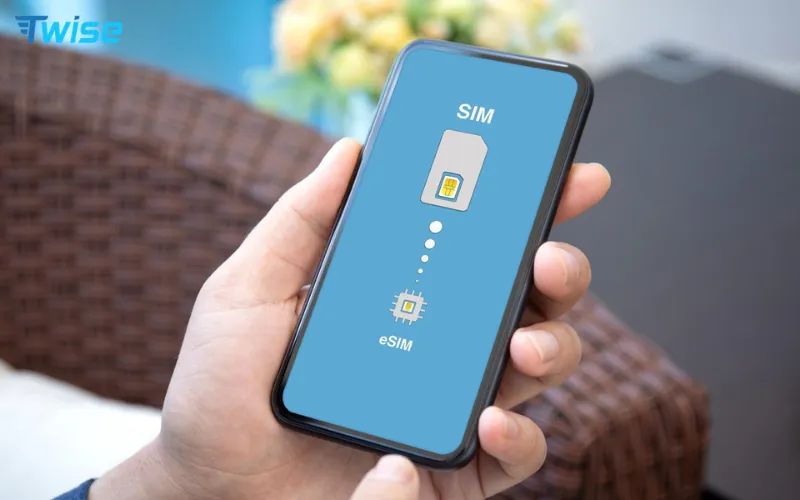
Almost all plans are installed digitally. No physical SIM, no store visit, no deposit or return process.
For Spotify specifically: if audio is a light part of your trip, most plans will be sufficient. If you stream for several hours daily, use video podcasts, or share data via hotspot with a second device, check the plan’s data size and hotspot policy before purchasing.
Related Articles
How Much Data Does YouTube Use? 480p, 720p, 1080p & Travel Data Tips
Europe eSIM Reviews: What to Know Before You Choose for Your Trip
USA eSIM Coverage Maps and Signal Strength by Carrier
Pre-Flight Guide: Install eSIM Before Traveling – Done in 5 Minutes
