

Navigating Your Japan Travel Itinerary: Why Paper Maps are Dead and Travel eSIMs are Mandatory
Sep
Plan a realistic Japan travel itinerary for 7, 10 or 14 days with efficient routes through Tokyo, Kyoto, Osaka, Hakone, Nara, Hiroshima and Miyajima. This guide explains how many days to spend in each city, when to choose Hakone or Kawaguchiko, where to stay, how to use the Shinkansen, whether a JR Pass makes sense, and what to book before departure. It also covers practical mobile data needs for airport arrivals, station navigation, Maps, ticket access and hotel communication, helping first-time visitors build a Japan route that feels exciting without wasting hours on avoidable transfers.
| Length | Suggested route | Pace | Hotel bases |
| 7 days | Tokyo → Kyoto → Osaka | Fast | 2–3 |
| 10 days | Tokyo → Hakone → Kyoto → Nara → Osaka | Balanced | 3–4 |
| 14 days | Tokyo → Hakone → Kyoto → Nara → Hiroshima/Miyajima → Osaka | Comfortable | 4–5 |
Which Japan Itinerary Is Right for You?
Choose 7 days if…
Choose seven days if this is a short first visit and Tokyo, Kyoto and Osaka are your priorities. Keep day trips limited and accept that you will see highlights rather than everything.
Choose 10 days if…
Ten days is the strongest all-round Japan travel itinerary for many first-time visitors. It adds a Fuji-area experience and Nara while leaving enough time for Tokyo and Kyoto.
Choose 14 days if…
Two weeks allows a slower pace and meaningful time in Hiroshima and Miyajima instead of squeezing them into a long day trip.
When to add Tokyo Disney or Universal Studios Japan

Either park can take most of a full day. Replace a sightseeing day rather than adding a theme park on top of an already packed schedule.
7-Day Japan Travel Itinerary: Tokyo, Kyoto & Osaka
Day 1 – Arrive in Tokyo + Easy Neighborhood Evening
After an international flight, stay close to your hotel. Explore Shinjuku, Shibuya or Asakusa depending on where you sleep.
Keep mobile data ready for airport trains, hotel directions and check-in messages rather than scheduling six attractions immediately.
Day 2 – Asakusa, Ueno & Akihabara
Cluster eastern Tokyo: Senso-ji → Ueno → Akihabara.
This keeps your route compact and avoids spending half the day crossing Tokyo.
Day 3 – Meiji Jingu, Harajuku, Shibuya & Shinjuku
Move to western Tokyo: Meiji Jingu in the morning, Harajuku and Shibuya during the day, then Shinjuku after dark.
Treat observation decks and museums as optional additions.
Day 4 – Tokyo to Kyoto + Gion Evening
Take a morning Tokaido Shinkansen to Kyoto. SmartEX supports online reservations and eligible QR boarding for Tokaido–Sanyo–Kyushu Shinkansen services. スマートEX
After checking in, keep the evening light with Gion, Yasaka or Pontocho.
Day 5 – Fushimi Inari + Kiyomizu-dera + Higashiyama
Start at Fushimi Inari, then move toward Kiyomizu-dera, Ninenzaka, Sannenzaka and Higashiyama.
Grouping nearby sights saves more time than chasing isolated attractions across Kyoto.
Day 6 – Arashiyama + Optional Central Kyoto
Visit the Bamboo Grove, Tenryu-ji and Togetsukyo Bridge. Add one central attraction later only if you still have energy.
Day 7 – Osaka + Departure
If departing from KIX, spend the morning around Osaka Castle or Kuromon Market, then visit Dotonbori before the airport.
Alternative
If temples and traditional neighborhoods matter more than nightlife, remain in Kyoto and skip the Osaka overnight.
10-Day Japan Travel Itinerary: The Classic First Trip
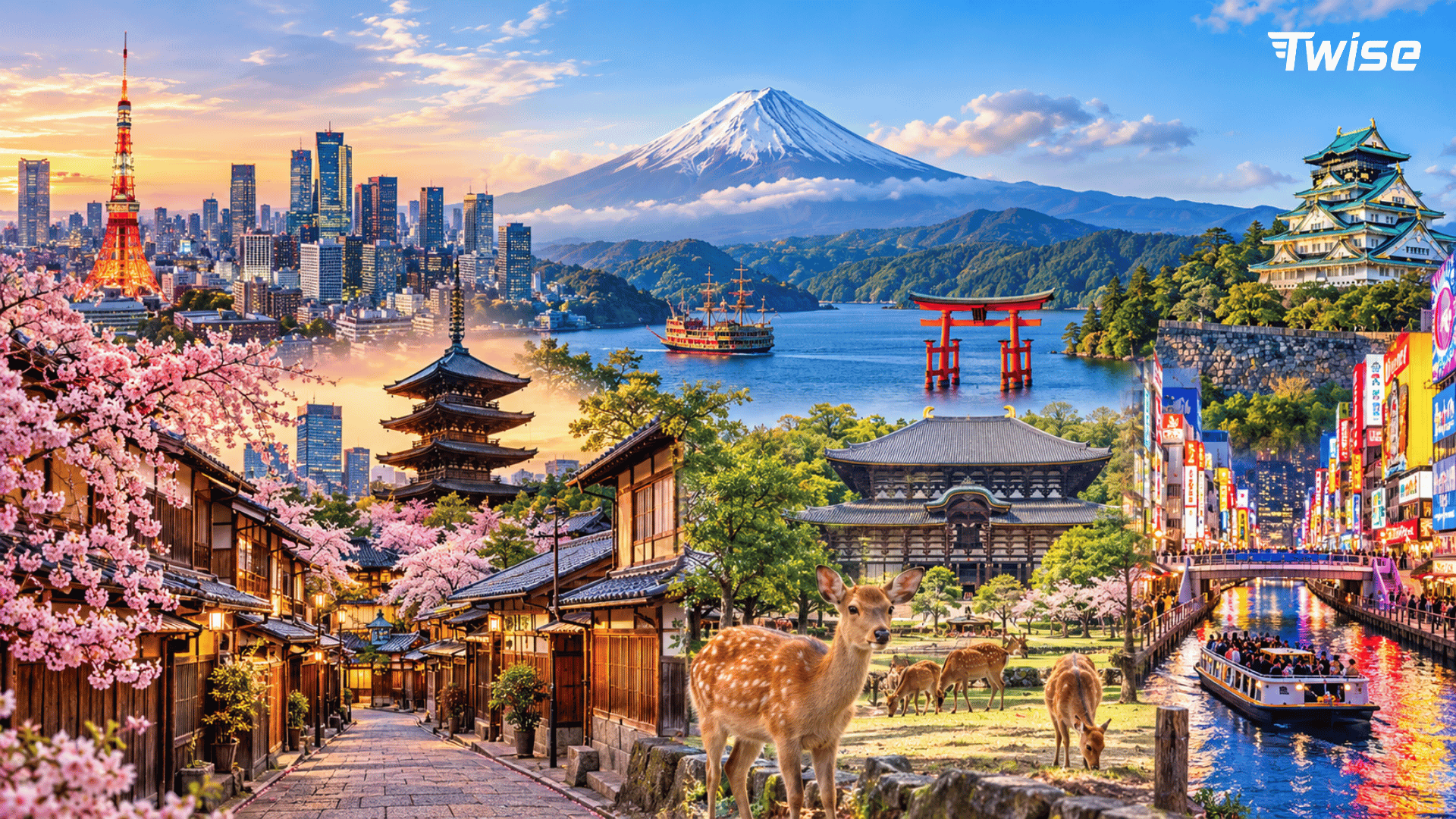
This is the most balanced first-time Japan travel itinerary because it adds Fuji scenery and Nara without excessive hotel changes. Japan’s official tourism resources also feature Golden Route itineraries built around Tokyo, the Fuji/Hakone area, Kyoto, Nara and Osaka. Pasted markdown
Days 1–3 – Tokyo
Day 1
Arrival and an easy neighborhood evening.
Day 2
Asakusa, Ueno and Akihabara.
Day 3
Meiji Jingu, Harajuku, Shibuya and Shinjuku.
Travelers who want mobile data ready from arrival can compare a Twise Japan travel eSIM with airport SIMs and home-carrier roaming.
Day 4 – Hakone or Kawaguchiko
Choose Hakone for:
- onsen;
- ryokan stays;
- convenient progression toward Kyoto.
Choose Kawaguchiko for:
- Fuji-focused scenery;
- lake viewpoints;
- photography.
Mt. Fuji visibility depends heavily on weather, so avoid treating a clear view as guaranteed.
Day 5 – Travel to Kyoto + Gion
Treat this as a transfer day with an enjoyable evening, not a full sightseeing day.
Day 6 – Southern & Eastern Kyoto
Combine Fushimi Inari, Kiyomizu-dera, Ninenzaka/Sannenzaka and Gion.
Day 7 – Arashiyama + Northwest Kyoto
Visit the Bamboo Grove and Tenryu-ji. Add Kinkaku-ji if your timing and energy allow.
Day 8 – Nara Day Trip
Focus on Nara Park, Todai-ji and, if time permits, Naramachi.
Day 9 – Osaka
Visit Osaka Castle, then choose Umeda or Shinsekai before ending with Dotonbori and Shinsaibashi.
Day 10 – Departure
If departing KIX
Keep the final morning in Osaka.
If departing Tokyo
Return earlier rather than risking a long same-day cross-country transfer before an international flight.
14-Day Japan Travel Itinerary: Add Hiroshima & Miyajima
A 14-day Japan travel itinerary gives the Golden Route room to breathe and adds western Japan without sacrificing Kyoto.
Days 1–4 – Tokyo
Use the first three days for Tokyo and the fourth for Kamakura, Nikko or simply a slower city day.
Day 5 – Hakone Ryokan Stay
Make Hakone an overnight experience if budget allows. A ryokan and onsen feel very different when you are not watching the clock for a return train.
Days 6–8 – Kyoto
Three nights allow you to divide Kyoto geographically rather than racing between opposite sides of the city.
Day 9 – Nara
Travel Kyoto → Nara → Osaka if luggage logistics work, or visit as a day trip.
Day 10 – Osaka
Spend a full day exploring the city rather than treating it only as a place to sleep.
Day 11 – Osaka/Kyoto to Hiroshima
Travel west and focus on Peace Memorial Park, the Atomic Bomb Dome and Peace Memorial Museum.
Avoid adding multiple distant attractions after the train journey.
Day 12 – Miyajima
Explore the Itsukushima Shrine area and waterfront. Add Mt. Misen if weather, energy and daylight suit your plans.
Day 13 – Return Toward Osaka + Optional Himeji
Stop at Himeji only if train timing and your energy make it worthwhile.
Day 14 – Departure
A Kansai departure is usually more convenient for this westbound route if flight pricing allows.
Hakone or Kawaguchiko: Which Fits Your Japan Itinerary?
| Choose | Better for |
| Hakone | Onsen, ryokan, easier Tokyo→Kyoto routing |
| Kawaguchiko | Fuji-focused landscapes and photography |
Choose Hakone if you want an onsen night
Hakone integrates more naturally into a Tokyo-to-Kyoto route and suits travelers who value ryokan culture.
Choose Kawaguchiko if Fuji is the priority
Kawaguchiko puts Mount Fuji at the center of the experience.
Keep the day flexible for weather
Clouds can completely hide Fuji. Where possible, leave some flexibility rather than building the entire trip around one fixed viewing window.
Where Should You Stay on This Japan Route?
Tokyo
Shinjuku works well for nightlife and transport, Ueno for eastern Tokyo and rail access, Tokyo Station for Shinkansen convenience, and Asakusa for a quieter traditional atmosphere.
Kyoto
Choose Kyoto Station for transportation, Gion/Higashiyama for atmosphere or downtown Kyoto for restaurants and evenings.
Osaka
Namba suits Dotonbori, food and nightlife. Umeda offers excellent rail connections.
Hakone
If budget allows, stay in a ryokan rather than visiting only for a few hours.
How to Travel Between Tokyo, Kyoto, Osaka & Hiroshima
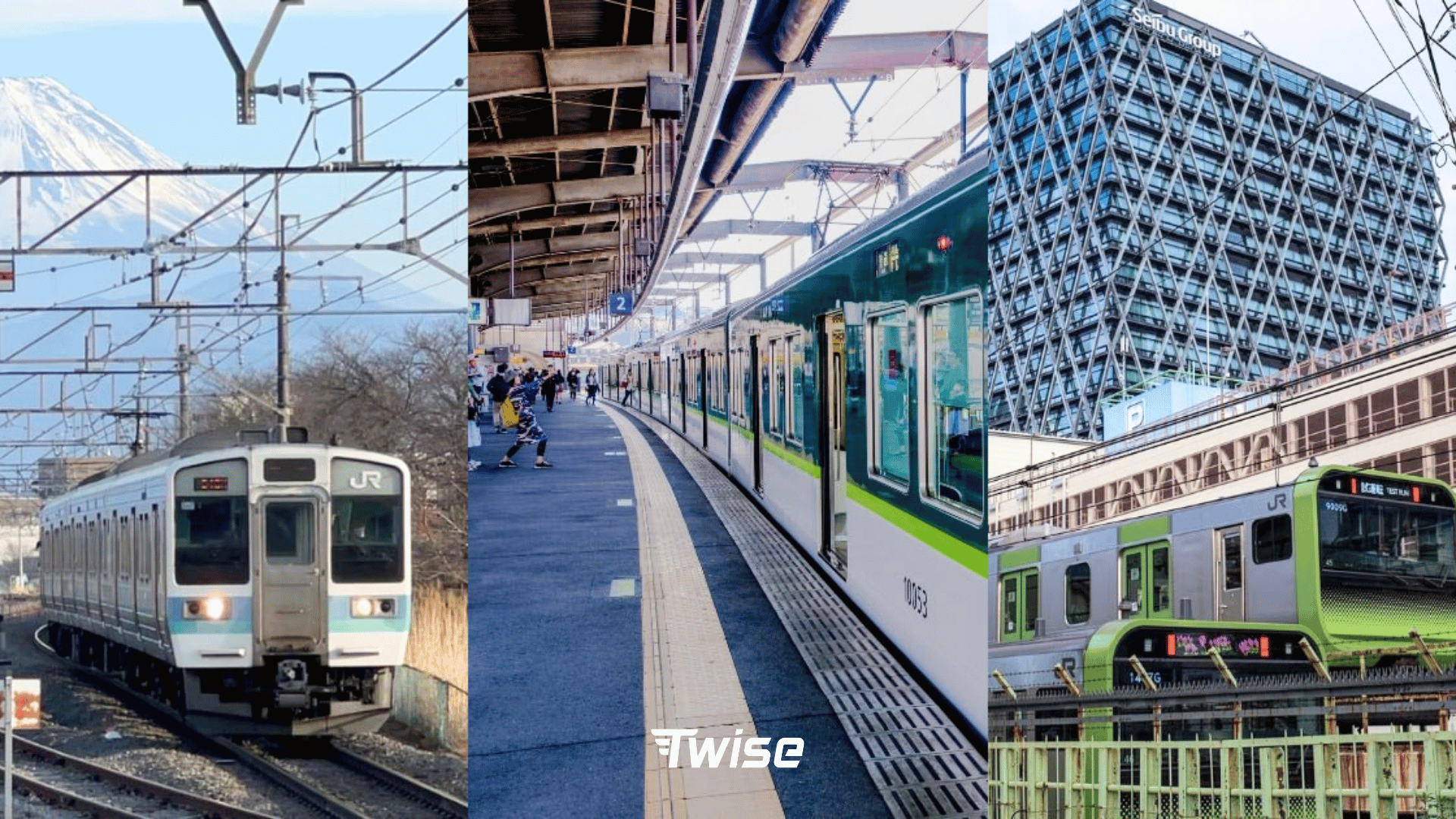
Tokyo → Kyoto
Use the Tokaido Shinkansen.
Kyoto → Nara
JR and Kintetsu both serve Nara; the better option depends on where you start and which part of Nara you want to reach.
Kyoto → Osaka
Frequent rail services make this an easy intercity journey.
Osaka → Hiroshima
Use the Sanyo Shinkansen.
Should you buy the JR Pass?
Do not assume the JR Pass automatically saves money. Calculate your planned long-distance journeys first and compare them with the current pass price.
When to reserve Shinkansen seats
Reservations are particularly useful during peak holidays, for groups wanting adjacent seats, travelers with oversized baggage and anyone with a fixed departure time.
SmartEX currently allows online booking and offers QR-Ticket, IC-card or ticket pickup boarding options for eligible journeys. スマートEX
How Mobile Data Fits Into a Japan Travel Itinerary
Mobile data becomes most valuable at transition points rather than while standing inside an attraction.
Travelers can review Twise eSIM options before departure if they want mobile connectivity ready when they land.
Airport arrival
You may immediately need train schedules, terminal directions, hotel routes, translation and family messages.
Navigating Tokyo and Osaka stations
Maps and rail apps help with complex stations, but signs and station maps remain useful backups.
Shinkansen travel
Data helps retrieve SmartEX reservations, QR tickets and schedule changes.
Kyoto buses and attraction routes
Kyoto often requires switching between rail, subway, bus and walking, making live navigation particularly useful.
Hotel and ryokan messages
Connectivity matters if you arrive late, dinner has a fixed serving time or luggage delivery is involved.
Banking and OTP
A data eSIM can provide internet access, but normal cellular SMS OTPs generally remain tied to your home line.
When an eSIM may not be enough
Remote trails, mountain valleys, tunnels, outages or an incompatible phone can still leave you offline.
Keep screenshots, offline maps and key reservations available.
How Much Mobile Data Do You Need for 7, 10 or 14 Days in Japan?
These are planning ranges, not guarantees.
| Trip | Light use | Moderate use | Heavy use |
| 7 days | 2–3GB | 5–10GB | 10GB+ |
| 10 days | 3–5GB | Around 10GB | 15–20GB+ |
| 14 days | Around 5GB | 10–20GB | 20GB+ / unlimited |
Light
Maps, WhatsApp, translation and tickets.
Moderate
Add social media, restaurant research and occasional photo uploads.
Heavy
Add video, hotspot use and work calls.
Hotel Wi-Fi can substantially reduce consumption. Choose a Japan eSIM plan based on actual travel behavior rather than automatically buying unlimited data.
Japan Trip Planning Mistakes to Avoid
Changing hotels every night
Each hotel change costs packing, checkout, luggage handling and orientation time.
Crossing Tokyo multiple times in one day
Group east and west Tokyo separately.
Planning Fuji on one inflexible date
Weather matters more than itinerary perfection.
Treating transport days like full sightseeing days
Checking out, navigating stations and checking in takes real time.
Assuming JR Pass is automatically cheaper
Compare individual fares first.
Overloading Kyoto
Kyoto attractions look close on a map but often require buses, walking and transfers.
Booking the wrong departure airport
Check whether your final airport is HND, NRT, KIX or another airport before finalizing the route.
Depending entirely on mobile connectivity
Keep:
- screenshots;
- downloaded tickets;
- offline Maps;
- hotel addresses.
What to Book Before Your Japan Trip
Flights
Consider open-jaw flights into Tokyo and out of Osaka to reduce backtracking.
Hotels
Reserve earlier for cherry blossom season, autumn foliage and major holiday periods.
Popular attractions
Book timed-entry attractions in advance where required, but do not assume ordinary temples and shrines all need reservations.
Shinkansen when appropriate
Reserve when traveling during busy periods or when your schedule has little flexibility.
Ryokan
Book early when a specific room, private bath or meal plan matters.
eSIM or roaming plan
Install before departure when the selected plan permits installation without immediately starting validity.
For broader connectivity choices, travelers can also browse Twise before deciding between an eSIM, roaming or a physical SIM.
Offline backup pack
Save hotel addresses, flight details, rail bookings, insurance information and emergency contacts.
FAQs About Japan Travel Itineraries
For a first trip, 7–14 days works well. Seven days suits Tokyo, Kyoto and Osaka, while 10–14 days gives you more room for Hakone, Nara, Hiroshima or slower sightseeing.
Yes. A focused Tokyo → Kyoto → Osaka Japan travel itinerary is achievable in seven days. Avoid adding Fuji, Nara and Hiroshima all at once.
A practical route is Tokyo → Hakone or Fuji area → Kyoto → Nara → Osaka. It follows Japan’s classic east-to-west Golden Route while limiting unnecessary backtracking.
Yes. Two weeks gives enough time for several days in Tokyo and Kyoto, Osaka and Nara, plus dedicated time for Hiroshima and Miyajima.
Stay in Kyoto if temples, historic neighborhoods and early sightseeing are priorities. Osaka works well for food, nightlife and some transport connections. Many first-time visitors include both.
Not necessarily. Calculate your expected Shinkansen and JR journeys before buying. Point-to-point tickets can be more economical depending on your exact Japan travel itinerary.
A good Japan route is not the one with the most pins on Google Maps. It is the one that leaves enough time to experience each place without constantly checking the clock. Build geographically, treat transfer days realistically, keep Fuji weather-flexible, and preserve offline copies of essential bookings. That approach makes a 7-, 10- or 14-day Japan travel itinerary much easier to actually enjoy.
.
