

Korea Travel Package Useful Guide: Tours, SIM/eSIM, Transport & What to Book Before You Go
Jul
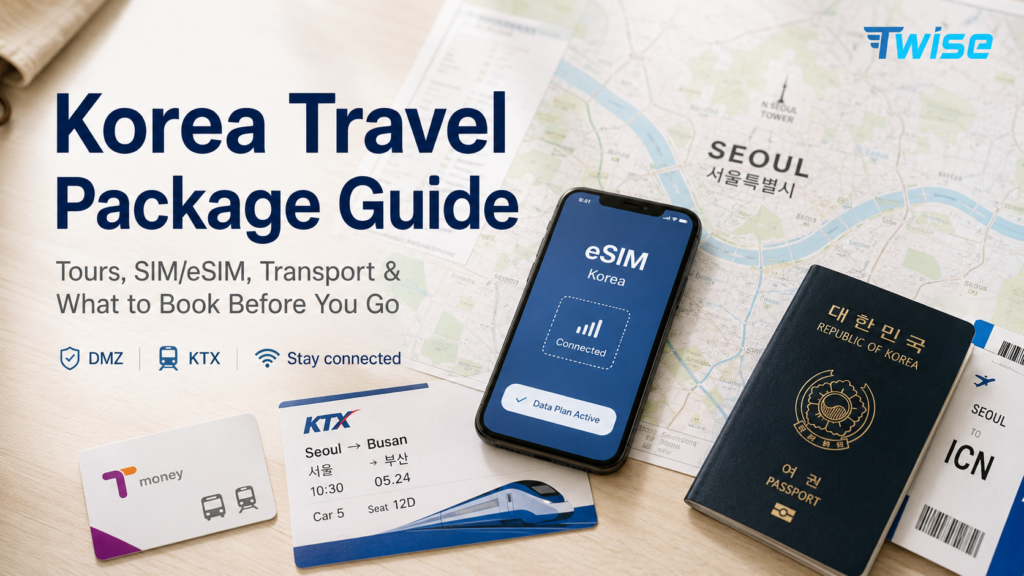
A Korea travel package works best when it covers more than hotels and sightseeing. First-time visitors usually need a first-night hotel, an airport-to-city plan, mobile data, T-money, local apps, and advance bookings for high-demand experiences such as the DMZ or KTX routes. Guided tours reduce planning, while a DIY or hybrid package gives more control over cafés, shopping, K-pop, beauty, and food stops. The smartest setup is to pre-book the parts that can fail on arrival, then keep flexible time open. This guide explains what to include, what packages often exclude, and how to stay connected from landing in Korea.
Quick Answer: What Should a Korea Travel Package Include?
A useful Korea travel package should solve the first practical problems of the trip: where you will sleep, how you will leave the airport, how you will get online, how you will pay for local transport, and which high-demand bookings cannot be improvised after arrival. A package that only bundles a hotel and sightseeing may still leave you handling the most stressful decisions at Incheon Airport.
Essential package components
| Component | Why it matters |
| Hotel | Determines transit convenience, first-night confidence, and tour pickup ease. |
| Airport transfer | Reduces arrival friction, especially after a late flight or with heavy luggage. |
| SIM/eSIM or pocket Wi-Fi | Keeps maps, taxi, translation, tickets, and hotel messages working. |
| T-money / transport card | Makes subway and bus use easier without buying a ticket for every ride. |
| Naver Map / Papago / taxi apps | Supports local navigation, Korean-language addresses, and ride pickup. |
| KTX / KORAIL Pass | Supports Seoul–Busan, Seoul–Gyeongju, and other multi-city routes. |
| Day tours | Useful for the DMZ, Nami Island, Jeju, ski trips, food tours, and hard-to-reach attractions. |
| Insurance | Protects against medical costs and eligible trip disruption. |
| Payment backup | Helps when a foreign card is rejected by a local app or small merchant. |
The short answer for first-time travelers
For a first Korea trip, book the first-night hotel, arrival data, airport transfer or route, key tours, and intercity train tickets before departure. Keep cafés, shopping, casual restaurants, neighborhood walks, and some museums flexible. This balance protects the trip from expensive arrival mistakes without turning every day into a fixed schedule.
What Does “Korea Travel Package” Actually Mean?
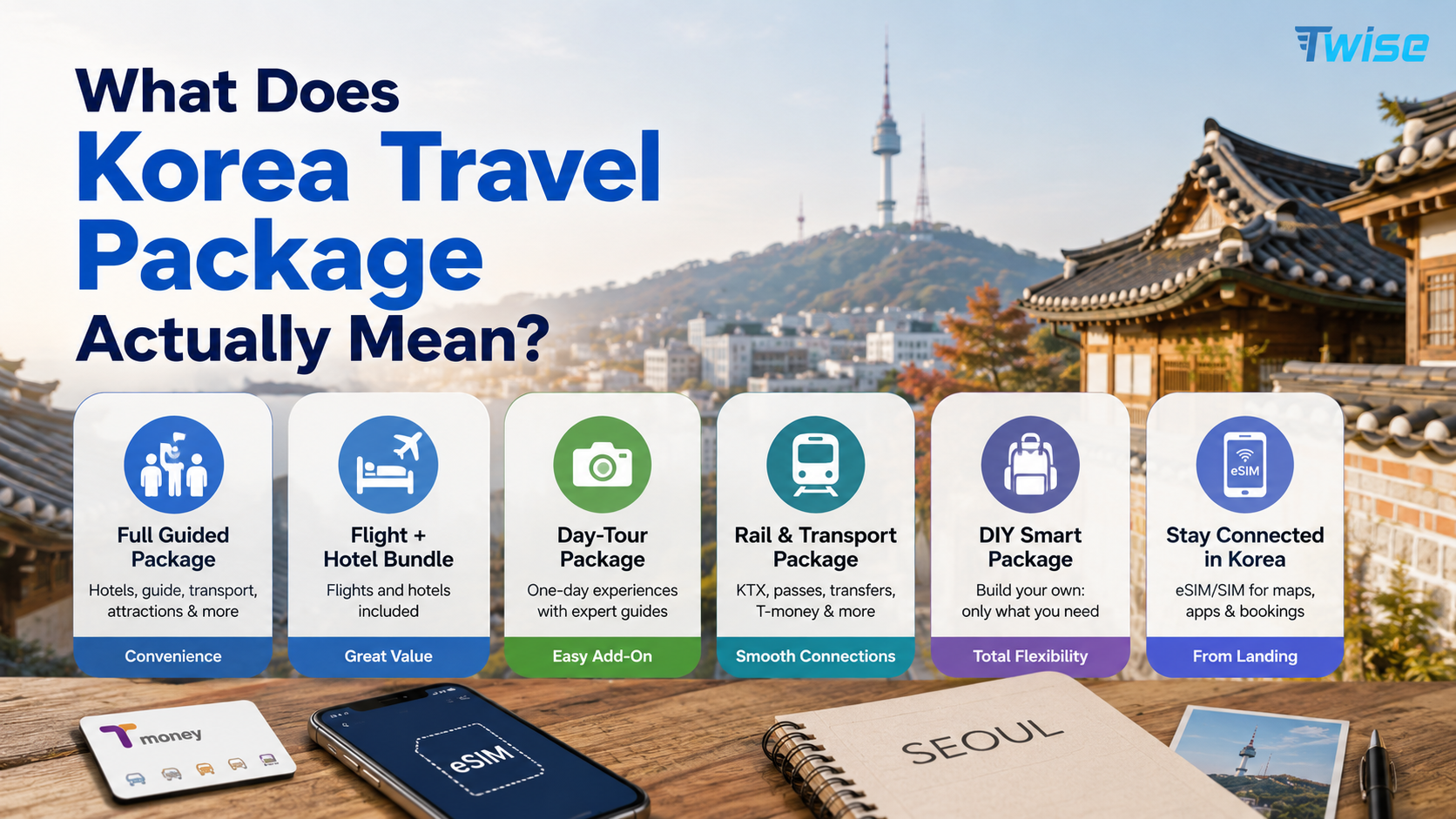
The phrase covers several products that solve very different problems. A low headline price may refer only to a flight-and-hotel bundle, while a higher price may include guides, transfers, entry fees, breakfast, and intercity transport. Compare the package structure before comparing the price.
Full guided package
A full guided package usually includes hotels, a guide, group transport, scheduled attractions, and sometimes flights or selected meals. It suits first-time visitors who want logistics handled, families coordinating several ages, and travelers who value an English-speaking point of contact. The trade-off is less control over start times, meal choices, and how long you stay in each neighborhood.
Flight + hotel bundle
This bundle solves the two largest bookings but leaves the traveler responsible for airport transfer, mobile data, local apps, T-money, tours, and intercity tickets. It can be good value when the hotel is near a useful subway line. A cheap hotel far from central transport can erase the savings through long transfers and early tour pickups.
Day-tour package
Day tours cover a single experience such as the DMZ, Nami Island, Alpaca World, a ski resort, a Jeju circuit, a food tour, or a K-pop experience. They are useful when a place is inconvenient by public transport or when a guide adds meaningful context. They work best inside an otherwise flexible itinerary.
Rail and transport package
A rail and transport package may include KTX tickets, a KORAIL Pass, AREX, airport buses, T-money, private transfers, or city transport support. This is often more valuable for a multi-city route than a generic sightseeing bundle, because missed trains and unclear transfers can consume an entire travel day.
DIY smart package
A Korea travel package can mean a full guided tour, a flight-and-hotel bundle, a day-tour package, a KTX or transport pass, or a DIY package built from separate bookings. Compare what is included, what is excluded, and whether mobile data, airport transfer, and local transport are covered. A DIY smart package is a self-built bundle: hotel, mobile data, T-money, local apps, selected tours, and KTX only if the route requires it. It keeps spending tied to actual needs. The traveler must still manage cancellations, app setup, Korean addresses, and backup plans, so it is most effective when the core logistics are prepared in advance.
Guided Tour vs DIY Korea Package: Which Should You Choose?
The best choice depends less on travel experience and more on where you want certainty. A confident solo traveler may still prefer a DMZ tour, while a family on a guided package may want free evenings for food and shopping. A hybrid structure is often the most practical answer.
Choose a guided package if…
- You want English-speaking guidance for major historical or political sites.
- You are traveling with family members or seniors who prefer fewer transfers.
- You want DMZ, Jeju, or regional logistics handled by one operator.
- You feel uneasy about language barriers, pickup points, or intercity planning.
- You prefer fixed schedules and do not want to compare multiple transport options.
- You want hotel-to-attraction transport included on most days.
Choose a DIY package if…
- You want flexibility to change neighborhoods, cafés, shops, and meal times.
- You are comfortable using Naver Map, Papago, public transit, and booking apps.
- Your priorities are K-pop, beauty, food, nightlife, or independent photography.
- You want to choose the hotel based on a specific subway line or neighborhood.
- You want control over KTX departure times and seat choices.
- You prefer lower-cost subway and bus travel over private coaches.
Hybrid package: the best fit for many first-timers
Book the hotel separately, arrange mobile data before arrival, prepare a T-money plan, reserve the DMZ or other hard-to-reach tours, and book KTX if the itinerary is multi-city. Keep one or two free days in Seoul or Busan. This structure gives you support where mistakes are costly and freedom where spontaneous decisions improve the trip.
Decision table
| Traveler type | Best package style |
| First-time family | Guided city + day tours + eSIM |
| Solo traveler | Hotel + eSIM + transit card + selected tours |
| K-pop/beauty traveler | Seoul base + experience bookings |
| Multi-city traveler | Rail package + city hotels + eSIM |
| Jeju traveler | Guided day tours or rental car + data |
| Budget traveler | DIY package + public transit |
| Senior travelers | Guided package + transfer + support |
| Remote worker | Flexible hotel + high-data eSIM + fewer group tours |
What to Book Before You Go to Korea
Pre-book the items that can block the trip if they fail. Leave flexible the items that are easy to decide locally. This is a better rule than trying to reserve every meal and attraction.
Book before departure
| Book before Korea | Why |
| First-night hotel | Avoids arrival stress and provides a fixed Korean address. |
| eSIM/SIM/pocket Wi-Fi | Data may be needed immediately for maps, messages, and transport. |
| Airport transfer if late arrival | Reduces uncertainty after a long flight or after the last easy connection. |
| DMZ tour | Often needs advance booking, passport details, and strict pickup timing. |
| KTX or KORAIL Pass | Useful for multi-city travel and busy periods. |
| Seasonal tours | Ski, cherry blossom, and autumn-foliage capacity can be limited. |
| Theme park tickets | Can save time and simplify entry on crowded dates. |
| Travel insurance | Coverage normally needs to be active before the relevant disruption. |
| Key apps/accounts | Avoids airport setup problems and verification delays. |
Can wait until arrival
| Can wait | Why |
| Casual cafés | Easy to choose around your daily route. |
| Shopping areas | Better decided by weather, energy, and local discoveries. |
| Some museums | Demand varies and many can be booked close to the visit. |
| Local subway rides | Pay as you go with a transport card. |
| Short taxi rides | Use an app, taxi stand, or hotel assistance. |
| Neighborhood exploring | Works best when adjusted to the actual pace of the trip. |
What should not be left until arrival
Do not wait until landing to solve mobile data, the hotel address, the airport route, or first-night transport. The real problem is not that these tasks are impossible at the airport; it is that they all compete for attention when you are tired, looking for luggage, checking the last train, and trying to contact the hotel.
Tours and Attractions: What Korea Packages Usually Include
Seoul city package
A Seoul city package commonly combines Gyeongbokgung Palace, Bukchon Hanok Village, Insadong, Myeongdong, Hongdae, and N Seoul Tower. Check whether the schedule allows enough time inside palaces and markets, or mainly uses them as photo stops. Hotel location matters because early pickups can turn a short attraction day into a long coach day.
DMZ tour
DMZ tours usually require a passport and advance booking. Check the exact pickup point, whether hotel pickup is included, what happens if access changes for operational reasons, and whether cancellation rules differ from normal city tours. Keep your passport accessible rather than packed in checked luggage.
Nami Island and nearby day tours
Nami Island is often bundled with Alpaca World, the Garden of Morning Calm, Petite France, or a rail-bike experience. These combinations reduce transfers but can feel rushed. Compare how many attractions are included with how much time is actually available at each stop.
Busan and Gyeongju package
Busan and Gyeongju packages suit travelers who want coast, temples, markets, seafood, and Korean history beyond Seoul. Check whether Gyeongju is a day trip from Busan or an overnight stop. A day trip is simpler; an overnight stay reduces backtracking and makes evening access easier.
Jeju package
Jeju packages often use guided day tours or rental cars because short-stay travelers can lose time waiting for indirect public transport. Compare east, west, and south routes carefully. A package that lists many Jeju landmarks may still be inefficient if the stops are spread across opposite sides of the island.
K-pop, beauty and food experiences
K-pop, beauty, cooking, market, and food experiences usually work better as selected day activities than as a fully guided package. They depend on personal taste and neighborhood timing. Reserve the hardest-to-book experience, then leave space for shopping, cafés, pop-ups, and local recommendations.
Korea Transport Package: Airport, Subway, KTX and T-money
Airport transfer

Options include the AREX Express Train, all-stop Airport Railroad service, airport limousine bus, taxi, private transfer, or package pickup. The official Airport Railroad app supports Express Train reservations, ticket management, refunds or changes, and ticket forwarding. Choose by hotel location, luggage, arrival time, and whether a transfer is required after reaching Seoul Station.
T-money and local transit
A physical T-money card remains a simple choice for visitors using subways and buses. Confirm whether a package includes only the card or also includes stored value. Mobile versions can depend on device and account conditions, so a physical card plus an international bank card is often the least complicated setup.
KTX and KORAIL Pass
The official KORAIL reservation site lets international travelers check schedules and buy regular or high-speed train tickets. KORAIL Pass is designed for international visitors and can cover repeated KORAIL-operated train journeys within its validity rules. According to VISITKOREA, current pass types and seat-reservation conditions should be checked before purchase because SRT, subways, and some tourist trains are not included.
KORAIL PASS vs single KTX ticket
| Choose KORAIL Pass if… | Choose single tickets if… |
| You take several long-distance trains. | You take only one or two routes. |
| Your route includes Seoul–Busan–Gyeongju or similar. | Your itinerary is fixed and simple. |
| You want some rail flexibility. | You know the exact trains you need. |
| You travel enough within the pass validity. | The pass costs more than the individual tickets. |
Discover Seoul Pass and attraction bundles
The official Discover Seoul Pass is aimed at international visitors and bundles selected attractions and transport-related benefits. The card and mobile versions do not always have identical functions, so check whether the option includes a transit-card feature, mobile-data benefit, AREX benefit, or only attraction entry. Calculate value from attractions you will realistically visit, not the maximum theoretical list.
SIM, eSIM or Pocket Wi-Fi: What Connectivity Should Be in Your Korea Package?
Connectivity belongs in the package because the itinerary is increasingly stored inside live apps. A hotel voucher is less useful when the taxi driver cannot find the English address, and a train booking is harder to manage when a platform changes and the phone has no data.
Why mobile data should be part of the package
- Naver Map and KakaoMap for live routes and Korean place names.
- Papago for signs, menus, addresses, and short messages.
- Kakao T or k.ride for taxi requests and driver communication.
- Korail tickets and schedule changes.
- Hotel messages, tour meeting-point updates, and emergency alerts.
- Family or group coordination when people split up.
eSIM for app-first travelers
A travel eSIM is most useful when the phone is compatible, the traveler wants to install before departure, and maps or taxi apps need to work as soon as airport Wi-Fi is left behind. It is particularly practical for solo travelers and couples who do not want to carry or return an extra device.
Physical SIM for travelers needing a phone number
Some travelers prefer a local physical SIM when a Korean phone number, local calls, or SMS is important. Do not assume every tourist SIM includes full verification capability. Ask whether the number is data-only, whether passport verification is required, and which local services can actually send messages to it.
Pocket Wi-Fi for groups
Pocket Wi-Fi can work for a group or laptop-heavy trip, but it adds a device that must be charged, collected, carried, and returned. Everyone also needs to stay near the router. If the group splits in a station or market, the person without the router may lose maps and messaging.
Twise positioning
Twise is a practical option for first-time travelers who want mobile data ready for Korea apps, hotel access, translation, route planning, and tour communication. Choose the plan by trip length, expected daily data, hotspot needs, and whether a Korean phone number is actually necessary.
Korea Travel Apps That Should Come With Your Package
Tour packages often include tickets but assume the traveler can independently reach the pickup point, identify a subway exit, contact the guide, or show a QR code. Prepare the app layer even when the itinerary is guided.
Naver Map and KakaoMap
Use local map apps for walking routes, subway exits, buses, destination search, and Korean place names. Save the hotel and tour pickup locations in advance. Google Maps can still help with global reviews and saved lists, but it should not be the only navigation tool.
Papago
Use Papago for menus, signs, taxi addresses, hotel messages, ticket-machine instructions, and short conversations. Keep sentences simple. A short message such as “I have a reservation at 7:00 PM” is more likely to translate clearly than a long explanation with slang.
Kakao T or k.ride
Use these for taxis and ride requests. Payment and account setup can vary for international users, so test the app before travel. Save a Korean address and a screenshot of the pickup point in case the driver calls or the pin lands on the wrong entrance.
KorailTalk and Korail website
Use KorailTalk or the official website for KTX and other Korail schedules and bookings. Save the ticket, train number, station name, and departure time offline. Large stations can have multiple levels and exits, so arrive with enough time to find the platform rather than relying on a last-minute map search.
VisitKorea and Emergency Ready
VisitKorea supports official tourism information, while Emergency Ready can provide multilingual safety information and alerts. Enable the language and notification settings before travel. These apps are most useful when they are already installed before severe weather or a route disruption occurs.
App setup checklist
- Install the apps before the flight.
- Add a payment card where the app accepts one.
- Save the hotel name and address in Korean.
- Screenshot tour meeting points and booking references.
- Test mobile data after landing before leaving airport Wi-Fi.
What Korea Packages Often Include vs Exclude
Packages use the same words for very different inclusions. “Transport included” may mean only the tour coach, not airport transfer or KTX. “Breakfast included” may begin after an early tour has already departed. Read the operational details, not only the summary icons.
| Item | Often included? | What to check |
| Flights | Sometimes | Baggage, departure airport, arrival time, and change conditions. |
| Hotel | Often | Location, subway access, room type, and breakfast timing. |
| Airport transfer | Sometimes | One-way or roundtrip, private or shared, pickup window. |
| Breakfast | Often | Whether it works with early tours and dietary needs. |
| Guided tours | Often | Guide language, group size, pace, and pickup point. |
| Entry tickets | Sometimes | Which attractions and special exhibitions are included. |
| KTX/train | Sometimes | Class, seat, route, schedule, and change policy. |
| SIM/eSIM | Rarely or add-on | Data amount, activation timing, hotspot, and phone-number features. |
| T-money | Sometimes | Card only or card with loaded balance. |
| Meals | Some | Number of meals, menu flexibility, and dietary restrictions. |
| Travel insurance | Sometimes | Medical limits, exclusions, and disruption coverage. |
| Free days | Varies | Transport and app support are still needed. |
First 90 Minutes in Korea: Arrival Package Checklist
The first 90 minutes expose whether the package is complete. A traveler may have a seven-day itinerary but still be stuck at the airport because the hotel address is only in English, the taxi app needs verification, or the mobile-data plan was never installed.
Before leaving airport Wi-Fi
- Confirm that mobile data works outside the Wi-Fi network.
- Save the hotel address in Korean.
- Open Naver Map and load the route.
- Test Papago with a saved phrase or address.
- Load the airport transfer route or ticket.
- Download tour confirmations and QR codes.
- Check the payment card and notify family or travel companions.
Airport-to-hotel choices
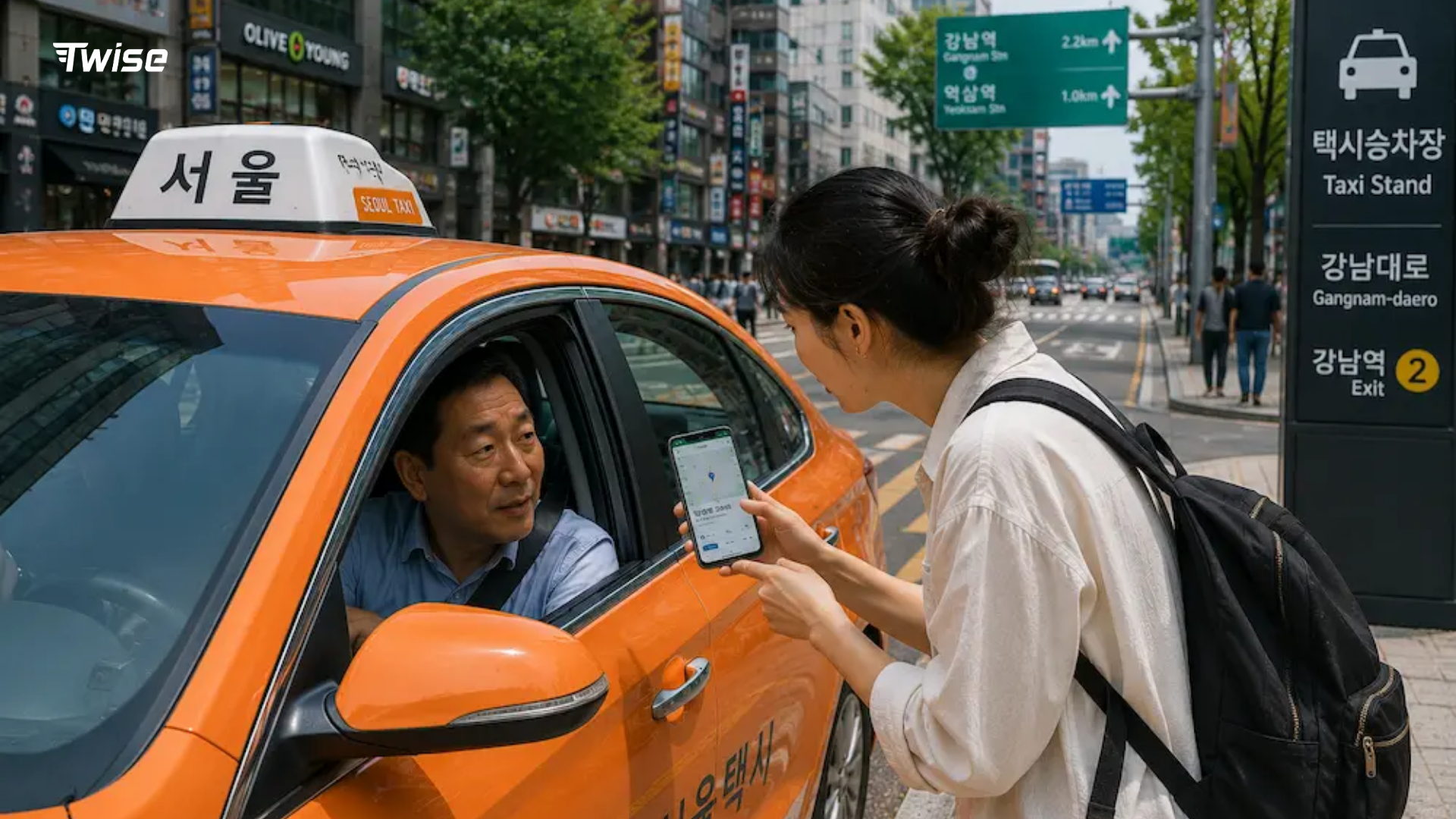
Use AREX when the hotel is convenient from Seoul Station or a connecting line; use an airport bus when it stops near the hotel and luggage handling matters; use a taxi or private transfer for late arrivals, families, or awkward connections. Package pickup is easiest only when the meeting instructions are unambiguous.
If something fails
If data fails, stay on airport Wi-Fi while checking the active data line, roaming setting, or support instructions. If a taxi app fails, use the airport taxi stand or booked transfer. If map search fails, show the Korean hotel address. The goal is not a perfect arrival; it is having a second route for each essential task.
How to Compare Korea Travel Packages Before Booking
Compare hotel location
A cheaper package may be worse value if the hotel is far from subway lines, airport transport, or tour pickup points. Check the walking route at the actual time of day. A ten-minute map estimate can become difficult with luggage, stairs, rain, or a station exit on the opposite side of a large intersection.
Compare transport gaps
- Is airport transfer included?
- Are KTX tickets or a rail pass included?
- Are local subways and buses included, or only the tour coach?
- Are pickup points easy to reach before the first train?
Compare guide language and group size
Small-group or private tours cost more but can reduce waiting and make questions easier. Large groups may be good value for major highlights but allow less flexibility. Confirm the guide language rather than assuming “international tour” means full English support.
Compare cancellation rules
DMZ access, severe weather, seasonal tours, and flight changes can alter a schedule. Check whether the operator offers a refund, date change, substitute itinerary, or only store credit. The cheapest option can become expensive when a non-refundable booking no longer fits the trip.
Compare digital support
- App instructions and account requirements.
- QR tickets that can be saved offline.
- A support contact that works in your language and time zone.
- Hotel address in Korean.
- SIM/eSIM option and activation guidance.
- Meeting-point screenshots with a landmark or exit number.
Sample Korea Package Setups by Trip Length
Use these setups as a starting framework rather than a fixed itinerary. The package should become more structured as the route becomes more complex.
| Trip length | Suggested setup |
| 3–4 days Seoul | Hotel + eSIM + T-money + palace, food, or DMZ tour. |
| 5–6 days Seoul + day trips | Hotel + eSIM + Nami/DMZ/theme park + transit card. |
| 7–8 days Seoul + Busan | Seoul hotel + KTX + Busan hotel + eSIM + selected city tours. |
| 9–10 days Seoul + Busan + Gyeongju | KTX/KORAIL Pass + hotels + selected tours + eSIM. |
| Jeju add-on | Flight or ferry + car/tour + hotel + eSIM. |
| Winter ski trip | Ski shuttle/tour + weather app + eSIM + warm-gear logistics. |
Where Twise eSIM Fits in a Korea Travel Package
A package still needs live connectivity
Even guided travelers need data during free time, at changed meeting points, and between the airport and the first hotel. Live connectivity supports guide messages, translation, maps, taxi backup, train tickets, emergency contact, and itinerary changes that a printed schedule cannot predict.
Twise eSIM as the app layer
Twise supports the apps that make Korea travel smoother: Naver Map, Papago, Kakao T or k.ride, KorailTalk, hotel apps, tour apps, email, and messaging. The value is not simply having data; it is keeping each booked part of the package usable while moving.
Install before departure if timing allows
Check device compatibility, carrier-lock status, activation timing, and setup instructions before the flight. Save the QR code and instructions offline. Some plans begin when they first connect to the destination network, while others have different activation rules, so follow the specific product guide.
Useful Twise resources
Before purchasing, review the device-compatibility guide, ordering instructions, data-usage guidance, and setup support. These resources are most useful before the airport, when you still have stable Wi-Fi and time to fix compatibility or carrier-lock issues.
15-Minute Korea Package Setup Checklist Before Departure
- Confirm the hotel address in Korean.
- Save the first-night hotel confirmation offline.
- Book an airport transfer or understand the AREX, bus, and taxi route.
- Buy a SIM/eSIM or arrange pocket Wi-Fi.
- Check phone eSIM compatibility and carrier-unlock status.
- Install Naver Map, Papago, and Kakao T or k.ride.
- Install KorailTalk if taking intercity trains.
- Book the DMZ, KTX, and seasonal tours early where needed.
- Screenshot pickup points, QR codes, and booking confirmations.
- Add payment cards where the app accepts them.
- Prepare a T-money or transport-card plan.
- Save emergency contacts and hotel phone details.
- Pack a charged power bank and cable.
- Keep the passport accessible for tours and ticket checks.
Final Decision Guide: What Korea Travel Package Should You Choose?
Choose the package style that removes the risks you do not want to manage. Do not pay for a fully guided itinerary if your real priority is independent cafés and shopping; do not choose a bare flight-and-hotel bundle if airport arrival and multi-city transport already feel overwhelming.
Choose a full guided package if…
You want low-stress planning, guided transport, family-friendly support, English-language context, or multi-city logistics handled by one operator. Check the pace, hotel location, and amount of free time before booking.
Choose DIY package if…
You want flexibility, lower-cost public transport, independent cafés, shopping, K-pop or beauty activities, and self-guided city days. Prepare the app, payment, address, and connectivity layers before arrival.
Choose hybrid package if…
You want to book the hotel, arrival route, data, KTX, and hard-to-reach tours early while keeping free days open. This is the strongest default for many first-time visitors because it protects the difficult logistics without flattening the trip into a timetable.
Add Twise eSIM if…
You want Korea apps, maps, translation, hotel messages, train tickets, and tour updates to work immediately after landing. Pair the plan with downloaded confirmations, Korean addresses, and offline screenshots so a temporary signal issue does not stop the trip.

FAQs About Korea Travel Packages
