

Where to Travel Solo in Japan: Best Cities, Routes, Safety & eSIM Tips
Sep
Planning to travel solo in Japan? Tokyo, Kyoto, and Osaka provide the easiest first route, with extensive public transportation, varied accommodation, and plenty of activities that do not require a companion. Hiroshima, Kanazawa, and Fukuoka are practical additions for longer trips. Japan is relatively manageable for independent visitors, but large stations, language barriers, natural hazards, late-night transport, and rural connections still require preparation. This guide compares solo-friendly cities and routes, explains transport and safety essentials, and shows how mobile data supports navigation, translation, bookings, and emergency information while you travel alone across Japan with reliable offline backups.
Is Japan Good for Solo Travel?
Yes. Japan’s rail network, organized cities, and visitor infrastructure make independent travel manageable, including for many first-time solo travelers.
Why Japan Works Well for Independent Travelers
Trains and subways connect major neighborhoods, while the Shinkansen simplifies longer journeys. Convenience stores, counter-seat restaurants, business hotels, hostels, and luggage-forwarding services also reduce everyday friction.
JNTO describes the country’s public transportation and accommodation options as particularly suitable for independent visitors in its official solo travel guide.
What Can Be Challenging When You Travel Solo in Japan?
Nobody else is available to watch your bag, check a second route, or handle communication when your phone fails.
Large stations can be confusing, rural services may be infrequent, and some restaurants or accommodation procedures remain primarily in Japanese. These are manageable problems, but preparation matters more when traveling alone.
Best Places to Travel Solo in Japan
| Destination | Best for | Getting around | Suggested stay |
|---|---|---|---|
| Tokyo | First visits, food, shopping | Extensive rail and subway | 3–5 days |
| Kyoto | Temples and traditional areas | Buses, trains, and walking | 2–4 days |
| Osaka | Food and lively evenings | Straightforward urban rail | 2–3 days |
| Kanazawa | Culture at a slower pace | Compact center plus buses | 1–2 days |
| Hiroshima | History and Miyajima | Trams, trains, and ferry | 1–2 days |
| Fukuoka | Food and Kyushu access | Compact subway network | 2–3 days |
These durations are planning ranges, not fixed rules. Select fewer destinations if you prefer unhurried mornings or dislike changing hotels.
Tokyo: Best for First-Time Solo Travelers
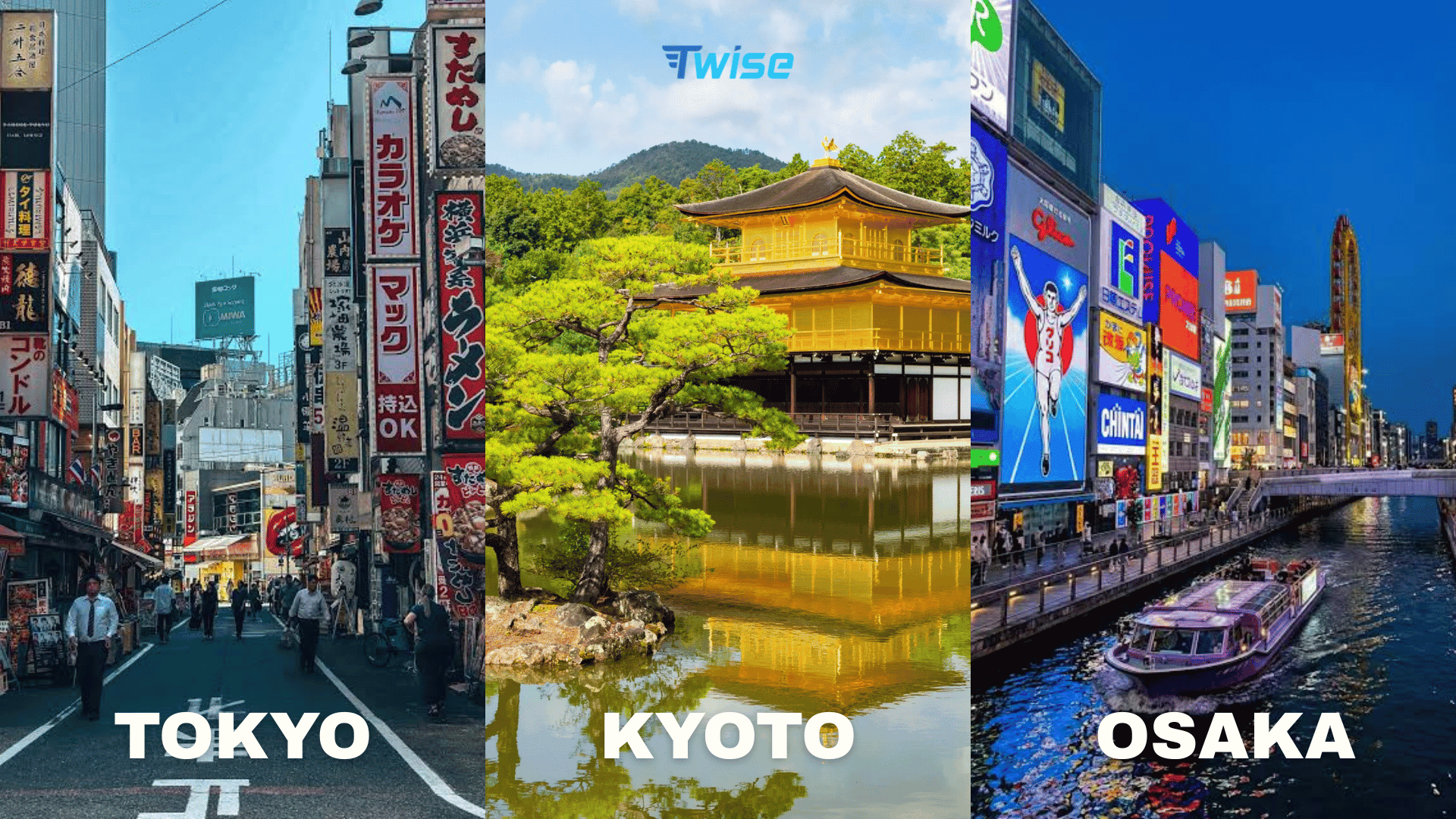
Tokyo provides the broadest introduction to travel solo in Japan. You can explore Asakusa in the morning, eat at a counter-seat restaurant, and change plans for Shibuya or Shinjuku without coordinating with anyone.
Choose accommodation near a useful station, but inspect the final walking route. A cheaper room involving several transfers and a dark 20-minute walk may be poor value for a late arrival.
Kyoto: Best for Culture and Independent Sightseeing
Kyoto suits travelers who enjoy temples, gardens, historic streets, and early starts. Traveling alone makes it easier to reach Fushimi Inari or Arashiyama before the busiest hours.
The city requires more surface navigation than central Tokyo. Buses, local trains, and walking often combine in one day, so group attractions geographically.
Osaka: Best for Solo Food and Nightlife
Osaka offers casual restaurants, busy shopping districts, and a livelier evening rhythm. Counter dining makes trying takoyaki, kushikatsu, or okonomiyaki less awkward alone.
Namba and Umeda provide different transport advantages. Choose your base according to onward journeys rather than nightlife reputation alone. Image Description: Realistic editorial travel photograph, 1920×1080, showing a solo international traveler from behind exploring a lively but welcoming Osaka food street in the early evening. Include counter-style restaurants and warm natural lighting without recognizable faces or excessive text. Place a small Twise logo in the top-right corner.
Kanazawa: Best for a Slower Solo Trip
Kanazawa combines Kenrokuen, contemporary art, markets, and preserved districts in a smaller urban setting.
It works well between Tokyo and Kyoto for travelers who want a calmer pace. Check museum closing days and bus routes before building the stop around a single attraction.
Hiroshima: Best for History and a Miyajima Side Trip
Hiroshima fits naturally after Osaka or Kyoto. Spend one day around Peace Memorial Park, then visit Miyajima as a separate day or well-planned extension.
Check ferry and return-train timing instead of assuming a late island departure connects smoothly with your next city.
Fukuoka: Best for Solo Travelers Continuing Into Kyushu
Fukuoka combines a compact center, food culture, and convenient access to Kyushu. It suits travelers extending west rather than returning immediately to Tokyo.
Use it as a base only after confirming whether your intended regional destinations require trains, buses, or a rental car.
Which Japan Solo Travel Route Should You Choose?
7 Days: Tokyo + Kyoto + Osaka
Spend three or four days in Tokyo, two in Kyoto, and one or two in Osaka. Flying into Tokyo and out of Kansai Airport reduces backtracking where flight prices work.
Do not add distant excursions simply to increase the number of pins on your map.
10 Days: Tokyo + Kyoto + Osaka + Hiroshima
Add two nights in Hiroshima or one night plus a carefully timed Miyajima visit. Keep at least three Tokyo days and two full Kyoto days.
This route moves west logically without returning through the same cities repeatedly.
14 Days: Tokyo + Kanazawa + Kyoto + Osaka + Hiroshima
A balanced route is Tokyo → Kanazawa → Kyoto → Osaka → Hiroshima. Use three- or four-night bases where possible.
If departing from Tokyo, return east the day before the flight rather than scheduling Hiroshima-to-airport travel on departure morning.
Should Solo Travelers Buy a JR Pass?
Not automatically. Add the current fares for your actual long-distance journeys and compare them with the pass price.
City-heavy itineraries may work better with individual Shinkansen tickets and local transport. A nationwide pass becomes more relevant when sufficient covered intercity travel is included.
How to Get Around Japan When Traveling Alone
Trains, Subways and IC Cards
Rechargeable IC cards simplify eligible local journeys by reducing repeated ticket purchases. They are payment tools, not unlimited passes, and do not cover every route.
Keep some cash and confirm the balance before entering a rural or late-night journey.
Shinkansen Between Cities
The Shinkansen makes Tokyo, Kyoto, Osaka, and Hiroshima practical to combine. Reserve seats when preferred, and understand the baggage rules before bringing a large suitcase.
Confirm the station name carefully: Osaka and Shin-Osaka serve different rail functions.
Save Routes Before Leaving Your Hotel
Save the destination in Japanese, the station exit, and your accommodation address. Screenshot the important transfer and final walking section.
This backup is especially valuable when the return journey occurs after your phone battery or data allowance has dropped.
Is Japan Safe for Solo Travelers?
Japan has relatively low crime, but “low risk” is not “no risk.” Solo visitors should prepare for personal safety and natural hazards.
Everyday Personal Safety
Keep valuables secure, watch drinks, and avoid following street promoters into unfamiliar venues. Check the last train before staying out late.
Use official taxi ranks or recognized ride services. If a situation feels wrong, move into a staffed station, convenience store, hotel, or police box.
Earthquakes, Typhoons and Other Natural Hazards
Learn your accommodation’s evacuation route and follow instructions from staff and authorities. Never travel toward a restricted area for photographs.
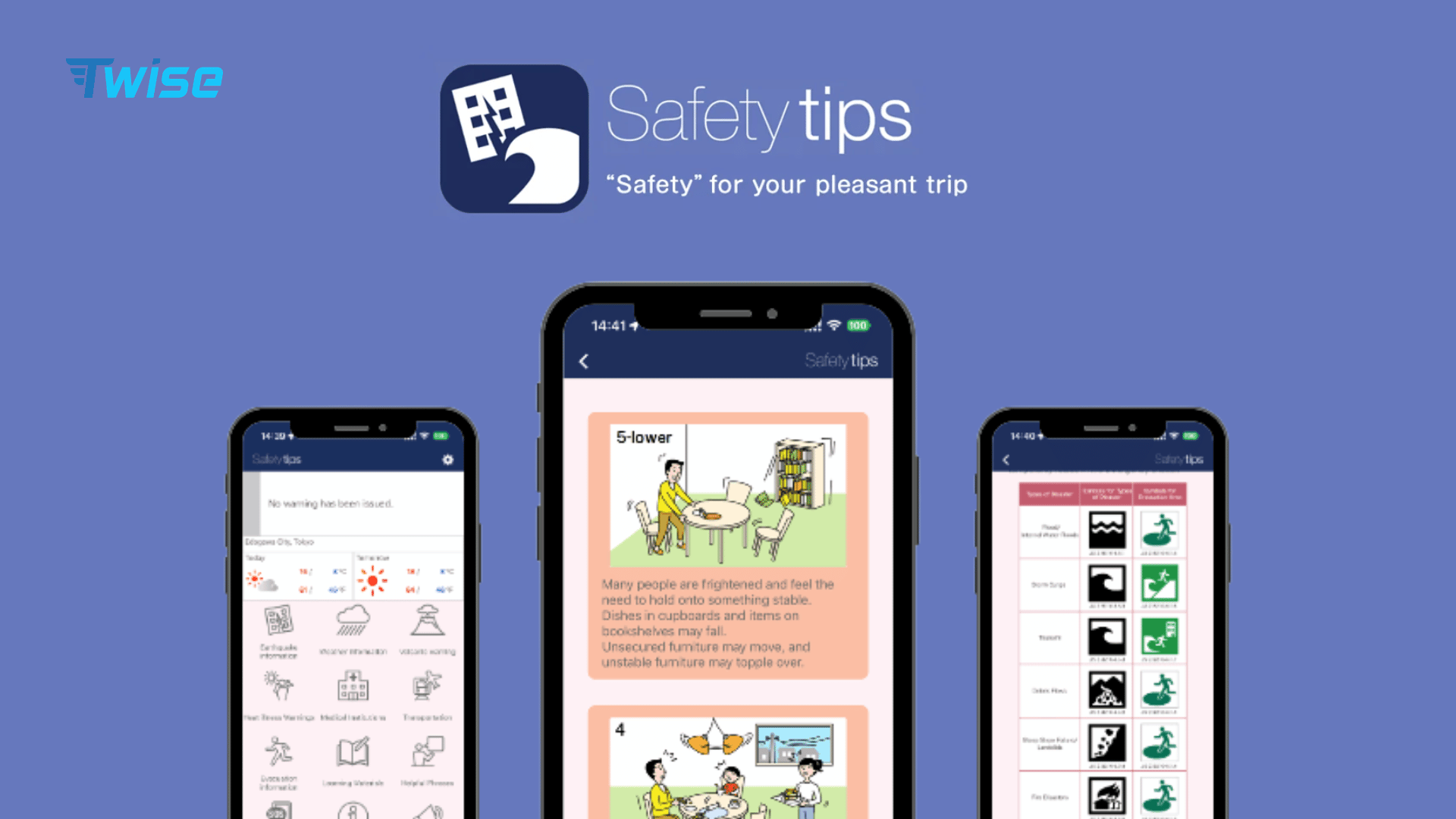
The official Safety tips service provides multilingual notifications covering earthquake early warnings, tsunami warnings, and other weather alerts.
Solo Female Travel in Japan
Many women travel independently in Japan, but accommodation location and the final route home still matter.
Share your itinerary with someone you trust, avoid isolated shortcuts at night, and note women-only carriage rules where available. No single precaution suits every traveler, so use the same judgment you would apply in another unfamiliar country.
Save Emergency Information Before Your Trip
Save police 110, ambulance/fire 119, your insurer, accommodation, and embassy information offline.
JNTO’s Japan Visitor Hotline operates 24 hours daily at 050-3816-2787, or +81-50-3816-2787 from overseas, for tourism information and assistance involving accidents or emergencies.
Solo Dining, Accommodation and Everyday Travel Tips
Eating Alone in Japan
Counter seating, ticket-machine restaurants, cafés, and individual meals make solo dining practical.
Some small venues have limited seating or ordering systems. Observe posted instructions, keep bags out of walkways, and do not assume every restaurant accepts cards.
Where Should Solo Travelers Stay?
Prioritize a staffed or well-reviewed property near suitable transport. Inspect the route from the station, especially for late check-in.
Capsule hotels can be useful for short stays, but verify luggage storage, noise expectations, bathroom arrangements, and gender-specific floors.
Don’t Overpack Your Solo Itinerary
Changing hotels every night means handling every bag, ticket, and check-in yourself.
Use a stable base for day trips. Leave one flexible half-day after several busy days rather than treating rest as failed sightseeing.
Why Mobile Data Matters More When You Travel Solo in Japan
A solo traveler has no companion’s phone as an immediate backup. Connectivity helps, but it should sit alongside offline preparation.
Navigation and Last-Mile Directions
Mobile data helps identify station exits, recheck a missed transfer, and navigate the final streets to accommodation.
Translation, Bookings and Messages
Use it to retrieve QR tickets, translate instructions, and notify a hotel when arrival changes. Save crucial bookings locally too.
Disruptions and Safety Information
Rail disruption or severe weather may require a new route and accommodation contact. Preparing a travel eSIM before departure is one way to keep those tools available beyond airport Wi-Fi.
Japan eSIM vs SIM Card vs Roaming for Solo Travelers
| Option | Prepare beforehand | Keep home SIM | Pickup or swap | Practical consideration |
|---|---|---|---|---|
| Travel eSIM | Usually possible | Yes, on compatible Dual SIM devices | Digital setup | Requires compatible unlocked phone |
| Physical Japan SIM | Sometimes | May require removal or second slot | May be required | Useful without eSIM support |
| Home roaming | Check carrier package | Yes | None | Pricing and allowance vary |
| Pocket Wi-Fi | Usually reserve | Yes | Pickup and return may apply | Another device to charge |
No option is automatically best. Compare trip length, coverage, data allowance, validity, and hotspot policy.
Selected Twise plans may offer digital delivery and simplified identity requirements, but check the individual package before purchase. A data-only plan does not provide Japanese cellular calls, SMS, or a local number unless explicitly stated.
Prepare Your Phone Before Traveling Solo in Japan
Before Your Flight
Confirm eSIM compatibility and carrier-unlock status. On iPhone, check Settings → General → About → Carrier Lock → “No SIM Restrictions.”
Install the plan over stable Wi-Fi when permitted, but first check what starts its validity. Download maps, translation resources, hotel addresses, tickets, and setup instructions.
After Landing in Japan
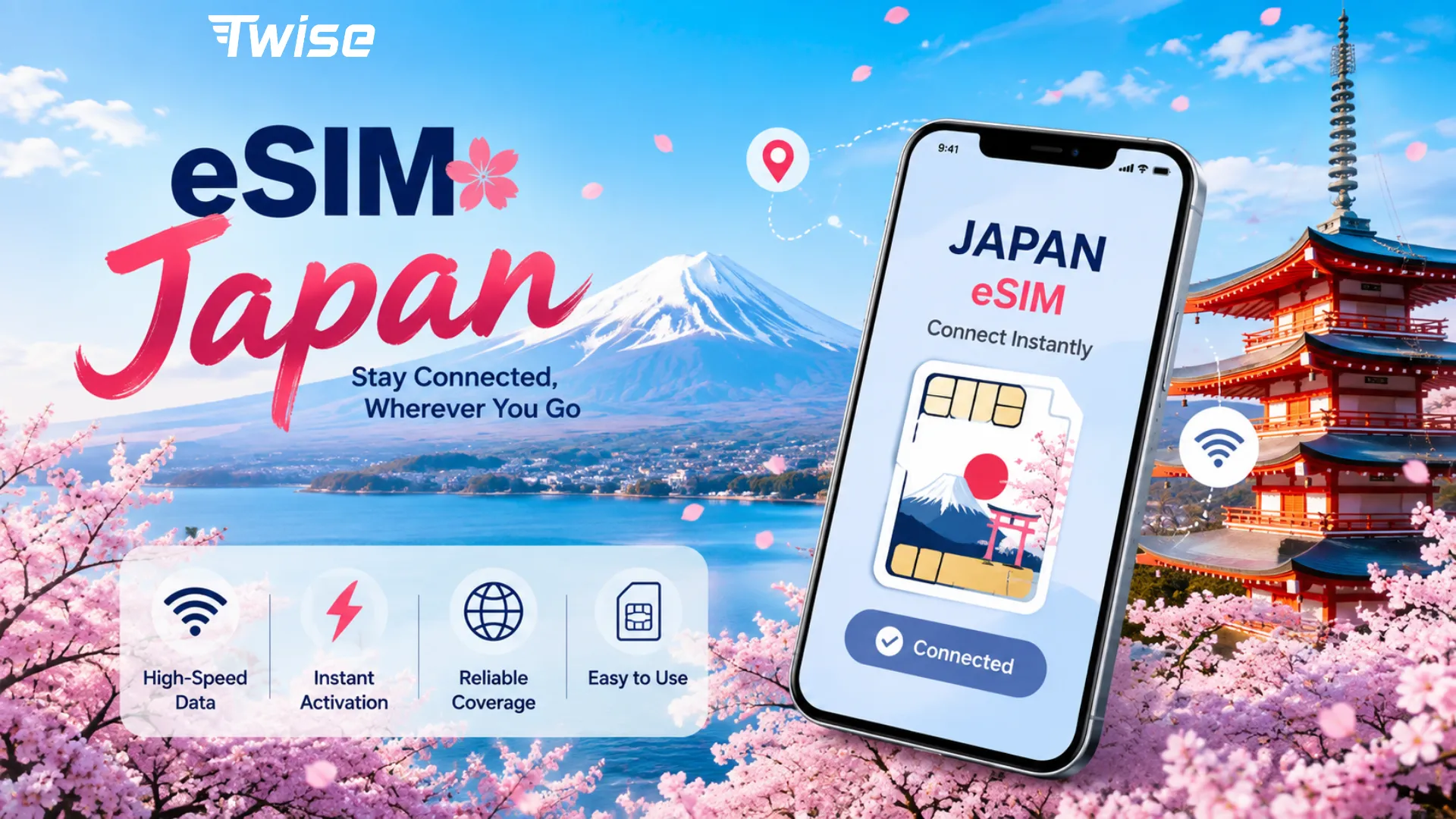
Select the travel eSIM for cellular data and enable roaming on that line only if instructed. Keep home-line data roaming off unless intentionally needed.
Test a webpage and navigation route before leaving airport Wi-Fi. Do not delete a non-working profile as the first troubleshooting step.
Solo Japan Pre-Departure Checklist
- Confirm the airport-to-hotel route and last useful train.
- Save accommodation addresses in English and Japanese.
- Download navigation, translation, transport, and safety apps.
- Prepare at least two usable payment methods.
- Reserve necessary intercity seats and timed attractions.
- Store insurance and emergency details securely offline.
- Measure large baggage and plan hotel transfers.
- Arrange mobile connectivity and carry a power bank.
- Share your route with a trusted contact.
- Leave unscheduled time for weather, delays, and rest.
Build a Solo Japan Route You Can Manage Yourself
The best route is not the one containing the most cities. It is the one you can navigate without constant hotel changes, difficult transfers, or anxiety about reaching the next reservation.
Tokyo → Kyoto → Osaka is a practical first foundation. Add Kanazawa, Hiroshima, or Fukuoka only when the available days and transport direction make sense. If you want data ready for navigation and trip management, compare Twise eSIM plans before departure, while keeping essential addresses and tickets offline.

FAQ About Traveling Solo in Japan
